
Iran
Iran banknotes combine imperial and revolutionary layers, where portraits, mosques, and calligraphy coexist with complex numeric systems linked to the toman.
1982–2003 | Islamic Republic Series
-

Iran 100 Rials 1982, P-135, UNC
5,99 € -

Iran 200 Rials 1987, P-136b, UNC
2,49 € -

Iran 200 Rials 1997, P-136d, UNC
1,49 € -

Iran 200 Rials 2004, P-136e, UNC
1,49 € -

Iran 500 Rials 2003-2009, P-137Aa, UNC
1,49 € -

Iran 500 Rials 2003-2009, P-137Ab, UNC
1,49 € -

Iran 500 Rials 2003-2009, P-137Ad, UNC
1,49 € -

Iran 1000 Rials 1991, P-138f(1), UNC
3,99 €
1985–2005 | Low Denomination Rial Issue


1992–2019 | Khomeini Rial Series
-
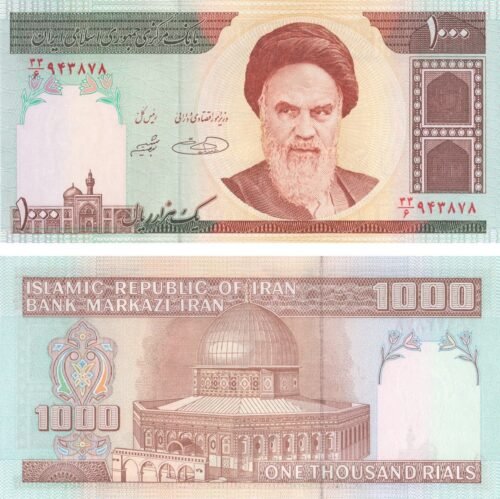
Iran 1000 Rials 2004, P-143d, UNC
1,49 € -

Iran 1000 Rials 2007-2008, P-143g, UNC
1,49 € -

Iran 2000 Rials 2005, P-144a, UNC
0,99 € -

Iran 2000 Rials 2005-2013, P-144d, UNC
1,49 € -

Iran 5000 Rials 2010, P-145f, UNC
2,49 € -

Iran 10000 Rials 1997, P-146d, UNC
2,99 € -

Iran 10000 Rials 2007, P-146h, UNC
1,49 € -

Iran 10000 Rials 2015, P-146i, UNC
1,49 €
2009–2021 | High Value Rial Issue


2002–2023 | Iran Cheque Series

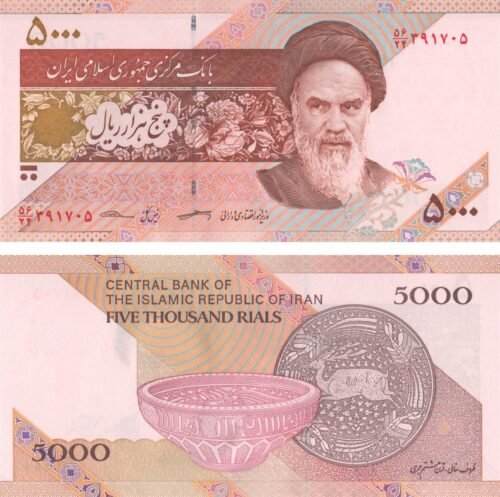


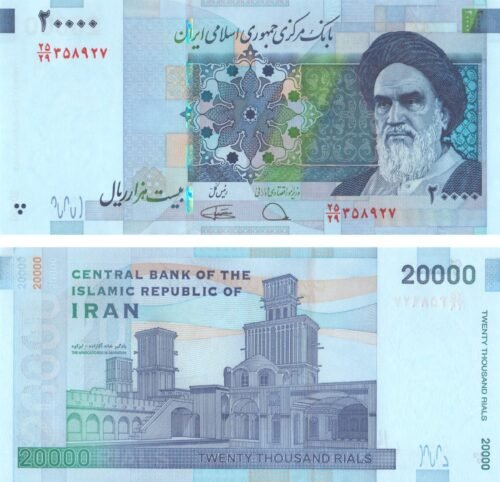
2014–2019 | University Commemorative Issue

2017–2018 | 10000 Rials Issue


2018–2026 | New Rial Series
-

Iran 10000 Rials 2022, P-160, UNC
1,49 € -

Iran 20000 Rials 2022, P-161, UNC
1,49 € -
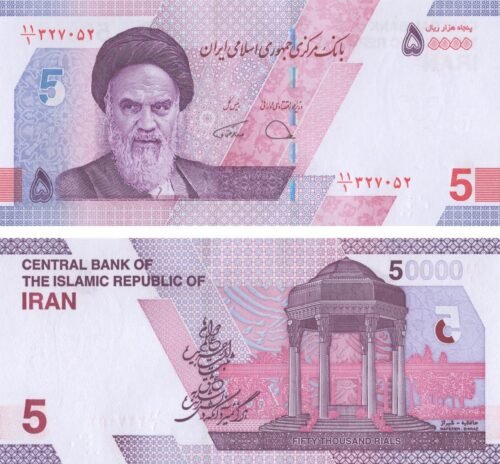
Iran 50000 Rials 2021, P-162(1), UNC
1,49 € -

Iran 50000 Rials 2023, P-162(3), UNC
0,99 € -

Iran 100000 Rials 2021-2022, P-163(3), UNC
2,49 € -
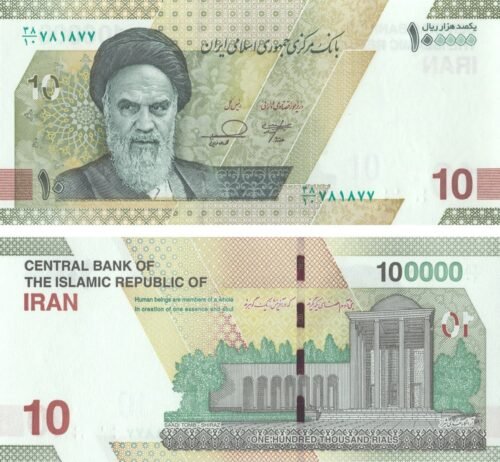
Iran 100000 Rials 2023, P-163(4), UNC
2,49 € -

Iran 100000 Rials 2023, P-163(4)r, UNC
2,99 € -
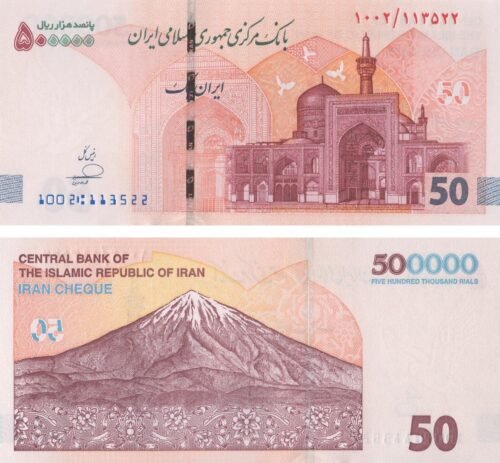
Iran 500000 Rials 2025, P-164A, UNC
2,99 € -

Iran 1000000 Rials 2020, P-165(1), UNC
5,99 € -

Iran 1000000 Rials 2023, P-166(2), UNC
6,99 € -

Iran 5000000 Rials 2025, P-168, UNC
12,99 €
Design & Visual Identity
Pahlavi-era banknotes featuring Mohammad Reza Shah remain a key reference point, especially issues later modified with revolutionary overprints where the portrait was masked or stamped, creating distinct transitional types sought by collectors. Contemporary notes shift the focus to architectural and cultural landmarks: the 100,000 rials note includes Persepolis with the Tachara Palace, while the Khaju Bridge in Isfahan and the Golestan Palace in Tehran appear across other issues as precise historical anchors.
The 10,000 rials note features the Mausoleum of Saadi in Shiraz, linking the currency to classical Persian poetry. Background structures are densely constructed with arabesque geometry and guilloche patterns that closely resemble Tabriz and Isfahan carpet weaving motifs, integrating textile-inspired design into security printing. Modern issues also introduce the “shadow zero” format, where four zeros are reduced or faded within denominations such as 50,000 and 100,000 rials, reflecting alignment with the toman-based valuation system.
Historical & Cultural Context
Iran’s banknotes are defined by a visible transition from imperial portrait engraving to layered architectural and literary representation, combined with technical adaptations to monetary reform. The presence of Persepolis establishes continuity with Achaemenid heritage, while structures such as Khaju Bridge and Golestan Palace anchor later historical periods. The Saadi mausoleum extends this framework into literary tradition, creating a multi-era visual structure across denominations.
The integration of overprinted Shah issues alongside modern toman-oriented layouts produces a dual collecting field, where historical transition and contemporary design coexist within a single national currency system.
For Collectors
For collectors, Iran offers a specialized field built around Pahlavi portrait banknotes with revolutionary overprints, Persepolis 100,000 rials issues, Khaju Bridge and Golestan Palace notes, and the Saadi Mausoleum 10,000 rials. The addition of shadow-zero toman formatting and carpet-inspired guilloche patterns creates strong collecting pathways focused on imperial-to-revolutionary transitions, Persian architecture, and advanced numeric design.
Quick Facts
Currency: Iranian Rial