
Myanmar
Myanmar banknotes preserve royal heritage and everyday craft in the same field, where peacocks, shrines, and village work remain central to the kyat’s visual world.
1990 | 1 Kyat Issue
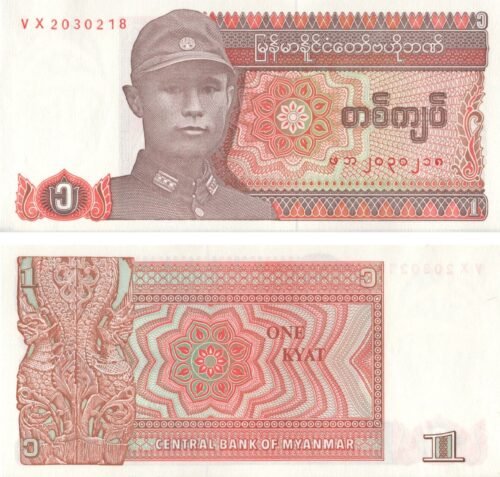
1990–1998 | Kyat Issue
-
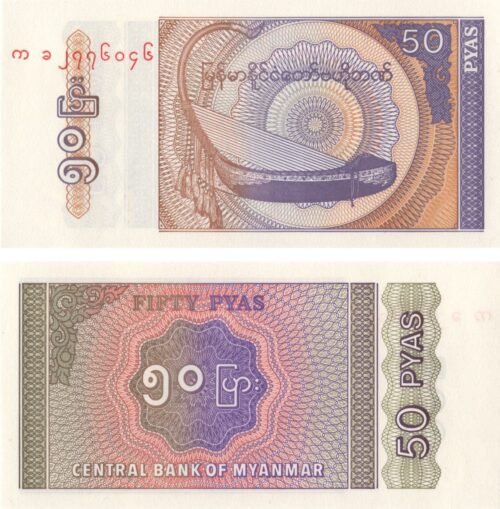
Myanmar 50 Pyas 1994, P-68, UNC
1,49 € -
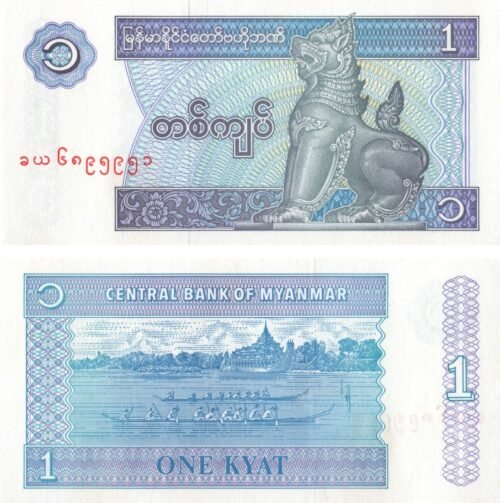
Myanmar 1 Kyat 1996, P-69(2), UNC
0,99 € -
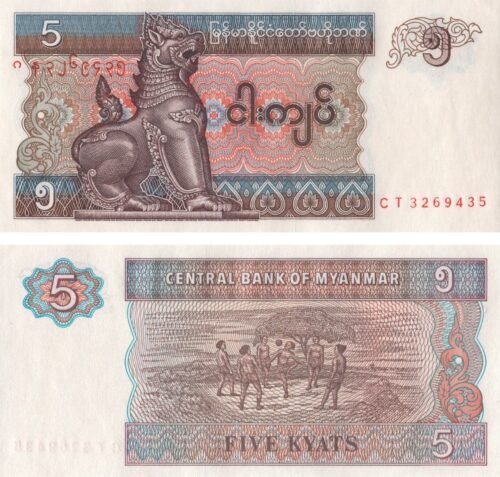
Myanmar 5 Kyats 1995, P-70b, UNC
0,99 € -
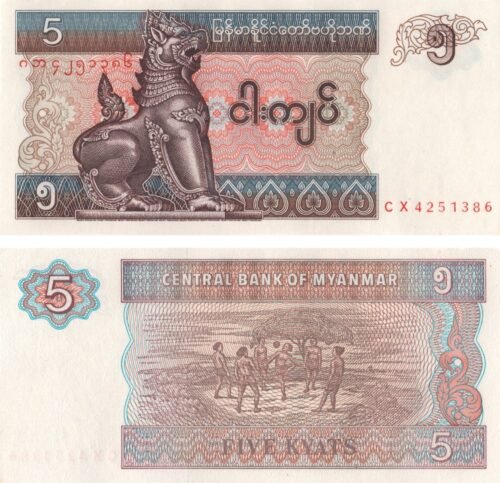
Myanmar 5 Kyats 1995, P-70br, UNC
0,99 € -
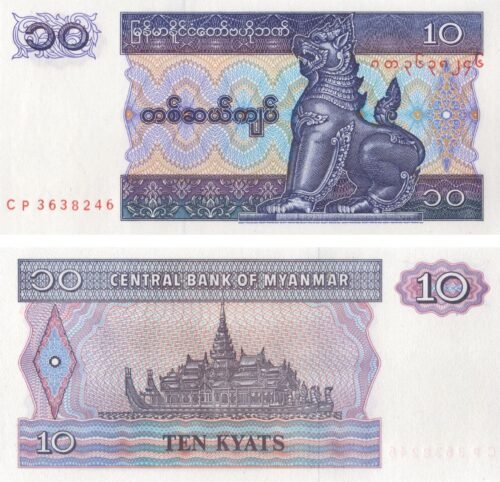
Myanmar 10 Kyats 1995, P-71b, UNC
0,99 € -
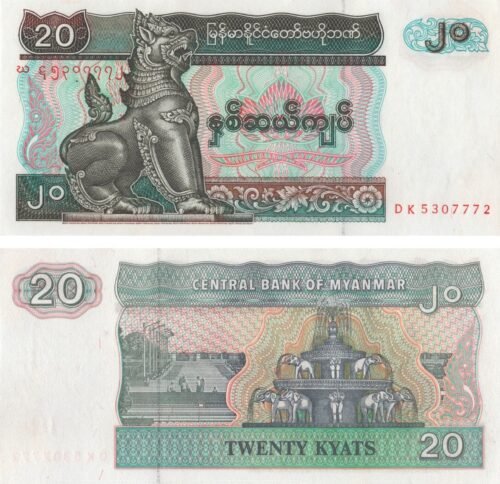
Myanmar 20 Kyats 1994, P-72, UNC
0,99 € -
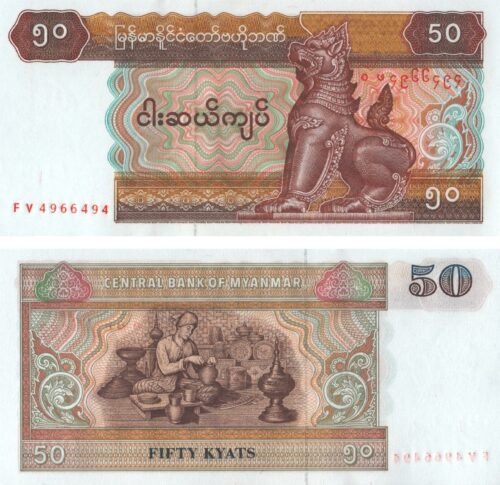
Myanmar 50 Kyats 1997, P-73b(1), UNC
0,99 € -
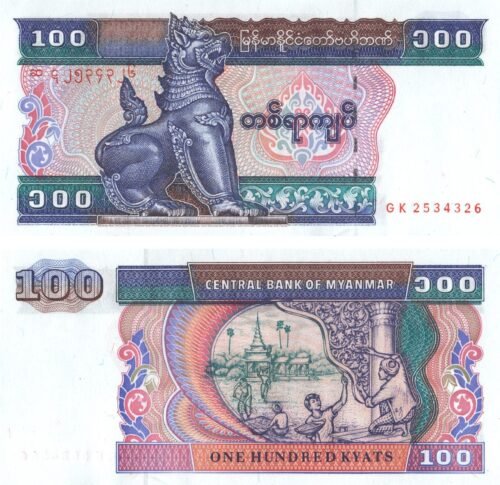
Myanmar 100 Kyats 1996, P-74b, UNC
0,99 €
2004–2012 | Kyat Issue
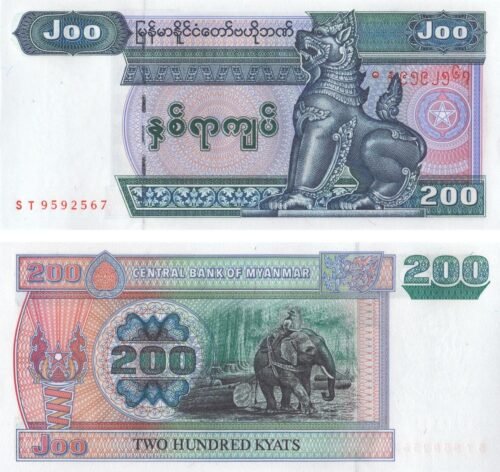
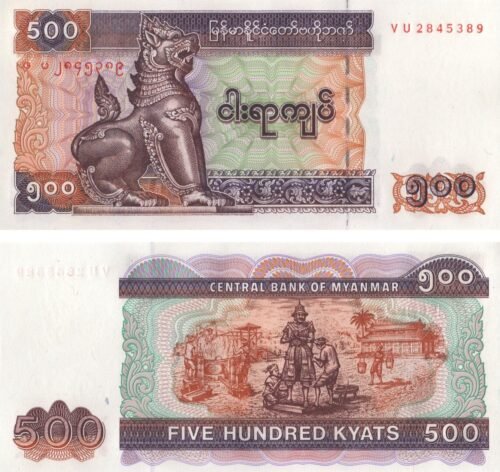
2019–2023 | Kyat Issue


Design & Visual Identity
The high denominations are anchored by the Mandalay Palace, shown through its long red defensive walls, corner towers, and surrounding moat, all laid out in strict horizontal perspective. The 5000 kyat introduces the White Elephant (Hsinbyudaw), depicted in ceremonial stance with ornate regalia, emphasizing its role as a sacred royal symbol rather than a naturalistic animal study.
Lower denominations shift to ethnographic detail. The Karaweik Royal Barge appears as a gilded vessel shaped like a mythical bird, its curved prow and layered ornament clearly defined. Daily craft is recorded through Pathein umbrella makers, shown assembling bamboo frames and painted canopies, while Chinlone players are captured mid-motion, their woven ball suspended between controlled gestures. The Saung-gauk harp is engraved with its curved body and string alignment, presented as a precise musical instrument rather than decorative motif.
Historical & Cultural Context
The series moves between palace architecture, sacred fauna, and village craftsmanship without overlap. Each denomination isolates one subject and renders it with minimal background interference.
This creates a banknote set that functions as a direct visual record of Burmese royal symbolism and traditional life.
For Collectors
For collectors, Myanmar offers Mandalay Palace engravings, the White Elephant 5000 kyat, Karaweik Royal Barge, Pathein umbrella makers, Chinlone sport scenes, and Saung-gauk harp details. The Myanmar Kyat stands out for its strong ethnographic content and clear separation between royal and everyday imagery.
Quick Facts
Currency: Myanmar Kyat
Issuer: Central Bank of Myanmar