
Papua New Guinea
Papua New Guinea banknotes center ceremonial houses and ethnographic objects, using bold composition and early polymer technology to create an unmistakable Pacific identity.
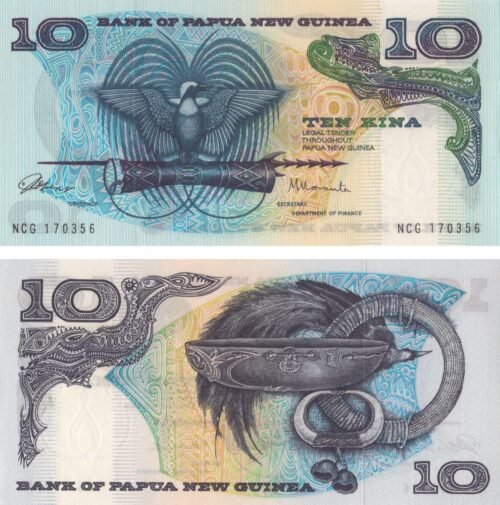
1981–1991 | Kina Issue

1996–2002 | 2 Kina Polymer Issue

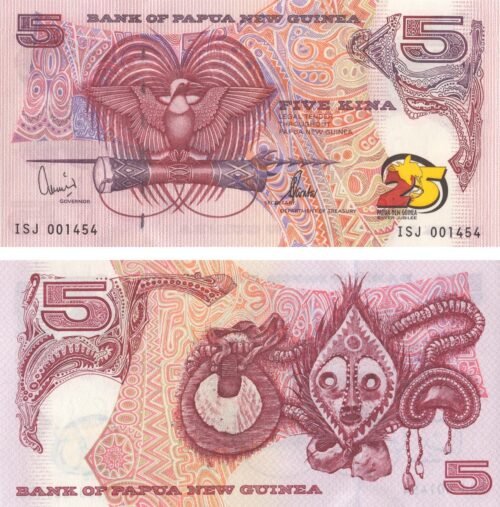
2000 | Papua New Guinea Silver Jubilee Commemorative Issue
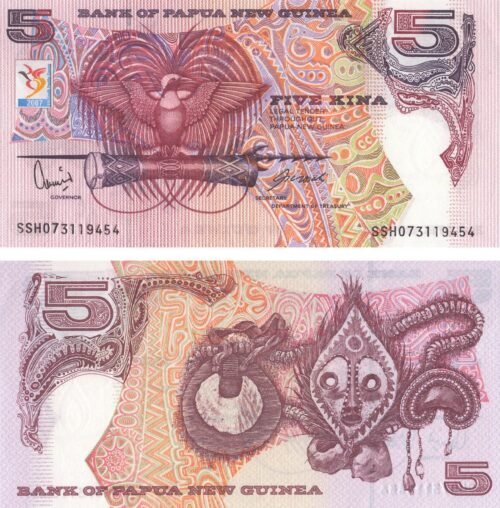
2007 | South Pacific Games Commemorative Issue
2008 | Bank Anniversary Commemorative Issue
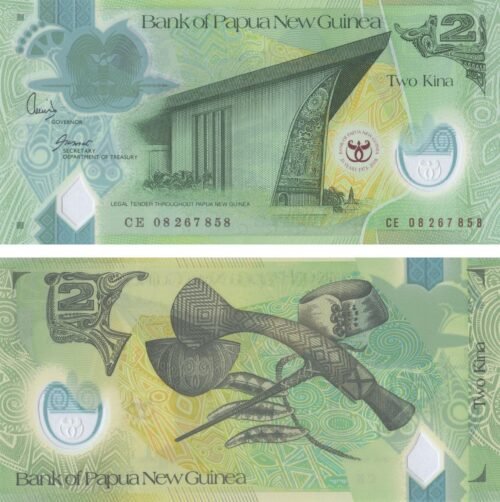


2010 | Independence Anniversary Commemorative Issue

2013 | Bank Anniversary Commemorative Issue
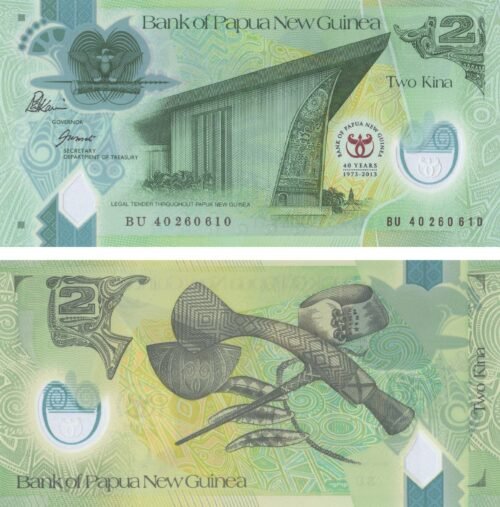
2016–2025 | Reduced Size Kina Issue


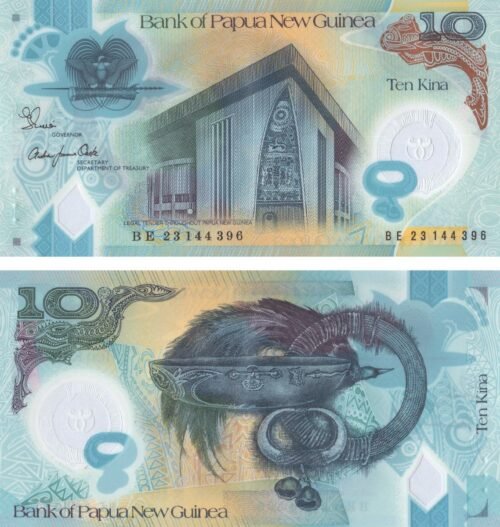
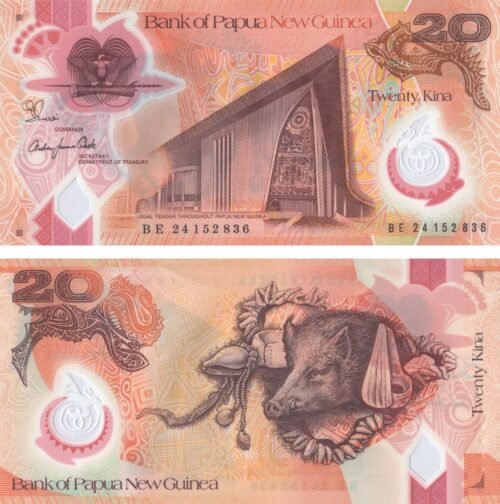
Design & Visual Identity
The obverse is dominated by the National Parliament building, designed in Haus Tambaran style, with its steep triangular façade rising vertically and covered in carved indigenous motifs. This structure forms a fixed visual axis across the series, giving immediate recognition through its monumental and symbolic architecture.
Traditional wealth objects are rendered with clarity and separation. Kina shells and toea shells appear as circular forms, while the curved boar tusk is engraved with precise contour, each element presented as a distinct cultural artifact rather than decorative background.
Reverse compositions introduce movement and navigation. The Hiri Moale lakatoi canoe stretches across the surface with multiple sail masts in linear alignment, paired with the Bird of Paradise (Kumul), whose elongated tail plumes are engraved with fine, flowing linework, emphasizing form and motion.
The polymer substrate defines the physical experience. Transparent windows, smooth plastic surfaces, and sharply separated color zones create a layered structure where each object remains clearly isolated and readable.
Historical & Cultural Context
Papua New Guinea established itself as an early pioneer of polymer currency with the 2 Kina issue, introducing plastic substrate technology ahead of its widespread global adoption. Later series retained the Parliament House as the central anchor while expanding the range of ceremonial and maritime imagery.
For Collectors
For collectors, Papua New Guinea offers a highly distinctive field built around early polymer innovation, the Haus Tambaran Parliament design, kina shell and boar tusk wealth objects, and the Hiri Moale canoe. The Papua New Guinean Kina stands out for its direct translation of cultural artifacts into banknote form and its pioneering role in modern substrate technology.
Quick Facts
Currency: Papua New Guinean Kina
Issuer: Bank of Papua New Guinea