
Philippines
Philippines banknotes combine wartime overprints, emergency issues, volcanoes, reefs, and modern polymer design into a layered national currency history.
1942 | Japanese Occupation Issue

1969 | White Border Seal Type 2 and 3 Issue


1970s | Full Printing Seal Type 3 Issue
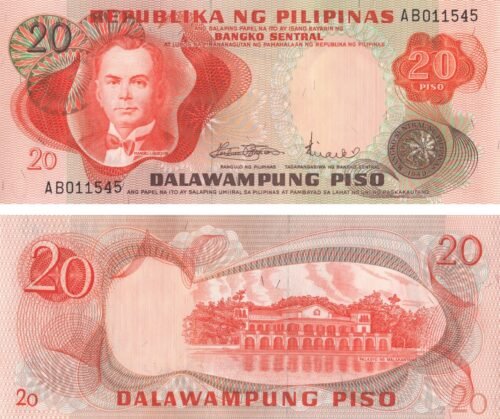

1970s | Ang Bagong Lipunan Seal Type 3 Issue
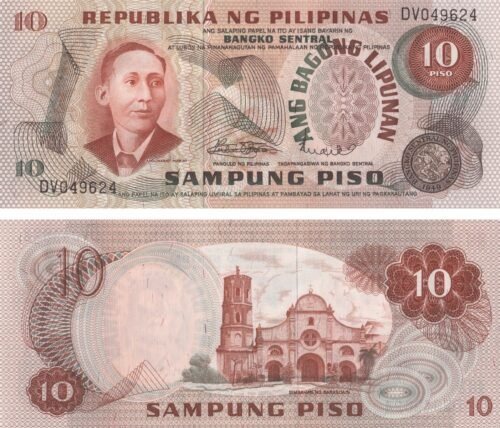

1978 | Ang Bagong Lipunan Seal Type 4 Issue
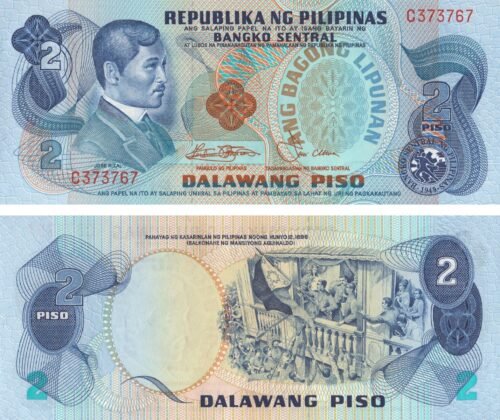


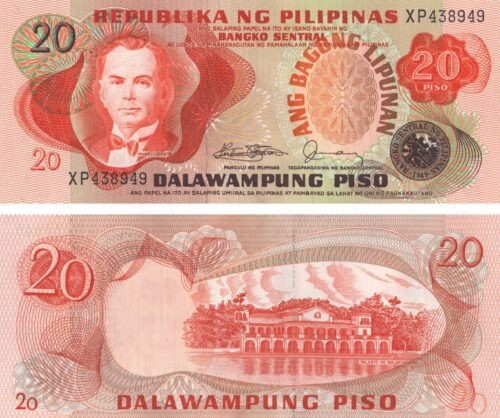

1981 | Papal Visit Commemorative Issue

1981 | President Marcos Inauguration Commemorative Issue
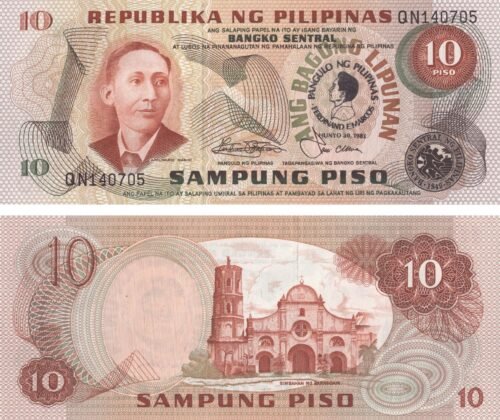
1995–2012 | Seal Type 5 Issue

1997–2001 | 10 Piso Two Portraits Issue

2001–2013 | Seal Type 5 Issue

2011–2012 | Commemorative Issues

2013 | Commemorative Issues


2020–2022 | NGC With Blind Marks Issue

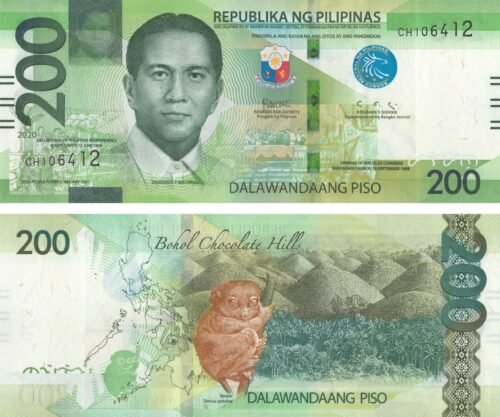
2022–2025 | NGC Seal Type 7 Issue

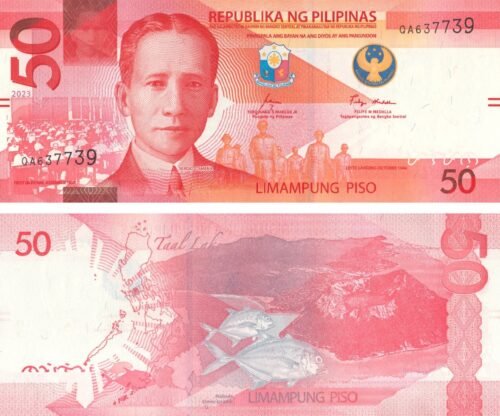
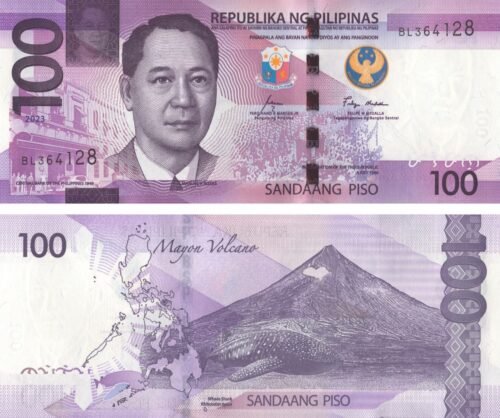
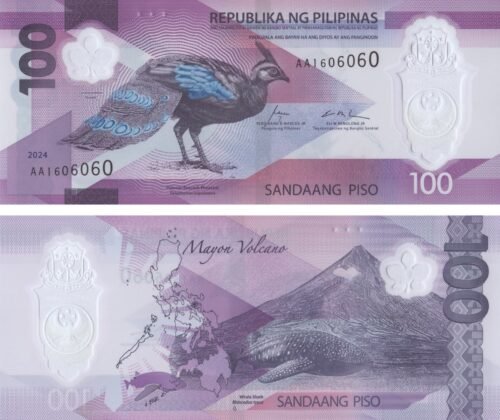
2022–2025 | Polymer Animals Seal Type 7 Issue

Design & Visual Identity
Early high-interest issues include the 1944 “Victory” overprints applied to liberation-era notes and a wide range of guerrilla currencies printed by provincial resistance groups, each with varying paper quality, typography, and local seals.
Obverse layouts retain structured portrait engraving, while background fields incorporate indigenous textile patterns inspired by abaca and T’nalak weaving, forming dense geometric textures behind denomination panels.
Reverse imagery is geographically explicit — the conical formations of the Chocolate Hills in Bohol rendered as repeating dome structures, and the Puerto Princesa Underground River shown as a cavern system with flowing water channels engraved in layered depth.
Modern polymer issues introduce vertical compositions, most notably the 1000 Piso note featuring the Philippine Eagle with sharply defined feather structure, vibrant blue color fields, and a transparent security window integrated into the layout.
Historical & Cultural Context
Philippine currency history reflects multiple overlapping systems, from Japanese occupation issues known as “Mickey Mouse money” to locally issued guerrilla notes and later centralized production under the Bangko Sentral ng Pilipinas.
This layered history creates a wide spectrum of paper types, print qualities, and regional variations within a single national series.
For Collectors
For collectors, the Philippines offers exceptional depth through rare WWII “Victory” overprints, diverse guerrilla currencies, distinctive geological landmarks such as the Chocolate Hills, and the award-winning 1000 Piso polymer note, making it one of the most historically dynamic and visually diverse banknote markets in Southeast Asia.
Quick Facts
Currency: Philippine Piso
Issuers: Bangko Sentral ng Pilipinas, Central Bank of the Philippines, Japanese Government