
Uruguay
Uruguay banknotes present a currency shaped by experimentation and control, where artistic heritage and technical innovation develop within a compact, disciplined system.
1967 | Regular Issue

1978–1988 | Nuevo Peso – Without Pagará al Portador y a la Vista Issue

1986 | Issue
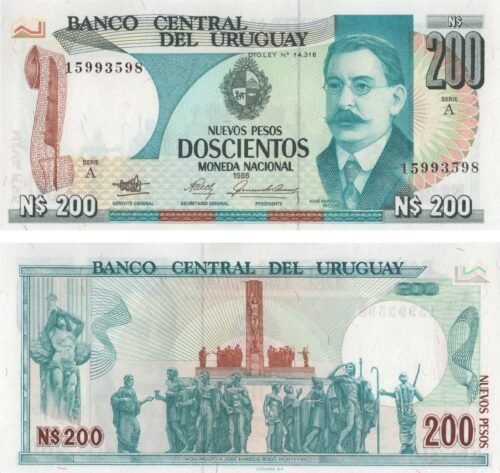
1998 | TDLR Printer Issue
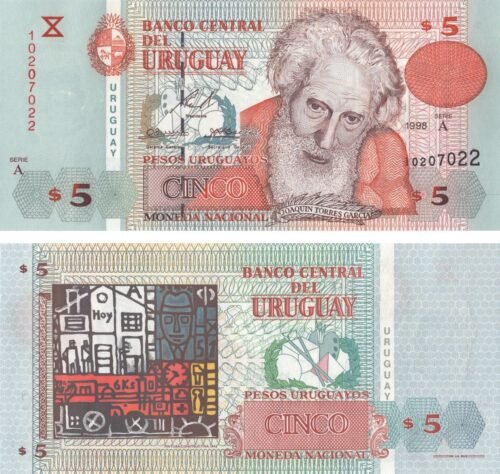
2003–2011 | Issue

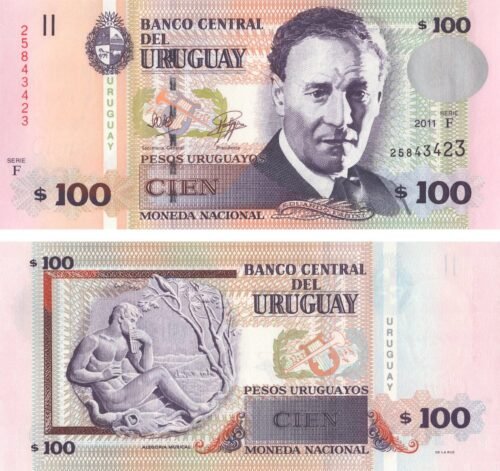
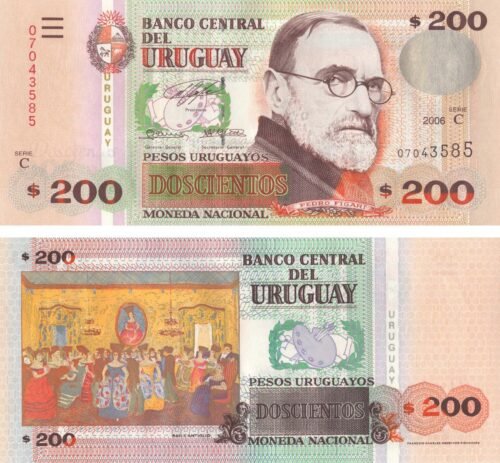
2014–2021 | Without Vertical Text "URUGUAY" at Left Issue

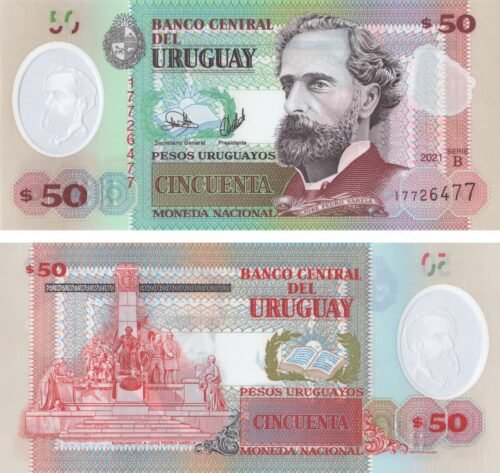
2020–2021 | Polymer Issue

Design & Visual Identity
The modern Uruguayan Peso is defined by a clear structural shift toward vertical polymer design. The commemorative 50 Peso anniversary note introduced a vertical format that departs from traditional layouts, integrating transparent windows, layered security features, and high-definition printing into a distinctly modern composition.
Transitional issues add a separate layer of interest. Surcharged banknotes — older Nuevo Peso notes overprinted with new denominations — create a hybrid category where two monetary systems coexist on a single surface. These overprints form a specialized collecting field, documenting adaptation during periods of monetary change.
Cultural identity is anchored by Juan Manuel Blanes, featured on the 100 Peso note. His presence connects the currency to national artistic heritage, translating historical painting into engraved form and establishing a consistent artistic reference within the series.
Architectural elements reinforce this framework. The Teatro Solís, depicted on the 20 Peso note, is rendered with precise intaglio detail, linking the currency to performance and cultural institutions within Uruguay’s national identity.
Color structure evolves across series. Earlier restrained palettes give way to stronger tones — deep purples, vivid oranges, and saturated hues — supported by modern printing techniques that enhance clarity and differentiation between denominations.
Throughout all changes, José Gervasio Artigas remains a constant presence. His portrait provides continuity across multiple issues, forming a stable reference point within an otherwise evolving design system.
Production quality reflects collaboration with established international printers, including Oberthur and De La Rue. Fine guilloché structures, integrated microtext, and sharply raised intaglio elements create a crisp and controlled tactile surface.
Across its development, the Uruguayan Peso maintains a dual character — a structured system of modern banknote production combined with selective experimentation in format and design.
Historical & Cultural Context
The vertical polymer format, surcharged transitional issues, and strong artistic references establish Uruguay as a technically and culturally distinctive collecting field.
For Collectors
For collectors, Uruguay banknotes offer a refined balance — combining artistic heritage, controlled experimentation, and precise engraving into a compact yet varied numismatic system.
Quick Facts
Currency: Uruguayan Peso, Old Uruguayan Peso, Uruguayan Nuevo Peso
Issuer: Central Bank of Uruguay