
Egyptian Banknote Dates: Reading Beyond the Year
Two Egyptian 50-piastre notes show the same mosque, the same denomination and the same governor’s signature. One carries ٢٠١٧/٢/٦; the other, ٢٠١٧/٢/٧. Their dates are one day apart: 6 and 7 February 2017. The numeric part of the serial prefix changes too, from 330 to 331.
Both belong to B342a in The Banknote Book. They are distinct dated examples within one catalogue variety. Understanding that distinction starts with finding the right date and reading its digits in the right order.
50 piastres · 6 February 2017 · prefix 330

50 piastres · 7 February 2017 · prefix 331
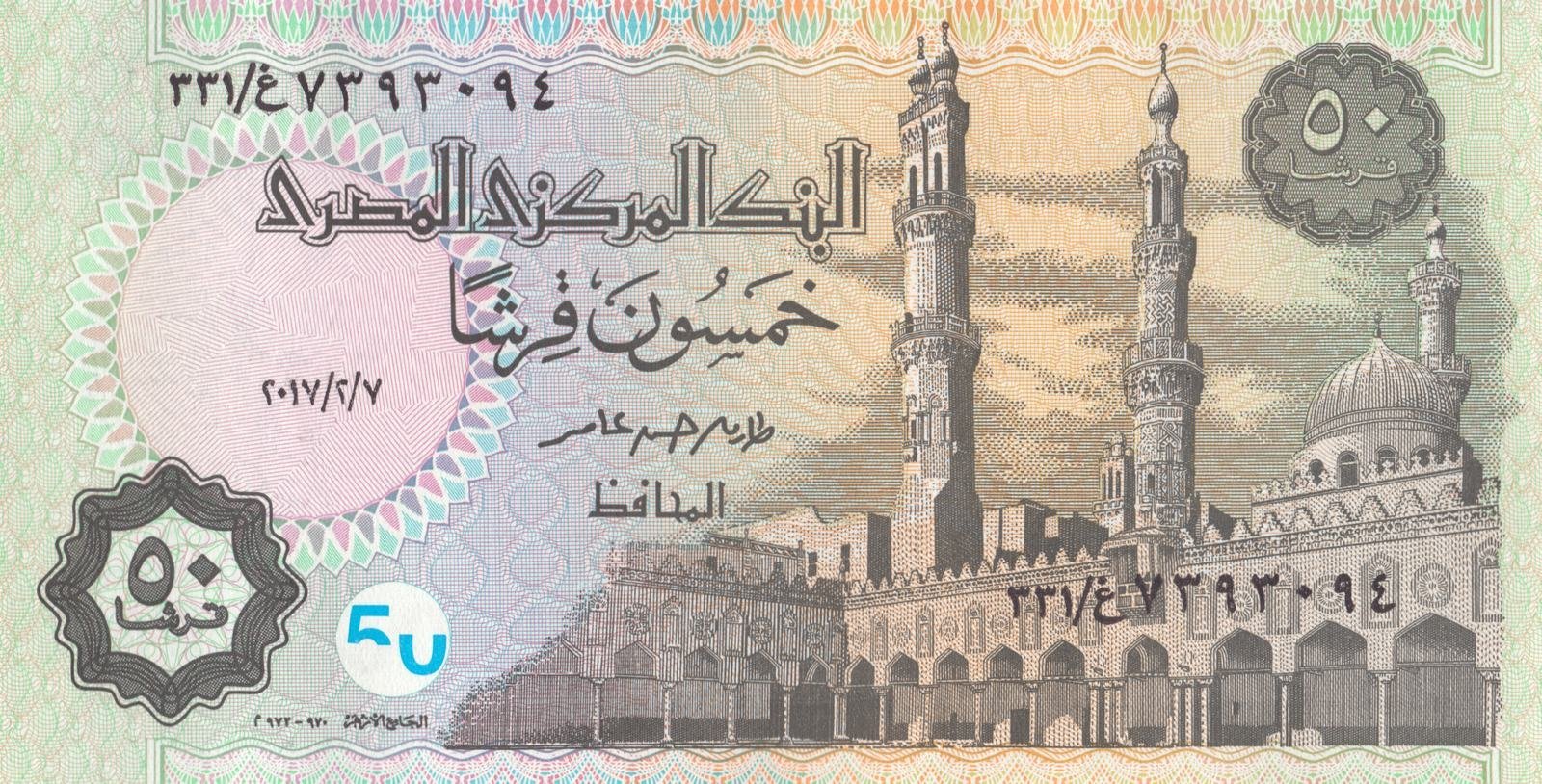
6 February · date detail
Prefix 330 · same front
7 February · date detail
Prefix 331 · same front
Reading the Date: Two Different Formats
The numerals in these date fields are Arabic-Indic, also called Eastern Arabic numerals. The dates themselves are Gregorian. No conversion from the Islamic Hijri calendar is needed.
| ٠ | ١ | ٢ | ٣ | ٤ | ٥ | ٦ | ٧ | ٨ | ٩ |
|---|---|---|---|---|---|---|---|---|---|
| 0 | 1 | 2 | 3 | 4 | 5 | 6 | 7 | 8 | 9 |
On the 2017 pair, the slashes separate year, month and day. Read ٢٠١٧/٢/٦ as 2017 / 2 / 6, not 2017 / 6 / 2. The month and day need not have leading zeros. Our 2008 50-piastre note uses the same arrangement: ٢٠٠٨/١/٢٤, or 24 January 2008.
The earlier 50-piastre note below is less obvious. Its date is the unbroken string ٨١٦٠٦٣, which transliterates as 816063. The Banknote Book explains the older format as YDDMMY: the two year digits sit at opposite ends, with the day and month between them.
16 June 1983 · six-digit format

24 January 2008 · slash-separated format

| First Y | DD | MM | Last Y |
|---|---|---|---|
| 8 | 16 | 06 | 3 |
| First year digit | Day | Month | Last year digit |
The outside digits give 83; the issue’s context supplies the century. The full date is therefore 16 June 1983. Treating 816063 as an ordinary day-month-year string will not work.
Finding a year elsewhere on the note is not enough. Under the al-Azhar mosque on our 2017 example is a separate inscription with the dates 970–972 CE. Those belong to the building shown, not to the banknote’s production. The government ten-piastre note offers another kind of date: its reverse says “ISSUED UNDER LAW 50/1940”. Here 1940 belongs to the law cited in the inscription, not to a printing-day field.
Building dates · al-Azhar mosque
Law reference · government currency note

What Does the Date Record?
The Banknote Book describes the dates on these Central Bank of Egypt notes as printing dates rather than issue dates. That is a more specific use than the legal, commemorative or series dates found on many other banknotes.
The Central Bank of Egypt itself used the phrase “recent printing date” in its 22 April 2025 statement about a photograph of a paper ten-pound note. Its printing-house description also places the date alongside serial numbering: it says the numbering lines print serial numbers and what that page calls the “date of issue”. The two descriptions use different terms in different contexts; neither is a comprehensive definition of every historical Egyptian date field.
For a collection record, preserve the full printed date and cite the catalogue’s interpretation. That does not tell us when an individual note first entered circulation. Nor does the printing-house description establish which production operation the date records.
A catalogue example makes the distinction from first issue concrete. For the 50-piastre variety B328a, The Banknote Book lists dated examples beginning on 6 July 1995, but gives the type’s introduction as 15 July 1996. Those are different entries for different events. The illustrated 2008 note is the later B328g variety, not that 1995 example.
The general question remains the same as in our guide to how to date a banknote: identify what a date refers to before using it to describe the note.
One Catalogue Variety, Many Dates
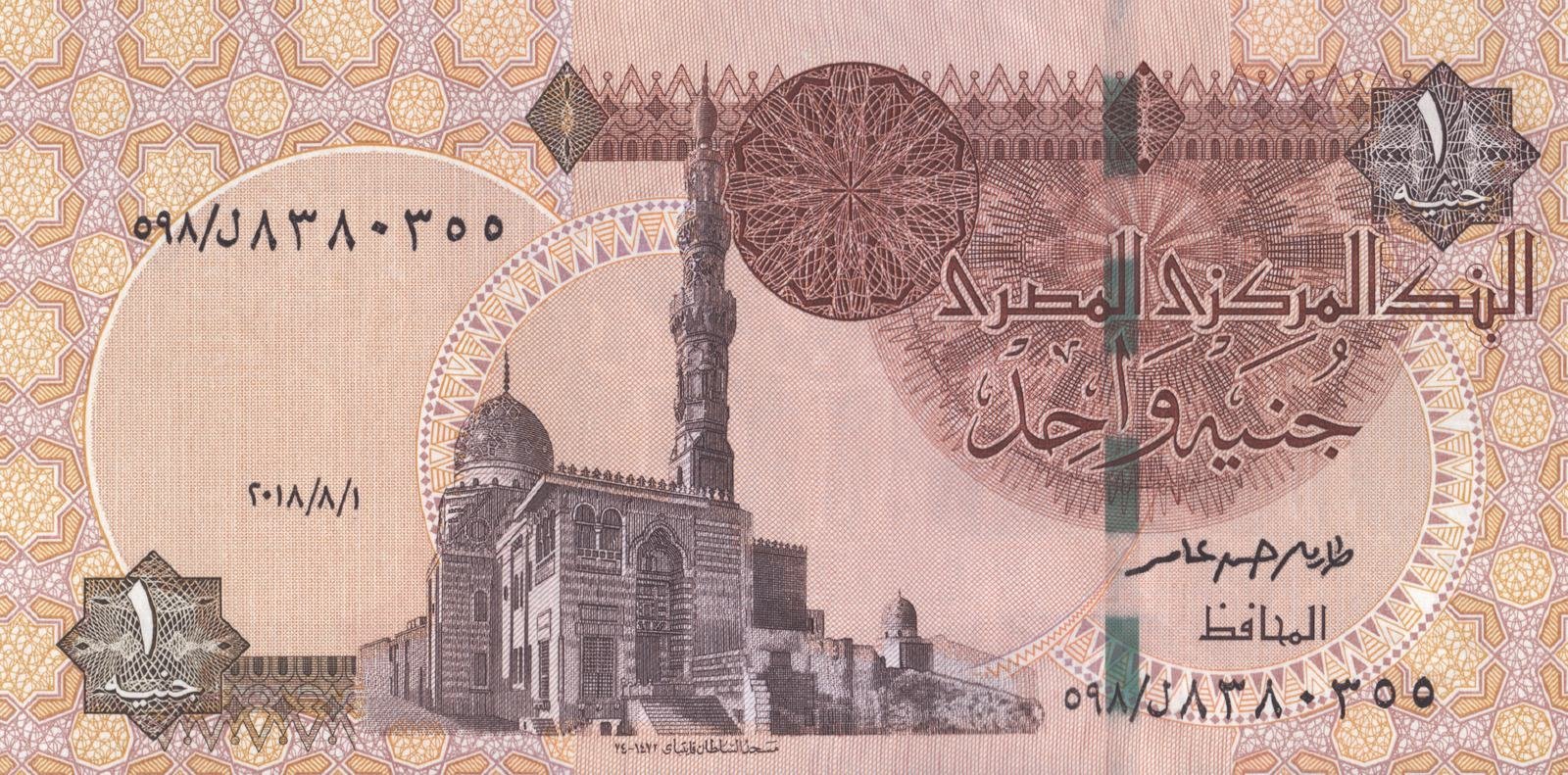
The two one-pound notes below are separated by more than three years. One is dated 1 August 2018, the other 15 September 2021. Both are B316n in The Banknote Book, a variety identified by Tarek Hassan Amer’s signature and a windowed security thread.
1 August 2018 · prefix 598
15 September 2021 · prefix 612
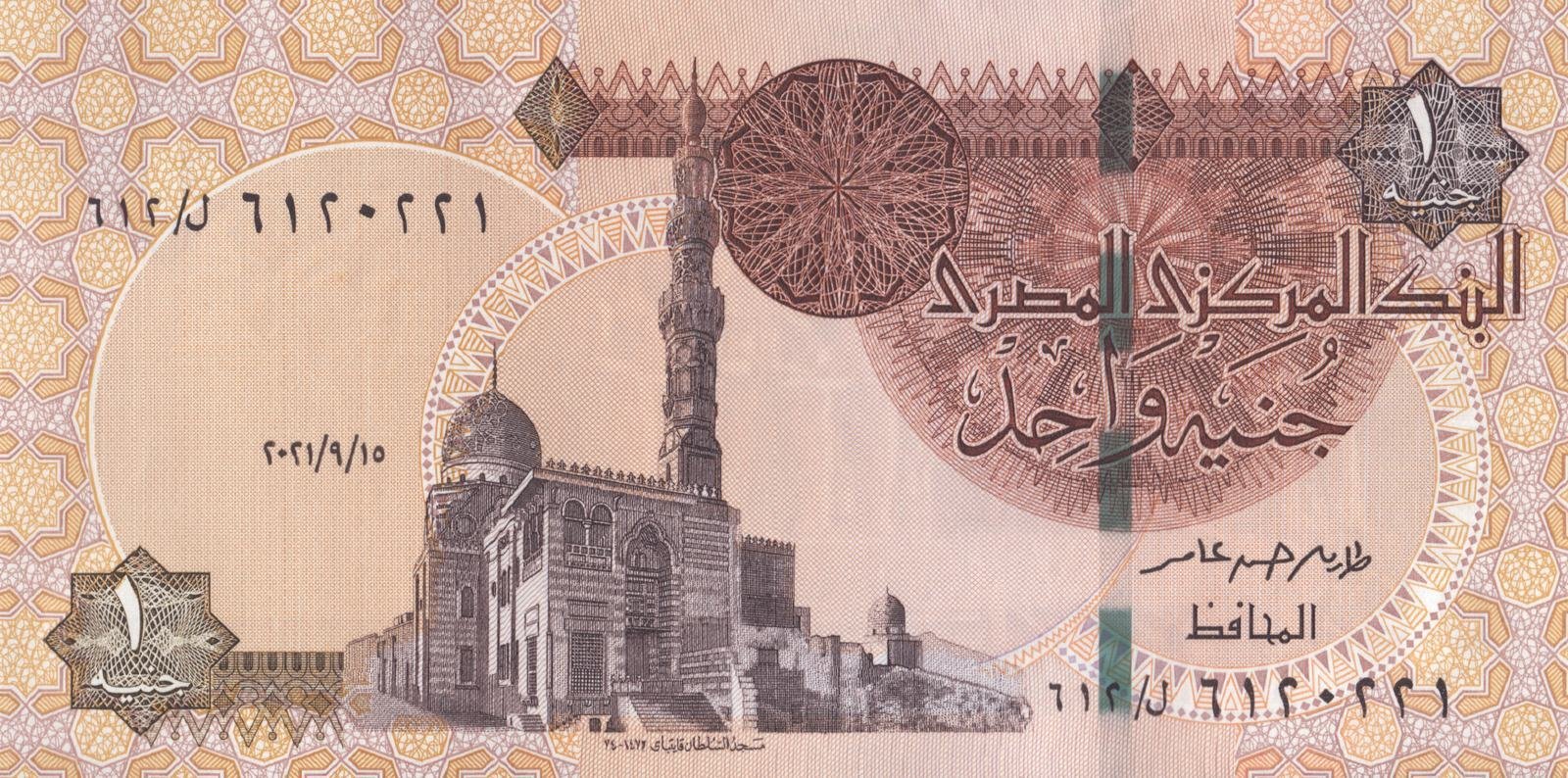
In its Egyptian listings, the catalogue assigns variety letters to shared features such as a signature, thread or watermark, rather than to every printed date. The date is still worth recording; it simply answers a different question from the variety letter. This is The Banknote Book’s stated approach, not a rule to impose on every other catalogue.
The same applies to the February 2017 pair. Both fit B342a, yet 6 February with prefix 330 is distinguishable from 7 February with prefix 331. The latter matches the last date and prefix listed for B342a in the consulted chapter. “Last listed” describes the catalogue’s coverage, not proof that printing stopped that day. The catalogue warns that some date ranges are incomplete.
A useful collection record therefore keeps the denomination, catalogue reference, full printed date and serial prefix together. Recording only “2017” loses the difference that makes this pair worth comparing.
Following the Prefixes
The prefix combines a short number and an Arabic letter; it is separate from the longer serial number. On our 50-piastre examples, the letter is غ (ghayn). Its dot matters: it is not the undotted ع. The numeric part rises from 307 on the 2008 note to 330 and 331 on the 2017 pair.
| Printed date | Numeric prefix | TBB variety |
|---|---|---|
| 24 January 2008 | 307 | B328g |
| 6 February 2017 | 330 | B342a |
| 7 February 2017 | 331 | B342a |
The Banknote Book says that the prefix usually increases by one when the printing date changes. Our adjacent-day pair illustrates that pattern neatly. The catalogue also records exceptions in which the prefix changes without a change of date. A prefix is therefore useful evidence to compare with a date, not a substitute for reading it.
Gaps can help a collector decide what to look for next. They cannot establish the exact dates of missing notes, or tell us that the jump from 307 to 330 represents 23 printing days or 23 production batches. Nor does the sequence provide a print-run total. Our guides to banknote serial numbers and banknote print runs explain those broader limits.
On these Egyptian notes, a small date field separates otherwise similar examples without requiring a new design or catalogue letter. Record the complete date and prefix alongside the catalogue variety.
Frequently Asked Questions
Are these Egyptian banknote dates in the Hijri calendar?
No. The date fields examined here use Gregorian dates written in Arabic-Indic numerals. The 2017 date ٢٠١٧/٢/٦ reads as 6 February 2017; it does not need a Hijri conversion.
How do you read a six-digit Egyptian banknote date?
The older format described by The Banknote Book is YDDMMY. Group 816063 as 8 | 16 | 06 | 3: the outside digits give the year ending 83, with day 16 and month 06 between them. The issue’s context identifies the full date as 16 June 1983.
Does a different printed date mean a different catalogue variety?
Not necessarily. The Banknote Book groups Egyptian notes by shared features such as signature, thread or watermark, rather than assigning a new variety letter to every date. Our 6 and 7 February 2017 examples are both B342a.
Sources and Method
The comparisons use original WorldBanknotes.eu scans of six Central Bank of Egypt notes: four 50-piastre examples dated 16 June 1983, 24 January 2008, 6 February 2017 and 7 February 2017; and two one-pound examples dated 1 August 2018 and 15 September 2021. A government ten-piastre reverse supplies the law-date contrast. Details are cropped from the same originals and link to their complete sides. Display widths are not a common physical scale.
- Owen W. Linzmayer, The Banknote Book, Egypt: “Dates/Prefixes”, printed page 2 (PDF page 4), for the interpretation of dates, prefix pattern, exceptions and variety structure; “1978–2020 Issues”, printed page 41 (PDF page 48), for the two date formats. Entries B321b, B328a and B328g, B342a, B316n and B230a supply the catalogue identifications and the first-issue comparison. The consulted chapter does not state an edition date.
- Central Bank of Egypt, statement of 22 April 2025: the bank’s use of “printing date” in discussing a photographed paper ten-pound note.
- Central Bank of Egypt, “Egyptian Print House Capacities”, updated 23 March 2023: the description of numbering lines and its use of “date of issue”. This current production account has not been treated as a complete explanation of historical practice.
Catalogue statements are distinguished from what can be read in the scans. The date and prefix sequences are not used to reconstruct production batches, quantities or circulation dates. Our catalogue methodology explains this distinction between visible evidence and reference information.
About the Author
Audrius is the founder and curator of WorldBanknotes.eu, a catalogue and shop for collectible banknotes. His work focuses on banknote identification, catalogue structure, printing, design and the context behind individual issues.