
When Does a Banknote Enter Circulation?
A banknote can be finished, delivered, paid for, held in a commercial vault and recorded on a central bank’s books without ever reaching a shop counter or an ATM. At which of those points has it entered circulation?
There is no universal answer. Official rules place the boundary at different points, and some do not define a single entry event at all. In the United Kingdom, distribution by private scheme members is decisive. In India, the accounting event is a reported currency-chest transaction. Australia now defines circulation as a continuing status. In the euro area, legal issue, physical handling and balance-sheet allocation are deliberately separated.
This guide follows those distinctions through seven monetary systems. It is a comparison of the primary documents reviewed, not a claim that every issuer uses one of seven fixed models.
A banknote can move without an accounting transaction, while its accounting position can change without the banknote moving at all.

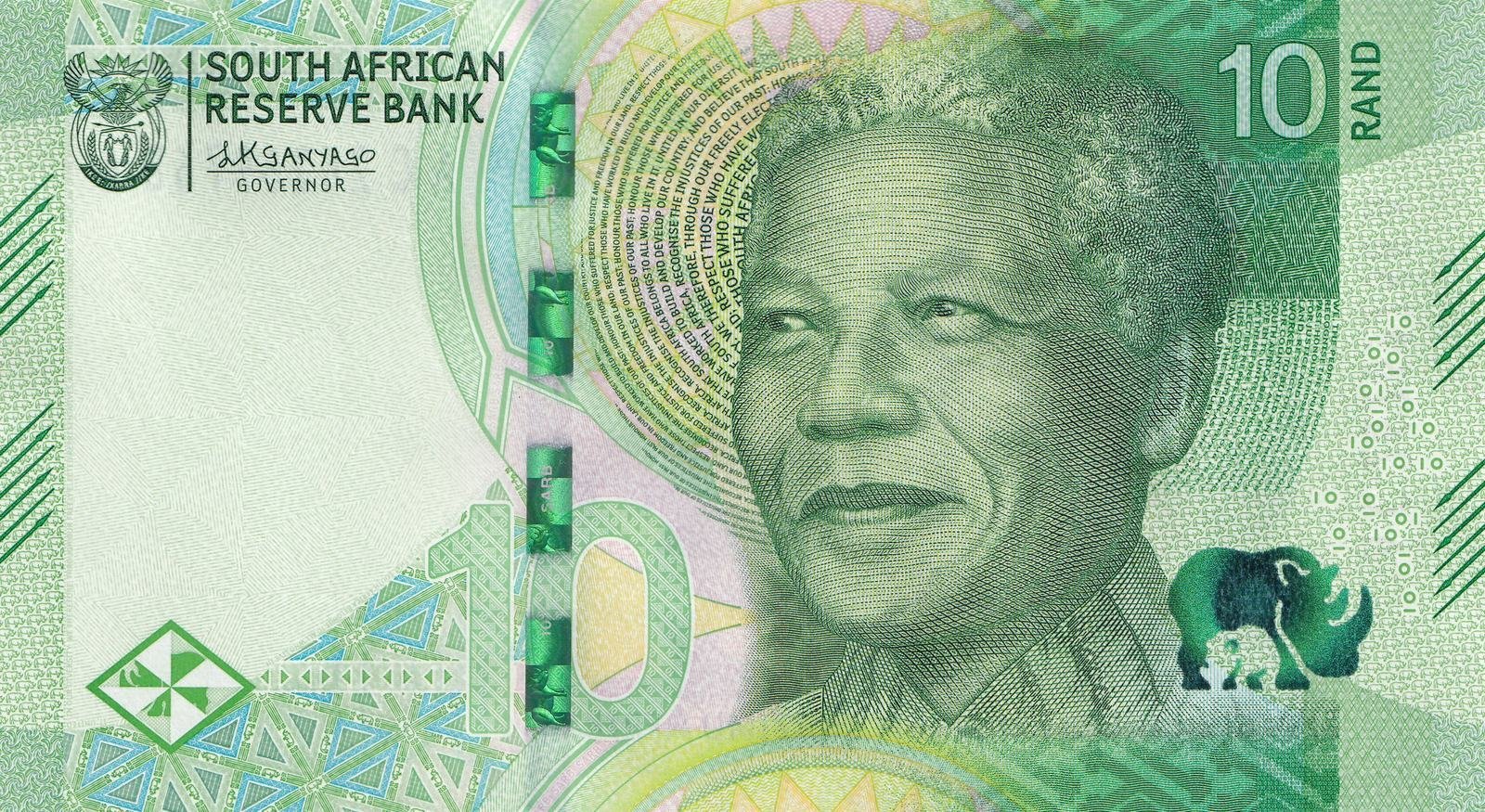
Illustration note: the banknotes shown in this article identify the relevant monetary systems. Their designs, dates and catalogue varieties are not evidence of the distribution or accounting rules described in the text.
One Phrase, Several Different Events
Every banknote has a physical history and an accounting history. They are connected, but they are not the same record.
| Stage | What has changed? | Why it is not automatically “circulation” |
|---|---|---|
| Printed | A physical banknote exists | It may still belong to a printer’s production stock |
| Delivered | The note reaches an issuer or contracted facility | Delivery does not prove issue, public use or accounting recognition |
| Held as issuer stock | The note is available for future demand | It may remain inside a vault |
| Issued to an intermediary | A bank, cash operator or depot receives it | The public may still have no access to it |
| Distributed | The note reaches banks, retailers or ATM operators | Some systems use this as the boundary; others do not |
| Paid to the public | A customer receives the note | Official statistics may have recorded it earlier |
| Returned and recirculated | An existing note begins another journey | No newly printed note is required |
This is why a print-run figure cannot be substituted for a circulation figure. Production, delivery, issue and public distribution measure different stages. Nor does circulation settle the separate question of legal-tender status. A note can remain legal tender without being newly issued, and a note held in a distribution stock may be officially within a circulation measure before anyone spends it.
The Physical Route Is Only Half the Story
The visible route often looks straightforward:
- a printer produces the banknotes;
- the issuer or its operator stores them;
- commercial banks or cash companies collect and move them;
- branches, retailers and ATMs make them available to the public;
- used notes return for authentication, sorting and possible recirculation.
South Africa provides a useful outline. The South African Bank Note Company prints the notes, which are transported to South African Reserve Bank cash centres in Johannesburg, Durban and Cape Town. Those centres are not open to the public. Commercial banks provide notes through branches and ATMs.
That outline tells us who handles the note. It does not identify the accounting boundary. To find that, one must ask narrower questions: When is an intermediary’s account debited? When does ownership pass? Which vault stock appears on whose balance sheet? What does the issuer itself count as outstanding?
The answers below show why a simple arrow from “central bank” to “ATM” is incomplete.
India: Three Physical Movements That Are Not Chest Transactions
India’s currency-chest rules provide the clearest demonstration that physical movement and accounting treatment can separate.
The reviewed RBI Direction treats a currency chest as a reporting and custody point. It requires chest transactions to be reported on the same day by 7 p.m., then debits or credits the operating bank’s current account on the basis of those reports. Only cash held in joint custody and “freely available” for use can be included in a chest balance.
The revealing part is the exclusion list. Three real movements of banknotes must not be reported as currency-chest deposits or withdrawals:
- fresh or reissuable notes received from an RBI office or a printing press;
- soiled-note remittances sent back to the RBI;
- diversions of banknotes from one currency chest to another.
The notes move, sometimes over a considerable distance, while the specified chest transaction does not occur. Conversely, once a qualifying withdrawal is reported, the accounting entry can be made from the report rather than from direct observation of a particular bundle’s journey. The direction is strict enough to impose penal interest for delayed, wrong or non-reporting.
This document explains a settlement mechanism. It does not say that the reporting event transfers legal ownership, so no ownership conclusion should be added to it.
United States: The Books Move While the Cash Stays Put
The Federal Reserve’s Custodial Inventory program presents the reverse case. Participating financial institutions can transfer qualifying currency to the Federal Reserve Banks’ books while the cash remains physically inside the institution’s secured facility.
It is “currency transferred to the Federal Reserve Banks’ books, but physically held by a financial institution within its secured facility.”
Federal Reserve Financial Services
The arrangement changes the accounting position without requiring the banknotes to cross the vault door. Armoured carriers can perform work as subcontractors, but the participating depository institution remains responsible to the Federal Reserve.
The reviewed Federal Reserve material does not provide a general definition of the exact moment at which every US banknote enters circulation. Its value here is narrower and more concrete: it proves that physical custody cannot be used as a substitute for the balance-sheet record.
United Kingdom: Sale Comes Before Circulation
The Bank of England draws an unusually explicit boundary. Its Note Circulation Scheme page begins with a blunt statement: “We do not distribute banknotes.” Four private-sector scheme members perform the wholesale distribution function.
The members buy new notes from the Bank at face value. Yet the Bank does not place the circulation boundary at that purchase. It says banknotes enter circulation when the scheme members distribute them to banks, building societies, ATM operators and large retailers.
In this model, purchase and circulation are consecutive but distinct. A new note can have been sold by the issuer and still be waiting inside the wholesale network.
The same page also recognises local recycling. A retailer or another business may authenticate cash takings and use the notes to refill its own tills or ATMs. Those notes can continue circulating without returning through the central wholesale scheme on every cycle. The route is a loop, not a one-way line.
Australia: Circulation Is a State, Not a Single Moment
Australia shows why current documents matter. The Reserve Bank of Australia implemented its Banknote Distribution Framework on 1 March 2024, replacing the former bilateral Banknote Distribution Agreements. The present Banknote Distribution Terms and Conditions were issued on 6 November 2024 and took effect on 1 December 2024.
Under those terms, circulation is not defined by a single handover. It means banknotes that the Reserve Bank has issued and that have not been cleared to a Reserve Bank Distribution Site. That is a continuing state bounded by issue on one side and clearance on the other.
The underlying sequence still matters. An approved payment occurs before liability, risk and title pass. Title passes when authorised personnel of an approved cash centre operator accept the replenishment receipt and take possession for a participant. On the return journey, clearance combines delivery to a Reserve Bank Distribution Site with sale of the banknotes back to the Reserve Bank.

This is more precise than saying that circulation begins when a cash company collects a consignment. Payment, receipt, possession, title and circulation status are connected, but the terms do not collapse them into one event. Operational details reserved for unpublished procedures cannot safely be inferred from the public conditions.
Euro Area: Issue, Handling and Allocation Are Separate
The euro area separates three ideas that are often treated as synonyms: legal issue, physical handling and accounting allocation.
Under the current consolidation of Decision ECB/2010/29, both the ECB and the national central banks issue euro banknotes. The national central banks put notes into circulation, withdraw them and perform the physical handling. That handling expressly includes euro banknotes legally issued by the ECB.
The total value is then allocated between the Eurosystem central banks using the banknote allocation key. The ECB is assigned 8 per cent, even though it does not physically put euro banknotes into circulation. The difference between each national central bank’s allocated value and the value it actually puts into circulation creates intra-Eurosystem balances.
National percentages are deliberately omitted here because they change when the allocation key is revised. The 8 per cent ECB share is current in the consolidation applicable from 1 January 2026.
The ECB’s statistics add a second layer. Three official datasets can answer three different versions of the question “How many euro banknotes are in circulation?”
| ECB framework | What it measures | Important limitation |
|---|---|---|
| BKN national net circulation | Cumulative banknotes put into circulation since 2002, less cumulative returns | A country’s figure can be negative because banknotes migrate across borders |
| BSI currency in circulation | Currency outside the monetary financial institution sector | Cash held in those institutions’ vaults is excluded |
| ILM financial statements | Eurosystem balance-sheet allocation under the allocation key | Allocation is not a map of where the physical notes are |
None of these statistics identifies whether a particular banknote is physically being used inside the euro area, held abroad or waiting in a private cash stock. The same currency supports several legitimate circulation measures because each serves a different institutional purpose.
Hong Kong: The State Registers the Certificate
Hong Kong shifts the focus again. Banknotes are issued by three authorised commercial banks: Bank of China (Hong Kong) Limited, Standard Chartered Bank (Hong Kong) Limited and The Hongkong and Shanghai Banking Corporation Limited. Under the Legal Tender Notes Issue Ordinance, the Financial Secretary can attach conditions covering design, denominations, production, distribution, quantity, safekeeping and destruction.
The Exchange Fund Ordinance supplies the accounting counterpart. A note-issuing bank pays the face value of the notes to the Exchange Fund and receives, in the prescribed form, a certificate of indebtedness held as cover. The Monetary Authority keeps a register of those certificates and payments.
The statutory register tracks certificates and payments, not individual banknote serial numbers. The cited laws do not establish how the note-issuing banks maintain their own operational records.
The statutes reviewed do not identify one universal instant when a Hong Kong note “enters circulation”, and they do not describe the operational route through cash centres. No exchange rate is stated here because the cited provision leaves the applicable rate to the Financial Secretary.
Switzerland: Gross Movement Is Not Circulation Growth
The Swiss National Bank’s figures show another common trap: gross issuance is not the same as growth in the stock of banknotes.
In 2024 the SNB issued 244.0 million banknotes and received 238.4 million back. The average number in circulation was 514.0 million. The first two are gross flows in opposite directions; the third is an average stock. Subtracting the return flow from the issue flow does not by itself establish the change in year-end banknotes outstanding.
The operating rules encourage recirculation before those flows reach the SNB. Its two bank offices and thirteen agencies accept and supply cash, but customers may not simultaneously offer and demand the same denomination. They are expected to recirculate notes of the required denomination and deliver only their excess.
The reviewed SNB materials do not define a single entry moment or state when ownership changes. They are valuable for a different reason: they place large gross movements beside the stock and make the measurement distinction visible.
Seven Systems, Seven Operational Answers
| System | Operational answer in the reviewed sources | What must not be inferred |
|---|---|---|
| India | A qualifying reported currency-chest withdrawal drives the current-account entry | Several physical transfers are expressly excluded; ownership is not stated |
| United States | No general entry moment found; custodial inventory separates Fed books from physical custody | A vault location does not identify whose books carry the cash |
| United Kingdom | Entry occurs when NCS members distribute notes to specified customer groups | Purchase from the Bank is not yet the stated entry point |
| Australia | Circulation is the state between Reserve Bank issue and clearance back to a distribution site | Payment, possession and title should not be collapsed into one instant |
| Euro area | National issue flows, financial-sector holdings and allocation-key balances produce different measures | An accounting allocation does not locate the physical banknotes |
| Hong Kong | The statutory mechanism records certificates of indebtedness covering authorised banknote issue | The cited laws do not describe the operational cash-centre route |
| Switzerland | No single entry moment found; the SNB publishes gross issue, gross return and circulation stock separately | The difference between gross flows is not automatically stock growth |
The comparison does not produce seven rival definitions of one universal event. Two systems in the reviewed material — the United States and Switzerland — do not define such an event at all. Their evidence establishes other boundaries. That absence is limited to the cited documents; it is not a claim that the issuers have never used a definition elsewhere.
What “In Circulation” Can and Cannot Tell Us
A circulation figure can be entirely correct and still answer a different question from the one a reader has in mind.
- It may describe a stock, not a flow. “Outstanding at month-end” cannot be compared directly with “issued during the year”.
- It may be net rather than gross. Returns can be deducted from issues, hiding the volume of work performed in both directions.
- It may be an accounting allocation. The recorded amount need not equal the cash physically handled by that institution.
- It may exclude private vault holdings. Another official series for the same currency may include them.
- It may be negative for one country. Cross-border migration can produce negative national net issuance inside a shared currency area.
- It does not prove active spending. Notes can be stored, exported, retained as savings or held for future distribution.
- It does not establish fitness or legal status. Those are separate classification and legal questions.
This is the same measurement discipline needed elsewhere in banknote research. A note classified as unfit has reached a sorting decision, not necessarily immediate destruction. A new series prepared for release has passed through a changeover programme, but preparation does not tell us when each note entered an issuer’s circulation measure.
What Collectors Should Take from the Distinction
A banknote’s date, prefix, signature combination or catalogue number rarely reveals its distribution history. Two notes of the same variety may have left issuer stocks at different times, followed different wholesale routes and completed many different circulation cycles.
When a catalogue, central bank or news report supplies a circulation number, check five things before using it:
- Unit: notes, value, bundles or an index?
- Direction: issued, returned, outstanding or net?
- Population: all denominations, one denomination or one series?
- Time basis: a date, an end-of-period stock, an annual flow or an annual average?
- Institutional boundary: central-bank vault, commercial bank, wholesaler, ATM network or public holdings?
If one of those fields is missing, the number may still be useful, but the limitation should travel with it. The safe description is the issuer’s own measurement label, not a broader phrase such as “notes in use” or “notes printed”.
A Banknote Enters More Than One System
The question in the title sounds physical: when did the banknote leave the vault? The official records show a more interesting answer. The note enters a transport system, a custody system, an ownership chain, an accounting framework and eventually a public payment network. Those entries need not occur together.
The United Kingdom names a distribution event. Australia defines a state between issue and clearance. India ties chest activity to reported transactions. The United States permits a book transfer without a physical transfer. The euro area separates legal issue, handling and allocation. Hong Kong records the cover certificate. Switzerland publishes gross movements and stock without declaring one decisive instant.
So when does a banknote actually enter circulation? Only after the word circulation has been defined for the system and the dataset being used. Without that definition, the apparently simple answer may join together events that the issuer keeps separate.
Frequently Asked Questions
When exactly does a banknote enter circulation?
There is no universal moment. Some systems define distribution to specified users as the boundary, some use a reported accounting transaction, and others define circulation as a state between issue and return. The answer must come from the rules governing the particular currency.
Is a banknote in circulation as soon as it is printed?
No. A printed banknote may remain in production stock, be delivered to an issuer, or sit in a vault awaiting demand. Printing, delivery, issue and circulation are separate measurement categories.
Do central banks distribute banknotes directly to the public?
Usually not. Commercial banks, cash operators, wholesale schemes, branches, retailers and ATM networks can stand between the issuer and the public. The exact chain differs by monetary system.
Can the accounting position change without the cash moving?
Yes. The Federal Reserve’s custodial inventory arrangement allows currency to move onto the Federal Reserve Banks’ books while remaining physically inside a participating financial institution’s secured facility.
Does a large number of banknotes issued mean circulation grew by the same amount?
No. Returned banknotes, recirculation, changes in private vault holdings and the definition of the reported stock all matter. Gross issues and the change in outstanding circulation are not interchangeable.
Can a banknote circulate without returning to the central bank?
Yes. Local recycling can keep authenticated notes moving between retailers, tills and ATMs without a return through the central wholesale system on every cycle.
Is being in circulation the same as being legal tender?
No. Circulation is an operational or statistical classification; legal tender is a legal status. A note can remain legal tender even when it is no longer newly issued, and the rules vary between jurisdictions.
Selected References
The institutional descriptions above follow the documents listed below. Where a source did not define ownership, settlement or a universal circulation moment, the article does not extend its claim beyond the material reviewed.
- Reserve Bank of India — Master Direction on penal provisions for currency-chest reporting
- Federal Reserve Financial Services — Currency Recirculation Policy fact sheet
- Bank of England — Note Circulation Scheme
- Reserve Bank of Australia — About the Banknote Distribution Framework
- Reserve Bank of Australia — Banknote Distribution Terms and Conditions
- Swiss National Bank — Life cycle
- Swiss National Bank — Questions and answers on banknotes
- EUR-Lex — Consolidated Decision ECB/2010/29 on the issue of euro banknotes
- European Central Bank — Banknotes and coins circulation data and methodology
- Hong Kong e-Legislation — Legal Tender Notes Issue Ordinance (Cap. 65)
- Hong Kong e-Legislation — Exchange Fund Ordinance (Cap. 66)
- South African Reserve Bank — Banknotes and coin production and distribution
About the Author
Audrius is the founder and curator of WorldBanknotes.eu, a specialised catalogue and shop for collectible banknotes from around the world, and a long-time collector and researcher of paper money. His work focuses on banknote identification, catalogue structure, printing, design and the historical and institutional context behind individual issues.
Continue Exploring
Follow the preceding stages in How Is a Banknote Created?, separate quantity labels in Banknote Print Runs Explained, or continue through recirculation and removal in When Is a Banknote Too Worn to Circulate?. For the legal endpoint, see When Banknotes Stop Being Legal Tender.
You can also browse the WorldBanknotes.eu catalogue to compare banknotes by country, denomination, date, issuer and catalogue reference.