
When Is a Banknote Too Worn to Circulate? Fitness, Sorting and Destruction
A banknote can remain genuine, retain its legal value and still be removed from circulation. The decision may follow from a tear measured in millimetres, a hole measured in square millimetres, a loss of stiffness that only a trained person notices, or a machine reading that depends on the denomination and series.
That decision belongs to the least visible part of the cash cycle. Notes return from shops, ATMs and bank branches, pass through authentication and fitness checks, and are divided between those that can circulate again and those that must leave the working stock. Some are destroyed inside the sorting machine. Others travel back to the issuing authority. The resulting fragments may be recycled, composted, burned for energy or sent to an ordinary waste incinerator.
This guide follows that process through official documents from ten monetary systems. The evidence is unusually uneven: the euro area publishes detailed machine thresholds, Australia describes both public exchange rules and a scoring regime, and several central banks disclose what happens after shredding. Lifespan and destruction figures are much harder to compare. The same familiar words often sit above different populations, units and methods.
“Unfit” is an operating decision. It is not another word for counterfeit, demonetised, worthless or low-grade.
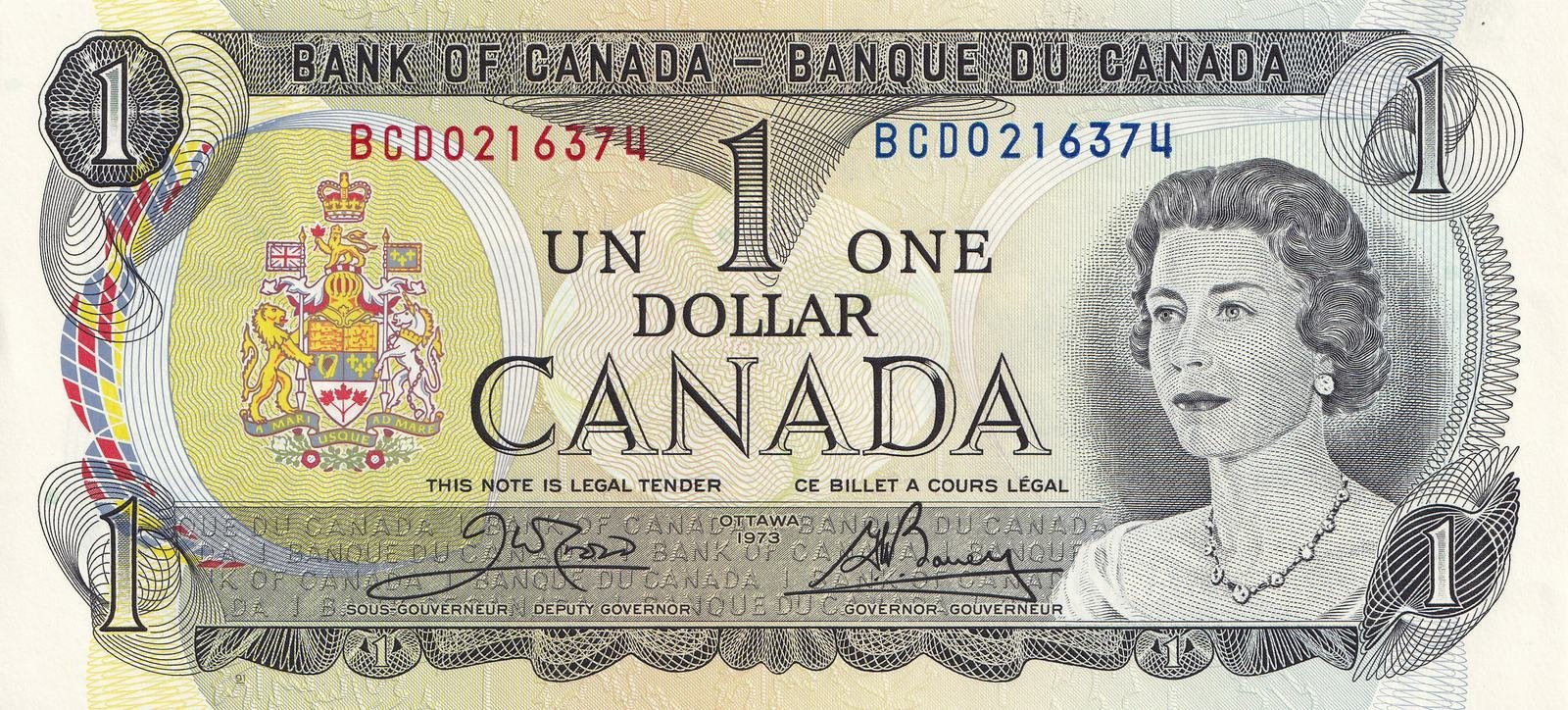

Canada, 1 dollar, 1973, paper, and Canada, 5 dollars, 2013, polymer. These uncirculated scans illustrate substrate only. They do not document wear, lifespan, sorting or disposal; the WorldBanknotes.eu catalogue contains no circulated example suitable for that purpose.
Table of Contents
Four Different Questions About the Same Banknote
Four classifications are easily collapsed into one. They should remain separate.
| Question | What decides it? | What it does not decide |
|---|---|---|
| Is the note legally valid? | Law and the issuing authority’s withdrawal decisions | Whether it is genuine, attractive or fit for another circulation cycle |
| Is the note genuine? | Authentication | Whether its physical condition is acceptable |
| What is its collector grade? | A market grading convention | Whether a cash-processing system will recirculate it |
| Is it fit? | An operational standard for a currency, denomination or series | Its legal status or collector value |
The European Central Bank’s machine categories make the separation unusually explicit. A note in category 4b has been identified as genuine and unfit. It cannot be recirculated by the cash handler, is returned to a national central bank and is credited to the account holder. The rule says nothing about collector grade, and it does not turn the note into a counterfeit.
Australia states the other half in a public instruction for damaged notes. Bank staff are told to exchange an unfit note for full face value when it remains within the guide’s accepted damage band. A note with less than 20% of its surface missing is classed as unfit; between 20% and 80% missing, it becomes incomplete and is valued according to the remaining area. These are Australian exchange rules, not universal thresholds.
Legal withdrawal is a different event again. It may happen while many notes remain physically clean, as described in When a Banknote Stops Being Legal Tender. Collector condition has its own vocabulary and evidence, covered in Banknote Grading Explained. Neither article supplies a substitute for an issuer’s fitness standard.
How a Fitness Standard Turns Damage into a Decision
A person and a machine may be asked to inspect the same kinds of damage without being given the same instructions. The ECB’s manual standard lists twelve criteria for trained staff in descriptive language. Dirt must be visually noticeable; a note can show a marked loss of stiffness; no measuring tools are required. Its automated standard expresses several of those defects numerically.
| Defect | Published automated threshold |
|---|---|
| Stain | At least 9 × 9 mm in an unprinted area or 15 × 15 mm in a printed area |
| Tear | Greater than 4 × 8 mm vertically, 4 × 15 mm horizontally or 4 × 18 mm diagonally |
| Hole | More than 10 mm² |
| Reduced size | Length reduced by at least 6 mm or width by at least 5 mm |
| Repair | Tape covering more than 10 × 40 mm and thicker than 50 μm |
| Folded corner | More than 130 mm², with the shorter edge longer than 10 mm |
The numerical appearance should not be mistaken for a universal measurement system. Graffiti, crumples and limpness are part of the manual inspection, yet the published automated standard imposes no mandatory detection requirement for them. A defect that staff must notice can therefore sit outside a compulsory machine test.
Even soil is not governed by one fixed number. The permitted increase in optical density varies from 0.04 to 0.08 according to denomination and series. For the €200 note it is 0.04 in the first series and 0.07 in the Europa series; the €5 moves in the opposite direction, from 0.06 to 0.04. The same measured increase can fall on different sides of the published limit depending on which note is being tested.
The ECB also permits a maximum 5% misclassification tolerance when machines are tested for fitness checking. This is a ceiling in the standard, not an observed rate in circulation and not evidence that 5% of all euro banknotes are wrongly returned. National central banks may impose stricter standards when local circulation quality justifies them.
Who Sorts the Banknotes?
The issuing authority does not necessarily see every note before it is recirculated. The actor and the point of decision differ by system.
| System | Documented route |
|---|---|
| United States | Reserve Banks verify deposits note by note; counterfeit suspects are identified, unfit notes destroyed and fit notes repackaged |
| United Kingdom | Members of the Note Circulation Scheme sort notes on high-speed equipment under Bank of England standards |
| Australia | Approved cash-in-transit companies verify, count and fitness-sort notes; unfit stock returns to the Reserve Bank |
| Euro area | Cash handlers use tested machines or trained staff under the ECB framework; national central banks receive the rejected notes |
| India | A 2002 RBI notice describes central-bank systems that authenticate, sort, shred and briquette notes in one machine |
Published capacity is not published output. The Bank of England says the machines used by its scheme can process up to 2,000 notes a minute. The Reserve Bank of India said in 2002 that its Currency Verification and Processing Systems could process 50,000 to 60,000 pieces an hour. Both figures describe machinery; neither says how many notes were actually processed or destroyed in a period.
The British system also records a gap. Retailers may refill their own ATMs and self-service tills directly from takings. The Bank calls this local recycling and notes that the cash does not return to the Note Circulation Scheme for authentication. A sponsored voluntary code addresses that route, but the notes have still bypassed the main wholesale check.
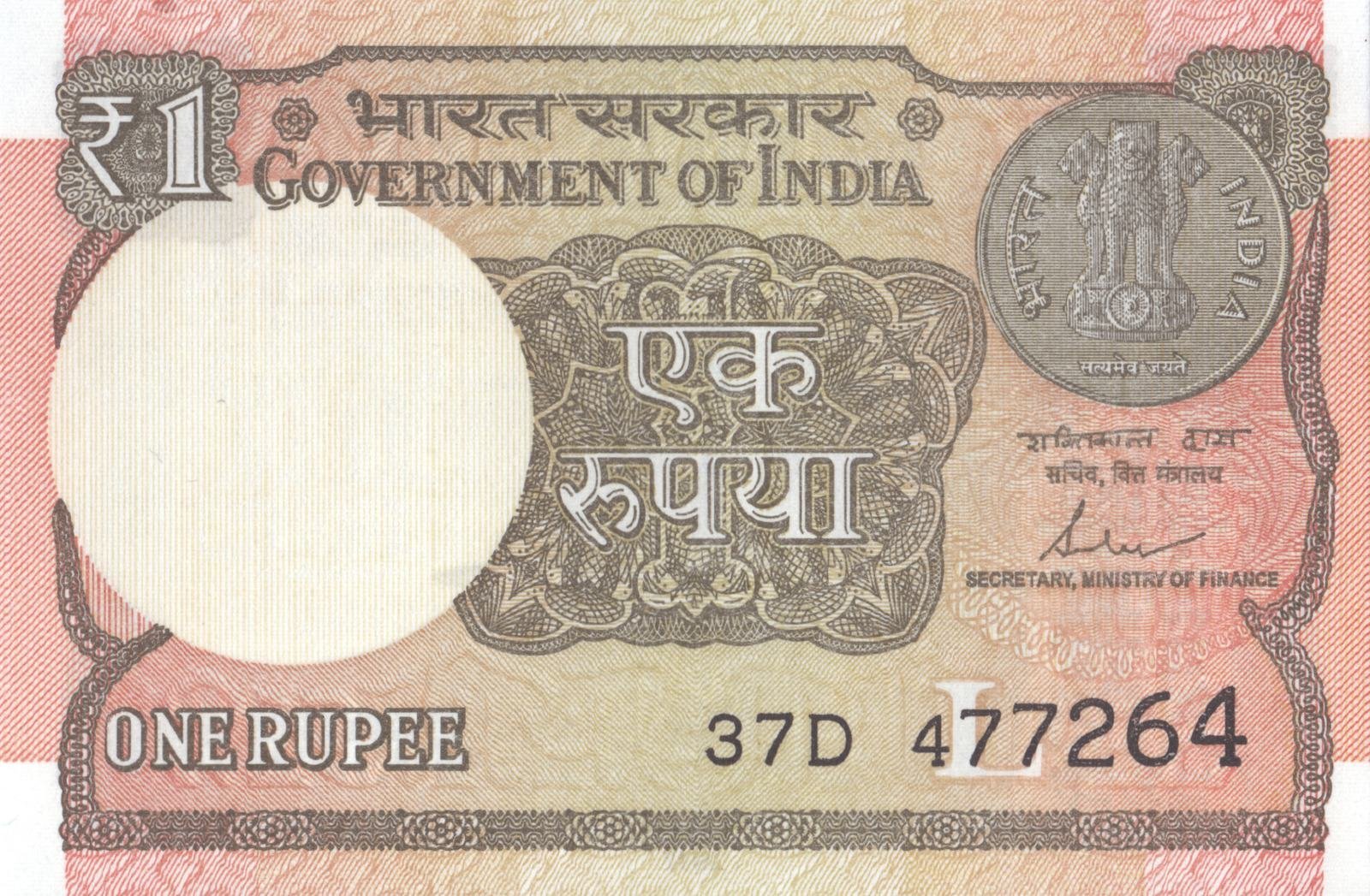
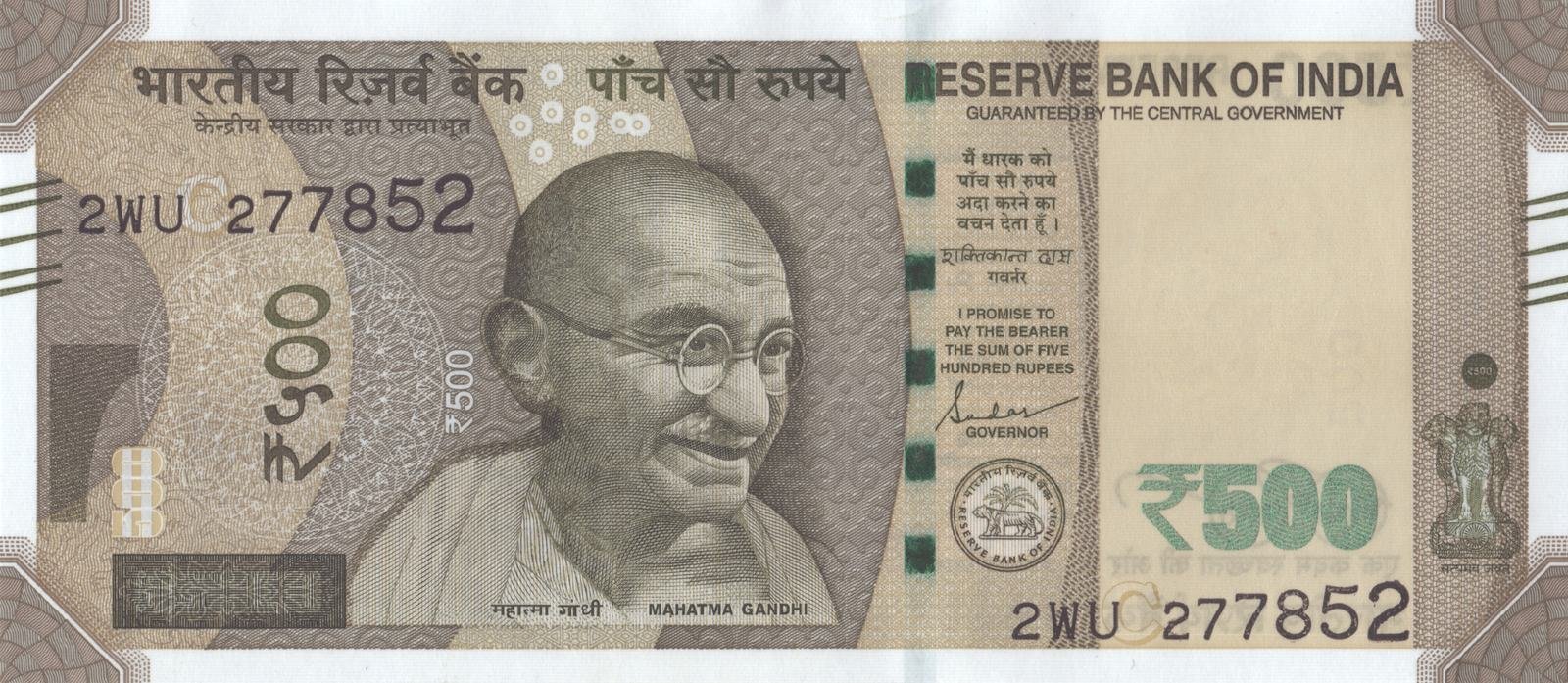
India, 1 rupee, 2017, and India, 500 rupees, 2022. The pair shows two denominations from one system. It does not document the 2002 machinery, handling frequency or lifespan of either note.
What Happens After a Banknote Fails?
An unfit result determines what the sorter may do next. In Australia, approved cash-in-transit companies package poor-quality notes for return to the Reserve Bank, which destroys them and sends fit stock back out as demand requires. In the United States, destruction occurs during the Reserve Bank’s own piece-verification process. In Switzerland, authentication and destruction are physically joined: the SNB says its sorting machines contain an integrated shredder that destroys genuine notes found unfit in the same process.
India described the same basic architecture much earlier. Its 2002 Clean Note Policy notice says soiled notes were shredded and briquetted online by processing systems at RBI offices. The source is useful for the machinery, but not as evidence of India’s current thresholds. It addressed banks, notes received over their counters and the position announced at that time.
Damage can also push a note into a different legal or security process. The South African Reserve Bank considers dye-stained notes from approved cash-protection devices to be proceeds of crime and says they cannot be exchanged. The Swiss National Bank sends notes stained by the improper opening of a security cash box to Bern for verification. The physical symptom is similar; the institutional treatment is not. Neither rule can be generalised beyond its jurisdiction.
Mutilation introduces another boundary. South Africa considers claims case by case and states that payment is not obligatory. Australia publishes surface-area bands for assessment. These rules concern redemption or payment for damaged notes; they are not measurements of ordinary circulation fitness. The distinction between an unfit flow and a recorded act of destruction is examined separately in Banknote Print Runs Explained.
Shredding Does Not Always Mean Recycling
Shredding describes a physical step, not the final destination. Official accounts show at least four different routes, and the substrate alone does not reveal which one applies.
| System | Route stated in the reviewed source | What is not stated |
|---|---|---|
| United Kingdom | Paper becomes soil improver through composting or goes to energy recovery; polymer becomes pellets for new plastic items | No share for each paper route on the scheme page |
| Canada | Polymer is shredded and sent to a company making products from recycled plastic | The page reviewed does not state what happens to Canadian paper notes |
| Japan | Some shreds become toilet paper and other items; the remainder is incinerated as general waste | No percentage for either route |
| Switzerland | Compacted fragments go to a public waste incinerator | No recycling stage is described on the life-cycle page |
The Canadian wording needs particular care. The Bank says the recycling company manufactures products made from 100% recycled plastic. The percentage describes the company’s products; it is not a statement that each product consists entirely of shredded banknotes. The same page says polymer notes, unlike paper notes in Canada, are recycled. That does not conflict with the Bank of England’s composting of British paper notes. Each authority is describing its own system.
Switzerland is the only case here that attaches an environmental quantity to the disposal stage. The SNB’s commissioned assessment estimates about 1,900 tonnes of CO₂ equivalent a year for the life cycle of Swiss banknotes: roughly 1,550 from manufacture, 250 from SNB logistics and 100 from disposal. The number describes that assessed system, not the impact of destroying one note.
Material choice still matters, but it does not dictate one global waste route. The differences between cotton paper, polymer and hybrid construction are covered in Paper, Polymer and Hybrid Banknotes. Here the relevant lesson is narrower: the destination must be sourced to the issuer and period, not inferred from the substrate.
How Long Does a Banknote Last?
Central banks often publish lifespan figures because they are easy to understand. Their apparent simplicity is deceptive. Among the four official lifespan sets examined here, none provides a complete combination of model, measured population, period and denominator that would allow an independent reader to reproduce or compare the result.
| Issuer | Published result | Definition limit |
|---|---|---|
| Federal Reserve, May 2025 estimates | $1: 7.2 years; $5: 5.8; $10: 5.7; $20: 11.1; $50: 14.9; $100: 24.0 | The method was updated in 2025 but is not described on the page |
| Bank of Canada | $5: about 8 years; $10: about 11; $20: about 16; $50 and $100: at least 16 | Model outputs; the two highest denominations are lower bounds, and no observation period is given |
| Bank of Japan | ¥10,000: 4–5 years; ¥5,000 and ¥1,000: 1–2 | No method, denominator, observation period or publication date on the FAQ |
| Swiss National Bank | CHF 10, 20 and 50: 3–6 years; higher denominations last longer | No numerical result for CHF 100, 200 or 1,000 and no method or observation period |
Even within one table, the pattern need not rise neatly with denomination. The Federal Reserve’s $1 estimate is longer than its $5 and $10 estimates. The explanation offered for the long life of the $100 concerns behaviour rather than construction: high-value notes are often stored and therefore pass between users less frequently. The Bank of Japan and the SNB also connect shorter life with more frequent use.
The Canadian table contains two kinds of statement. “Approximately 16 years” for the $20 is an estimate; “at least 16 years” for the $50 and $100 is a lower bound. Ranking those entries as though they were measured on the same scale would manufacture precision that the Bank does not provide.
The Bank of Canada also records a revision in its own expectations. Its life-cycle assessment conservatively assumed polymer would last 2.5 times as long as paper; subsequent research and experience indicated about four times as long. That is valuable evidence of learning after issue, but it also shows why a lifespan number cannot be detached from the model and date that produced it.
How to Read Banknote Destruction Statistics
The broader measurement taxonomy is set out in Banknote Print Runs Explained. For this comparison, each destruction total retains three labels: the unit, the period and the population included. The strongest datasets are three official destruction series with those elements stated.
| System and period | Published measure | Population included |
|---|---|---|
| Switzerland, 2025 | 27.6 million notes; nominal value CHF 2.0 billion | Damaged or recalled banknotes |
| Bank of England, 2024/25 | £917 million by face value, with a denomination breakdown | Notes destroyed because they had become unfit for use |
| Deutsche Bundesbank, 1992–1996 | Annual count in millions and annual value in DM billions | Notes no longer fit for circulation or called in, combined |
The Bank of England’s denomination breakdown permits one careful calculation. Its rounded 2024/25 values — £44 million in £5 notes, £92 million in £10, £348 million in £20 and £432 million in £50 — correspond to approximately 44 million notes, calculated from the Bank’s rounded denomination-level values. This is not a count reported by the Bank, and the published inputs are rounded to whole millions of pounds. The same operation cannot be applied to Australia’s 2022/23 aggregate of A$3.7 billion worth of unfit notes because the RBA does not break that figure down by denomination.
The British time series also carries the imprint of a changeover. In 2020/21 the Bank recorded £27,478 million destroyed, of which £26,932 million was in £20 notes. By 2024/25 the total was £917 million. The figures show a large episode in the destruction stream; they should not be converted into a survival estimate for collectible notes.
| Deutsche Bundesbank | 1992 | 1993 | 1994 | 1995 | 1996 |
|---|---|---|---|---|---|
| Number destroyed, million | 1,697 | 914 | 516 | 739 | 659 |
| Face value, DM billion | 97.5 | 120.0 | 28.2 | 50.6 | 27.7 |
The German series is the clearest warning against reading destruction as wear. From 1992 to 1993, the number of notes fell from 1,697 million to 914 million while their value rose from DM 97.5 billion to DM 120.0 billion. The Bundesbank explains the later decline mainly through a falling share of called-in notes, especially DM 500 and DM 1,000. Routine rejection and the withdrawal of older issues were combined in a total the Bank did not split.
These three systems should not be ranked by raw magnitude. They use different currencies, periods and populations; the German series is three decades older and includes an expressly mixed cause. What can be compared is the discipline of reading the label before the number.
Fitness Is Also a Policy Choice
A threshold does more than describe a damaged object. It distributes cost. A stricter standard improves the average appearance and machine performance of circulating cash, but removes more usable notes and demands more replacement production. A looser standard extends service life while allowing greater variation in quality.
Australia makes that choice visible through incentives. Its Note Quality Reward Scheme, introduced in 2006, allows quality to be scored quantitatively. The Reserve Bank samples notes classified as fit at cash depots and bases payments on the quality score of the worst 15% sampled. In 2022/23 it paid commercial banks more than A$14 million under a framework capped at A$15 million a year.
The mechanism also penalises the opposite error. A “fit-in-unfit” fee applies when fit notes are wrongly classified as unfit and sent back for destruction. A revised standard agreed in 2021 was intended partly to avoid destroying good-quality banknotes. Fitness was not treated as a permanent natural property; the minimum could be adjusted when the operating consequences changed.
The public Australian sorting guide and the wholesale reward scheme must not be merged. The guide’s 20% and 80% boundaries govern exchange and assessment of damaged notes at a counter. The NQRS governs machine sorting in the wholesale network, and its scoring bands are not published in the documents reviewed here. One currency can therefore apply different numerical systems to different decisions.
What Collectors Can Learn from the Cash Cycle
A collector normally meets the note after the operating system has finished with it. That can make the surviving object look more informative than it is. A crease, tear or repair can affect collector grade, but it does not reveal which machine saw the note, which threshold applied at the time or whether the note ever passed through an issuer’s sorting network.
- Identify the decision first. Authentication, legal validity, collector grade, fitness and redemption answer different questions.
- Keep the currency, denomination and series attached. Even one automated standard can set different limits for different notes.
- Read a lifespan figure as a model or estimate unless the issuer says otherwise. Years alone do not make two figures comparable.
- Read a destruction figure with its unit and population. Number, face value, unfit notes and recalled notes cannot be silently substituted for one another.
- Do not treat an uncirculated catalogue scan as process evidence. It can show substrate, denomination and design, not wear, sorting or destruction.
The separate question of surviving collector populations belongs to Banknote Print Runs Explained. No survival estimate is attempted here.
A worn banknote does not carry its administrative history on its surface. The decisive evidence lies in the rule, the machine, the reporting unit and the route the note actually followed.
Frequently Asked Questions
What is an unfit banknote?
An unfit banknote is a note judged unsuitable for another circulation cycle under the relevant issuer or cash-processing standard. The decision may be based on dirt, tears, holes, missing area, repairs, loss of stiffness or other defects. The exact criteria can vary by currency, denomination, series and whether a person or machine performs the check.
Can an unfit banknote still be genuine?
Yes. Authenticity and fitness are separate classifications. The European Central Bank explicitly provides for banknotes that are identified as genuine and unfit: cash handlers may not recirculate them, but that does not make them counterfeit.
Does unfit mean that a banknote is no longer legal tender?
No. Fitness concerns whether a note should be recirculated, while legal-tender status depends on law and withdrawal decisions. Australia’s public guide even instructs banks to exchange qualifying unfit notes for full face value. Withdrawal and later redemption are separate subjects.
How do machines decide whether a banknote is too worn?
Machines measure characteristics defined by the relevant standard, which may include optical density, tears, holes, reduced dimensions, tape repairs and folded corners. Not every human criterion has a mandatory machine equivalent, and published thresholds can differ by denomination and series.
What happens to an unfit banknote?
The route depends on the system. It may be returned to the central bank, destroyed during sorting or held for a separate assessment. After shredding, the material may be recycled, composted, used for energy recovery or incinerated as waste. No single route applies worldwide.
How long does a banknote remain in circulation?
There is no universal lifespan. Issuers publish estimates or model outputs that vary by denomination and use. In the official sources compared here, the model, measured population, period and denominator are not all disclosed together, so international lifespan figures should not be ranked as equivalent observations.
Are all returned banknotes destroyed?
No. Returned notes can include fit banknotes that are repackaged or stored for later issue, surplus stock and notes requiring separate assessment. Destruction follows the rules of the particular system and may occur during sorting or only after unfit notes are returned to the issuing authority.
Selected References
This guide relies on issuing-authority documents and official statistics. A missing detail means it was not stated in the specific documents reviewed for this comparison, not that the authority has never published it elsewhere. Capacities, estimates, observed quantities and calculations are labelled separately.
- European Central Bank — Decision ECB/2010/14 on authenticity, fitness checking and recirculation, for the operational definition, category 4b and governance of fitness standards.
- European Central Bank — Minimum standards for automated fitness checking, for measured thresholds, denomination and series differences, and the permitted machine tolerance.
- Federal Reserve Board — lifespan of United States paper money, for the May 2025 estimates and methodology-change notice, and Currency and Coin Services, for note-by-note processing.
- Bank of England — Note Circulation Scheme, for sorting roles, machine capacity, local recycling and disposal routes, and Banknote statistics, for destroyed value by denomination and financial year.
- Reserve Bank of Australia — distribution and destruction, for the wholesale route; Banknote sorting guide (PDF), for public exchange bands; and Box A: Current Arrangements for Quality Sorting, for the scoring and incentive framework.
- Reserve Bank of Australia — Annual Report 2023, Banknotes, for the 2022/23 unfit-note value and quality-sorting payments.
- Reserve Bank of India — Clean Note Policy, 5 December 2002, used only for the historical processing architecture and bounded counter instruction.
- Bank of Japan — banknote lifespan and disposal FAQ, for denomination ranges, handling explanation and the stated recycling/incineration split.
- Bank of Canada — The Lifespan of a Bank Note, for modelled values, the lower bound, revised durability assumption and Canadian polymer route.
- Swiss National Bank — Life cycle, for integrated destruction, 2025 quantities, lifespan wording and disposal footprint.
- South African Reserve Bank — Use of Banknotes, for the jurisdiction-specific treatment of mutilated and dye-stained notes.
- Deutsche Bundesbank — Annual Report 1996, printed page 125 (PDF), for the 1992–1996 count, value and combined unfit-or-called-in population.
About the Author
Audrius is the founder and curator of WorldBanknotes.eu, a specialised catalogue and shop for collectible banknotes from around the world, and a long-time collector and researcher of paper money. His work focuses on banknote identification, catalogue structure, printing, design and the historical and institutional context behind individual issues.
Continue Through the Banknote Life Cycle
Start with How Is a Banknote Created?, then follow the operational introduction in How New Banknotes Replace Old Ones. For the quantities recorded during production, circulation and withdrawal, continue to Banknote Print Runs Explained. Legal withdrawal and later exchange are covered separately in When a Banknote Stops Being Legal Tender.
You can also browse the WorldBanknotes.eu catalogue by country, currency, issuing authority or printer.