
Afghan Afghani
A currency shaped by endurance, the Afghan afghani reflects a nation where continuity is not inherited, but repeatedly rebuilt.
Quick Facts
Country: Afghanistan
Code: AFN
Symbol: ؋
System: Decimal (1 Afghani = 100 Pul)
Status: In circulation
Issuer: Da Afghanistan Bank
The Story of the Afghan Afghani
The Afghan afghani, the official currency of Afghanistan, is not the result of uninterrupted continuity, but of repeated reconstruction. It belongs to a monetary system shaped by rupture, reform, and persistence — where stability has often had to be re-established rather than maintained.
Its name is drawn directly from the identity of the Afghan people, embedding value into language and belonging. Rather than adopting an external monetary tradition, the afghani defines itself from within, turning currency into an extension of national identity.
Across its history, the afghani has existed within shifting political and institutional realities. It did not evolve through gradual refinement alone, but through cycles of disruption and reordering. Periods of fragmentation introduced parallel systems and changing authorities, while later reforms sought to consolidate and restore coherence.
What distinguishes the afghani is this layered character. Earlier monetary structures were not simply replaced, but absorbed into successive systems. The result is not a single linear evolution, but a stratified currency — one that carries the imprint of multiple eras within a single framework.
Design & Symbolism
Afghan banknotes communicate through architecture, symmetry, and institutional presence — a visual language where stability is constructed through form.
Mosques, palaces, and monumental structures dominate the compositions, rendered with geometric precision and framed by intricate ornamentation. These are not merely representations of place, but enduring cultural anchors — symbols of continuity that outlast political change.
National emblems and formal inscriptions reinforce authority, while dense background patterns introduce rhythm and visual depth. Symmetry plays a defining role, giving each banknote a composed, almost ceremonial stillness.
Security features are embedded within this visual system rather than added to it. Raised intaglio printing creates tactile hierarchy, allowing key elements to be felt as well as seen. Watermarks emerge under light as internal confirmations of authenticity, often echoing the central composition. Microprinting and fine line structures extend this precision into microscopic detail, strengthening both protection and visual complexity.
Together, these elements form unified compositions where symbolism and security operate as one — not separate layers, but a single, integrated design language.
For collectors
For collectors, the Afghan afghani offers a field defined by transition, variation, and historical depth.
Different issues reflect changing authorities, production conditions, and visual approaches, creating a broad and nuanced collecting landscape within one currency system. Variations in signatures, print execution, and stylistic detail reveal layers that extend beyond standard catalog classification.
Transitional and earlier issues often carry particular significance, closely tied to moments of political or monetary reorganization. Later banknotes, by contrast, demonstrate increasing standardization and technical refinement, offering a different dimension of collectible interest.
What makes the afghani especially compelling is its narrative presence. It is not a currency shaped by uninterrupted stability, but by adaptation — where each banknote becomes part of a wider story of reconstruction and endurance.
Each note stands as a fragment of a larger monetary history still visible in paper, print, and form — explore the Afghan afghani banknotes collection below.
Explore the Afghan Afghani Banknotes Collection
-
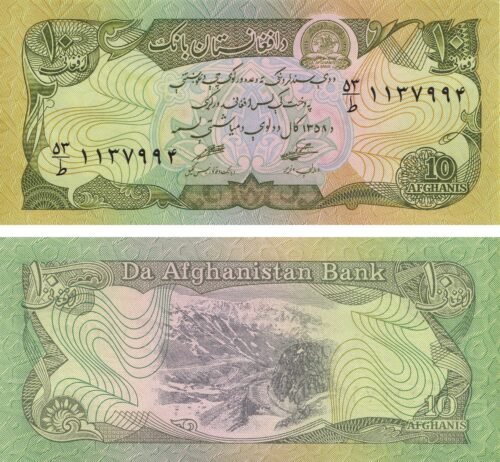
Afghanistan 10 Afghanis 1979, P-55, UNC
2,49 € -
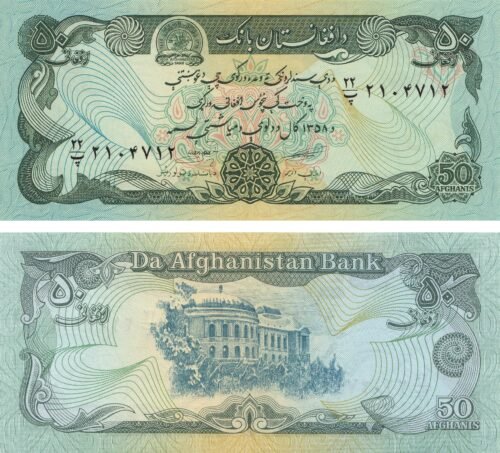
Afghanistan 50 Afghanis 1979, P-57a(2), UNC
1,99 € -
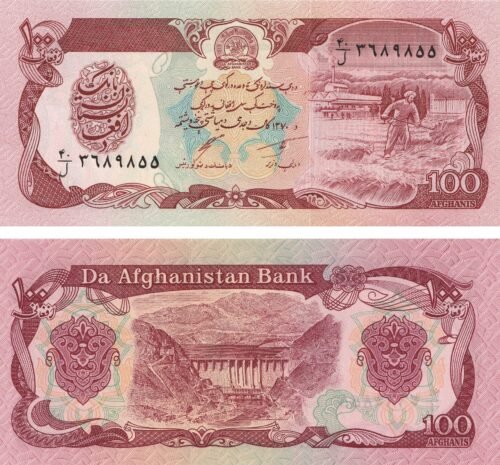
Afghanistan 100 Afghanis 1991, P-58c, UNC
1,49 € -
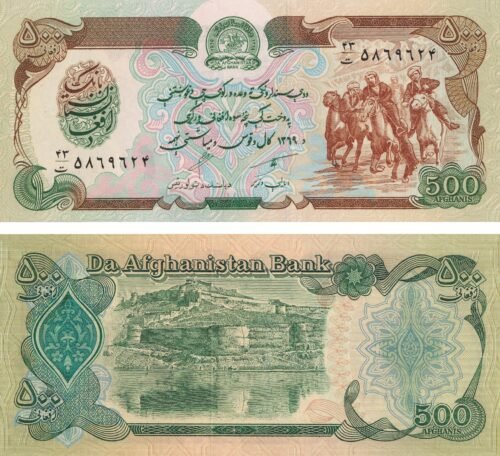
Afghanistan 500 Afghanis 1990, P-60b, UNC
1,49 € -
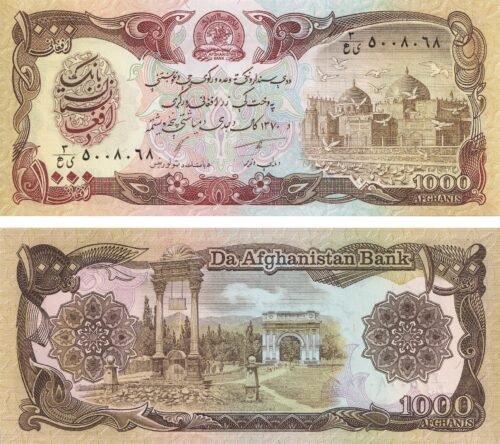
Afghanistan 1000 Afghanis 1991, P-61c, UNC
1,49 € -
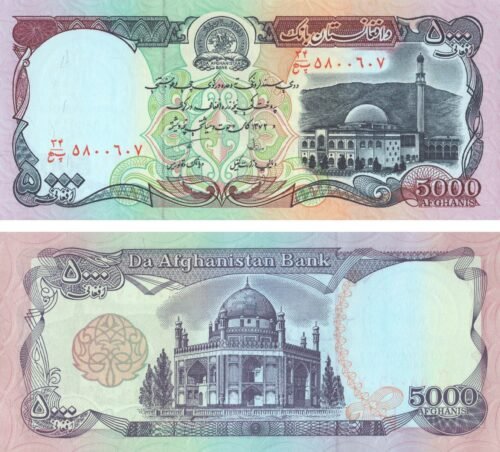
Afghanistan 5000 Afghanis 1993, P-62, UNC
3,99 € -
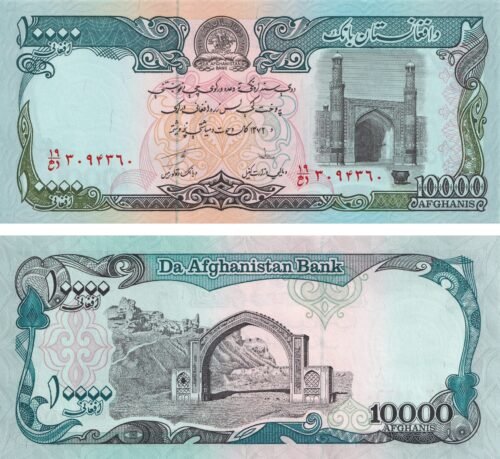
Afghanistan 10000 Afghanis 1993, P-63a, UNC
2,29 € -
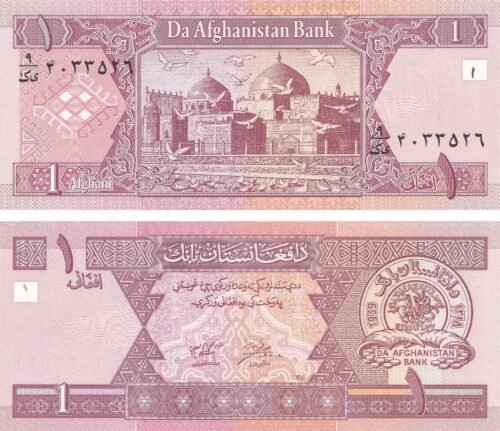
Afghanistan 1 Afghani 2002, P-64, UNC
0,99 € -
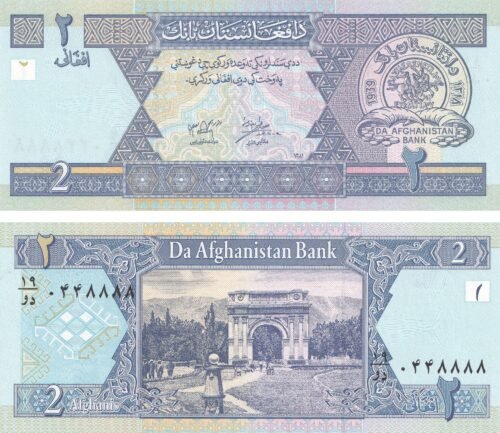
Afghanistan 2 Afghanis 2002, P-65, UNC
1,49 € -
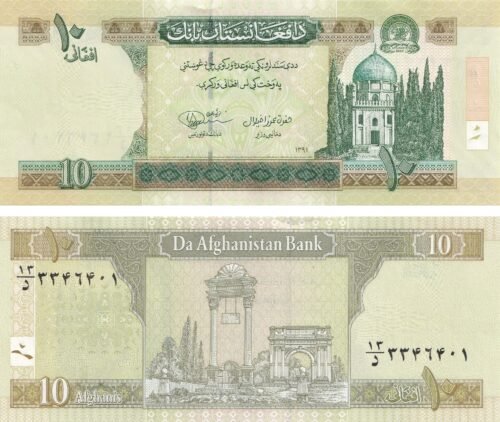
Afghanistan 10 Afghanis 2012, P-67Ab, UNC
1,99 € -
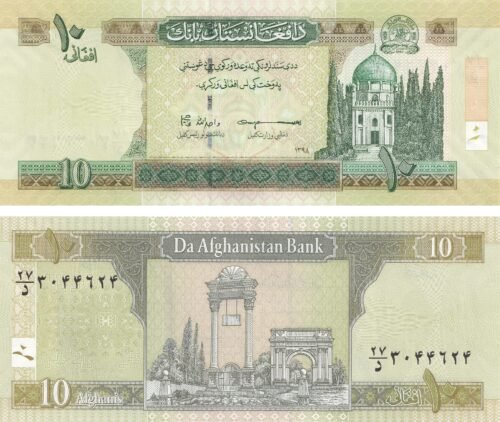
Afghanistan 10 Afghanis 2019, P-67A, UNC
1,99 € -
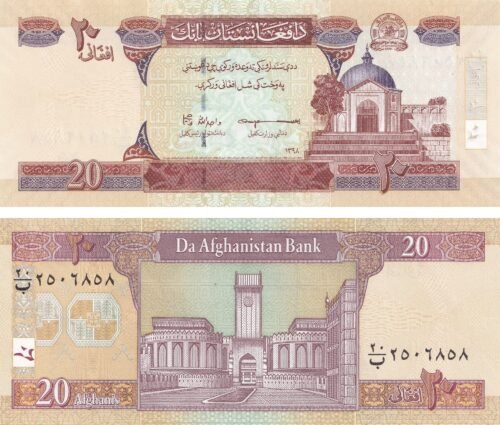
Afghanistan 20 Afghanis 2019, P-68, UNC
2,99 €