
Bhutanese Ngultrum
The Bhutanese ngultrum reflects a monetary system shaped by monarchy, spiritual tradition and controlled modernization within a Himalayan state.
Quick Facts
Country: Bhutan
Code: BTN
Symbol: Nu.
System: Decimal (1 Ngultrum = 100 Chhetrum)
Status: In circulation
The Story of the Bhutanese Ngultrum
The Bhutanese ngultrum was introduced in 1974, marking a formal transition from earlier systems that included barter, regional coinage and the Indian rupee. Its creation aligned Bhutan’s monetary identity with its broader state-building process under the Wangchuck monarchy.
Pegged to the Indian rupee at a fixed 1:1 rate, the ngultrum operates within a stable monetary framework that supports Bhutan’s gradual economic development while maintaining strong regional ties.
Over time, the currency has evolved through controlled modernization rather than rapid reform, incorporating new materials and security features while preserving a consistent visual and institutional identity.
Recent developments include the introduction of hybrid-substrate banknotes designed to improve durability in Bhutan’s climatic conditions, alongside commemorative issues marking key royal events such as coronations and national milestones.
Design & Symbolism
Bhutanese banknotes are defined by a clear structural identity centered on monarchy and religious architecture. Portraits of the Wangchuck kings anchor the obverse, establishing continuity and state authority.
Architectural elements play a central role, particularly dzongs—fortress-monasteries that function as both administrative and spiritual centers. Notable examples include Punakha Dzong, frequently depicted on higher denominations.
Symbolic elements such as the Druk (Thunder Dragon) reinforce national identity, while traditional patterns derived from textiles and religious art provide a consistent ornamental framework.
Modern issues incorporate advanced security features, including the i-Saffire™ security thread, watermark portraits and refined printing techniques, combining durability with controlled visual complexity.
For collectors
For collectors, the Bhutanese ngultrum offers a focused and distinctive collecting field defined by continuity, monarchy and limited but meaningful innovation.
Royal commemorative issues—particularly those associated with coronation and royal events—form key highlights, valued for their symbolic significance and limited circulation.
The transition toward hybrid-substrate banknotes provides an additional layer of interest, marking Bhutan’s gradual adoption of modern banknote technology without abandoning its traditional design structure.
For collectors, the ngultrum stands out as a currency where stability, symbolism and controlled evolution define its long-term appeal.
Monarchy, tradition and controlled modernization shape the identity of the ngultrum within Bhutan’s monetary system.
Explore the Bhutanese Ngultrum Banknotes Collection
-
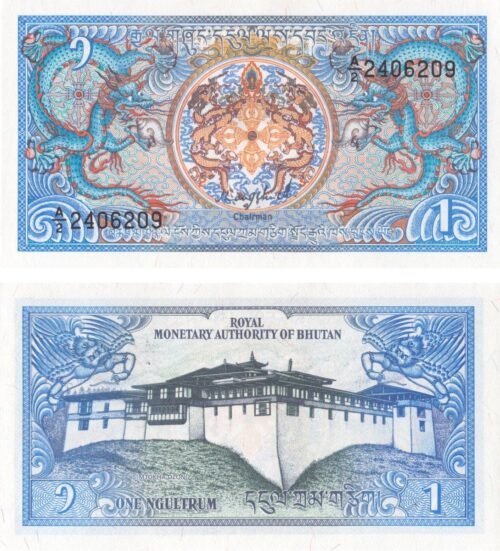
Bhutan 1 Ngultrum 1986, P-12a, UNC
2,49 € -
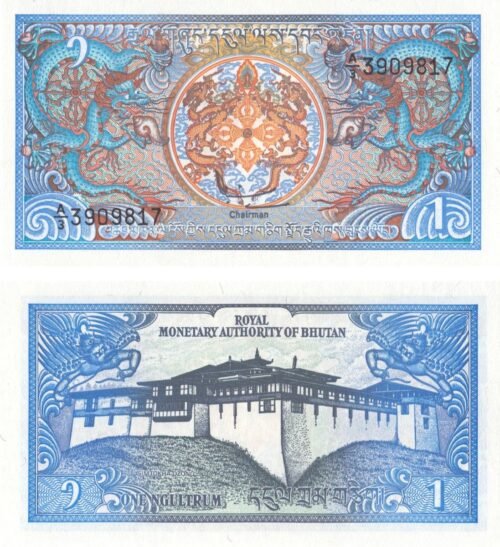
Bhutan 1 Ngultrum 1990, P-12b, UNC
2,49 € -

Bhutan 2 Ngultrum 1986, P-13, UNC
2,99 € -

Bhutan 5 Ngultrum 1990, P-14b, UNC
2,49 € -

Bhutan 100 Ngultrum 1986, P-18a, UNC
30,99 € -

Bhutan 10 Ngultrum 2000, P-22, UNC
2,99 € -

Bhutan 20 Ngultrum 2000, P-23, UNC
5,99 € -

Bhutan 1 Ngultrum 2006, P-27a, UNC
1,49 € -

Bhutan 1 Ngultrum 2013, P-27b, UNC
0,99 € -

Bhutan 5 Ngultrum 2006, P-28a, UNC
1,49 € -

Bhutan 5 Ngultrum 2011, P-28b, UNC
1,49 € -

Bhutan 5 Ngultrum 2015, P-28c, UNC
1,49 € -
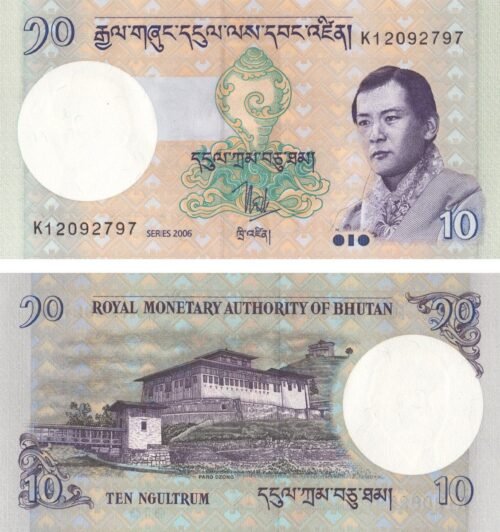
Bhutan 10 Ngultrum 2006, P-29a, UNC
2,49 € -
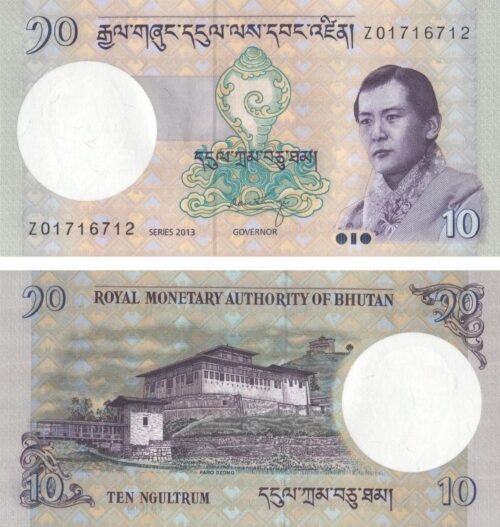
Bhutan 10 Ngultrum 2013, P-29b, UNC
2,49 € -

Bhutan 20 Ngultrum 2013, P-30b, UNC
2,99 € -
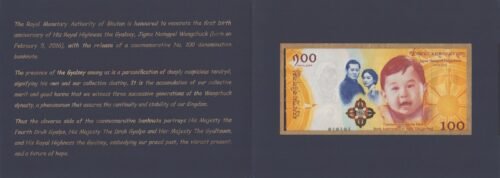
Bhutan 100 Ngultrum 2017, P-37, UNC
13,99 €