
Egyptian Pound
The Egyptian pound reflects a structured monetary system anchored in regional trade, archaeological heritage and long-term geopolitical stability.
Quick Facts
Country: Egypt
Code: EGP
Symbol: E£
System: Decimal (1 Pound = 100 Piastres)
Status: In circulation
Issuers: Central Bank of Egypt, Egyptian Government
The Story of the Egyptian Pound
Introduced in the late 19th century to replace a complex mix of Ottoman and regional currencies, the Egyptian pound established a unified monetary system aligned with modern economic structures. Initially linked to the gold standard, it became a stabilising force during the transition from khedival rule to a sovereign republic. Across the 20th century, it accompanied Egypt through political transformation, state-led economic phases and later liberalisation, remaining central to the country’s regional and global economic presence.
Design & Symbolism
Egyptian banknotes are defined by a globally distinctive dual-axis design: the obverse presents Islamic architecture with Arabic script and Eastern Arabic numerals, while the reverse features Pharaonic imagery with English inscriptions and Western numerals. This deliberate contrast links Cairo’s historic mosques, including Al-Azhar and Sultan Hassan, with ancient monuments such as the Great Sphinx of Giza and the temples of Abu Simbel. Executed in refined intaglio style, the notes integrate detailed engraving, watermark portraits and complex security elements within a visually balanced composition.
For collectors
For collectors, the Egyptian pound offers a high-prestige field defined by both historical depth and modern innovation. The introduction of polymer 10 and 20 pound notes marked a major technological shift, while earlier issues—particularly mid-20th century series and notes featuring the Ramses II watermark—offer a contrasting collecting focus. Variation in signatures, series and print quality further enhances its appeal within advanced collections.
The Egyptian pound remains in circulation under a managed float system, continuing to play a central role in regional trade.
Explore the Egyptian Pound Banknotes Collection
-
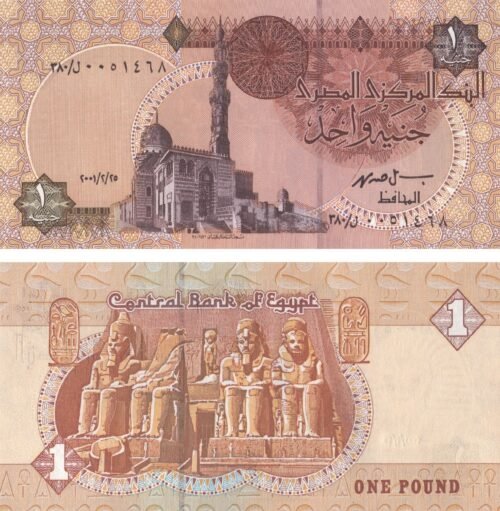
Egypt 1 Pound 2001, P-50e, UNC
2,99 € -
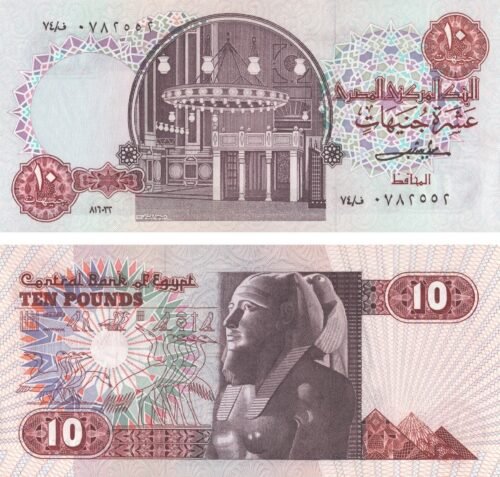
Egypt 10 Pounds 1982, P-51b, UNC
8,99 € -

Egypt 20 Pounds 1986-12-16, P-52b(3), UNC
9,99 € -

Egypt 20 Pounds 1988-01-04, P-52c(1), UNC
9,99 € -
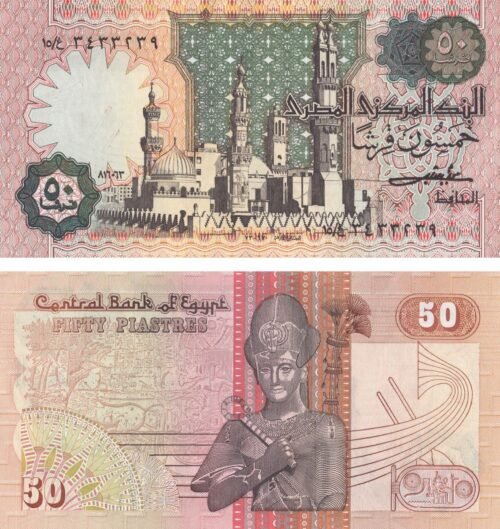
Egypt 50 Piastres 1983-06-16, P-55b, UNC
5,99 € -

Egypt 25 Piastres 1999-12-02, P-57b(2), UNC
1,49 € -
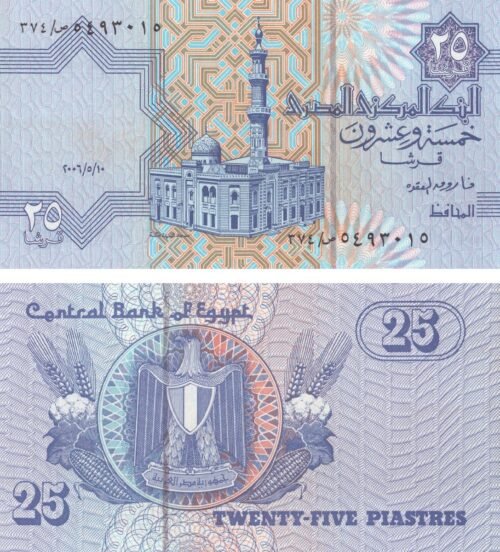
Egypt 25 Piastres 2006-05-10, P-57g(1), UNC
1,49 € -

Egypt 25 Piastres 2008-07-13, P-57h, UNC
1,49 € -

Egypt 25 Piastres 2008-12-28, P-57h, UNC
0,99 € -

Egypt 50 Piastres 1992-10-22, P-58c(1), UNC
1,49 € -

Egypt 50 Piastres 1994-08-25, P-58c(2), UNC
1,49 € -

Egypt 5 Pounds 1995-08-01, P-59b, UNC
6,99 € -

Egypt 50 Piastres 2008-01-24, P-62o, UNC
1,49 € -

Egypt 50 Piastres 2017-02-06, P-70b, UNC
0,99 € -
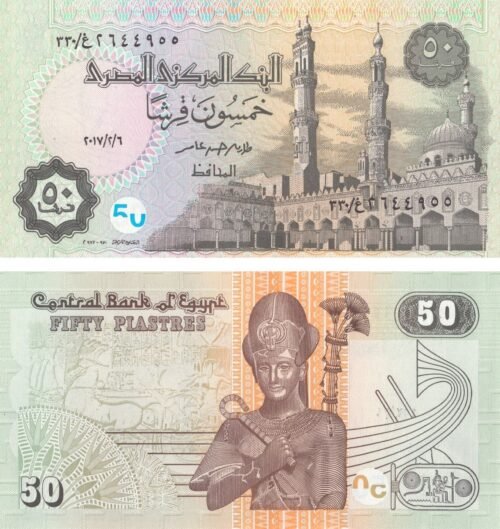
Egypt 50 Piastres 2017-02-07, P-70b, UNC
0,99 € -

Egypt 1 Pound 2016-05-18, P-71br, UNC
1,49 € -

Egypt 1 Pound 2018-08-01, P-71d, UNC
1,49 € -

Egypt 1 Pound 2021-09-15, P-71d, UNC
0,99 € -
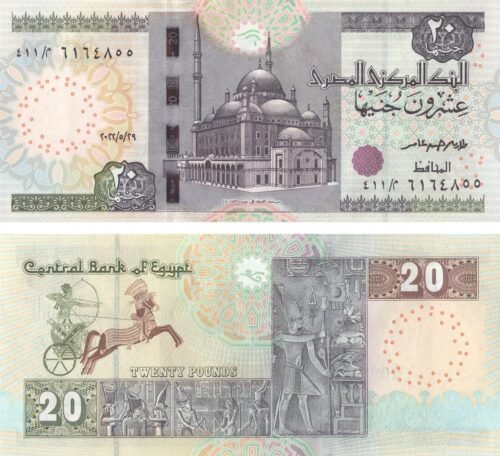
Egypt 20 Pounds 2022-05-29, P-74e, UNC
2,99 € -

Egypt 50 Pounds 2025-07-31, P-75, UNC
4,99 € -

Egypt 10 Pounds 2022, P-81(1), UNC
2,49 € -

Egypt 10 Pounds 2023, P-81(2), UNC
1,49 € -

Egypt 20 Pounds 2023, P-82, UNC
2,49 € -

Egypt 10 Piastres 1986-1991, P-184b, UNC
1,49 €