Eritrean Nakfa
The Eritrean nakfa was established following independence, creating a sovereign monetary system focused on national rebuilding.
Quick Facts
Country: Eritrea
Code: ERN
Symbol: Nfk
System: Decimal (1 Nakfa = 100 Cents)
Status: In circulation
Issuer: Bank of Eritrea
The Story of the Eritrean Nakfa
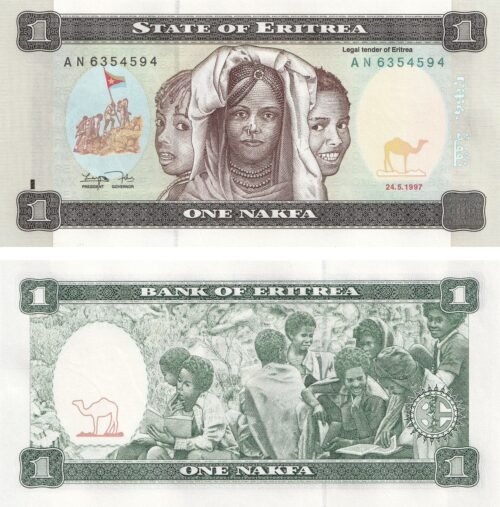
Introduced in 1997 following independence from Ethiopia, the nakfa replaced the Ethiopian birr at par, marking Eritrea’s full monetary sovereignty. Notably, most banknotes bear the date 1994, reflecting their earlier printing and three-year period held in reserve before official release—an unusual detail that distinguishes the series within modern currency history. Named after the town of Nakfa, a key stronghold during the independence struggle, the currency is deeply tied to Eritrea’s formation as a state.
Design & Symbolism
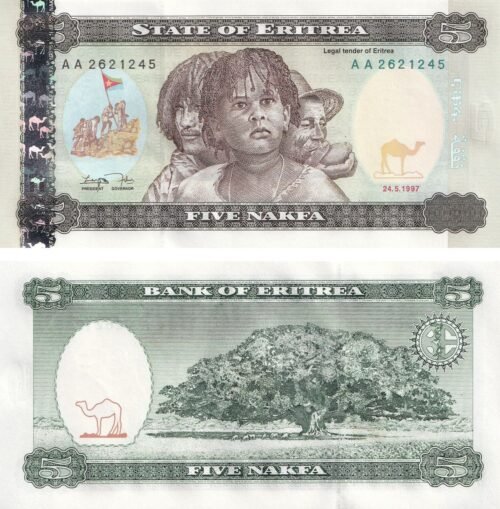
Eritrean banknotes are defined by their distinctive portrayal of society rather than leadership. A recurring central motif features three young women representing different ethnic groups, forming one of the most recognisable visual identities in African numismatics. Scenes of education, agriculture and daily life are combined with landscapes of highlands and coast, creating a cohesive national narrative. Printed by Giesecke+Devrient, the notes incorporate refined intaglio techniques, security threads and a characteristic camel head watermark, reinforcing both authenticity and regional symbolism.
For collectors
For collectors, the nakfa stands out as a conceptually unified and technically distinctive series. The 1994-dated issues, the tri-figure portrait motif and the camel watermark create clear identification markers, while limited international circulation and controlled issuance add to its appeal within modern African collections.
The nakfa remains the national currency of Eritrea, managed within a controlled economic system shaped by post-independence policy.