Guinea-Bissau Peso
The Guinea-Bissau peso represents a short-lived national currency shaped by liberation, inflation and eventual transition into the CFA franc zone.
Quick Facts
Country: Guinea-Bissau
Code: GWP
Symbol: ₱
System: Decimal (1 Peso = 100 Centavos)
Status: Withdrawn
Issuer: Banco Nacional da Guiné-Bissau
The Story of the Guinea-Bissau Peso
Introduced after independence from Portugal, the peso became the monetary expression of Guinea-Bissau’s sovereign statehood under the political influence of Amílcar Cabral. Its history was defined by economic fragility and accelerating inflation. In 1997, Guinea-Bissau abandoned the peso and adopted the West African CFA franc (XOF), ending an independent but unstable monetary experiment.
Design & Symbolism
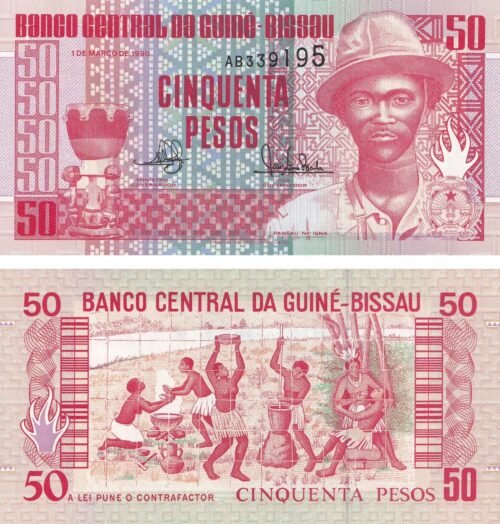
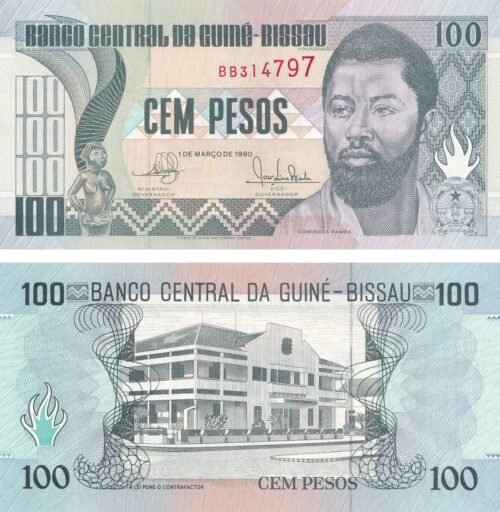
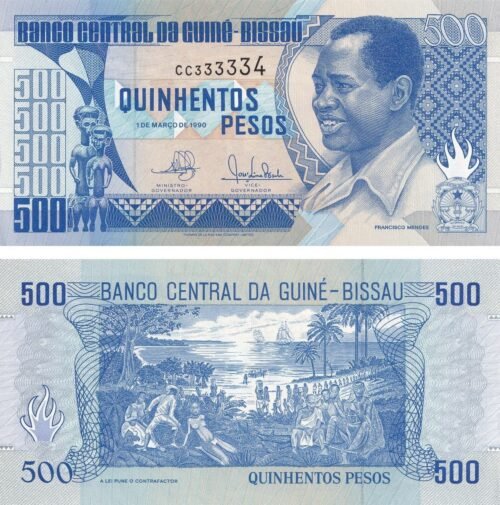
Banknotes are dominated by the portrait of Amílcar Cabral, giving the series one of the most ideologically unified visual identities in African numismatics. Printed by Thomas De La Rue, the notes combine strong engraved portraiture with scenes of agriculture and collective labour, reflecting the country’s liberation-era political narrative.
For collectors
For collectors, the Guinea-Bissau peso is defined by revolutionary iconography and low survival rates. The 10,000 pesos note (1990/1993) is the “holy grail” of the series, being the largest and rarest denomination. Tropical humidity and heavy circulation during the final inflationary phase severely reduced the number of well-preserved examples, making high-grade 5000 and 10,000 pesos notes genuinely scarce.
In 1997, Guinea-Bissau replaced the peso with the West African CFA franc (XOF), entering the UEMOA framework.