
Guinean Franc
The Guinean franc represents a sovereign currency system established following a decisive break from the CFA franc zone in 1960.
Quick Facts
The Story of the Guinean Franc
In 1958, Guinea rejected the French Community, leading to an immediate withdrawal of colonial infrastructure. The introduction of the Guinean Franc in 1960 was an urgent act of monetary survival. A notable period followed with the "Syli" era (1971–1985), where denominations were named after the elephant, before returning to the franc system to align with modern economic standards.
Design & Symbolism
Banknotes reflect Guinea's industrial and social landscape. Bauxite mining is a recurring theme, alongside portraits of Guinean women in traditional attire. Modern issues emphasize colour-rich layouts with improved security features, transitioning from earlier socialist-influenced designs to contemporary technical standards.
For collectors
For collectors, the Guinean Franc is defined by historical rupture and environmental scarcity. Early independence and Syli-era notes are difficult to obtain in high-grade condition due to the tropical climate. Well-preserved examples from the "elephant" era are especially sought after, combining unique thematic identity with limited survival rates.
The Guinean franc remains in circulation as an independent national currency, sustained outside any regional monetary union.
Explore the Guinean Franc Banknotes Collection
-

Guinea 100 Francs 2012, P-35b, UNC
1,49 € -
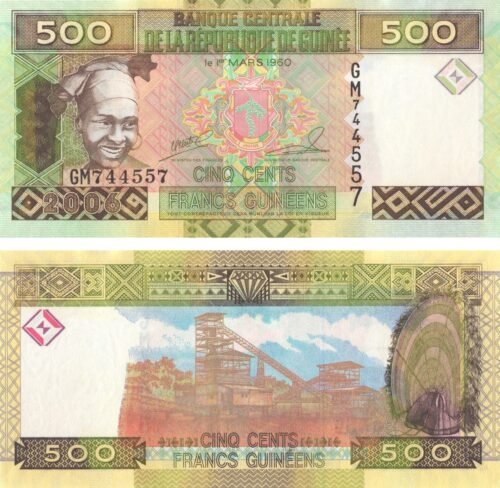
Guinea 500 Francs 2006, P-39a, UNC
2,49 € -

Guinea 5000 Francs 2012, P-41b, UNC
4,99 € -
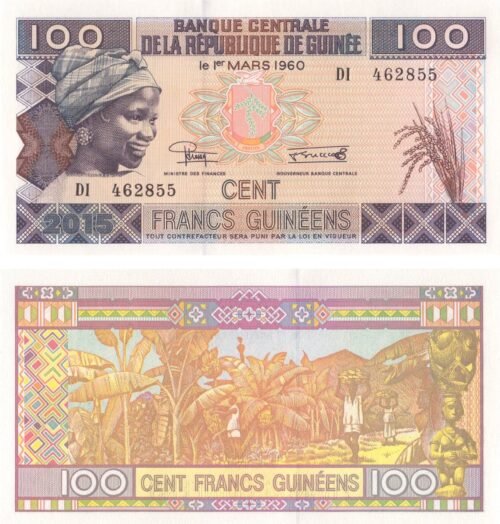
Guinea 100 Francs 2015, P-A47, UNC
1,49 € -

Guinea 500 Francs 2017, P-47b, UNC
1,49 € -
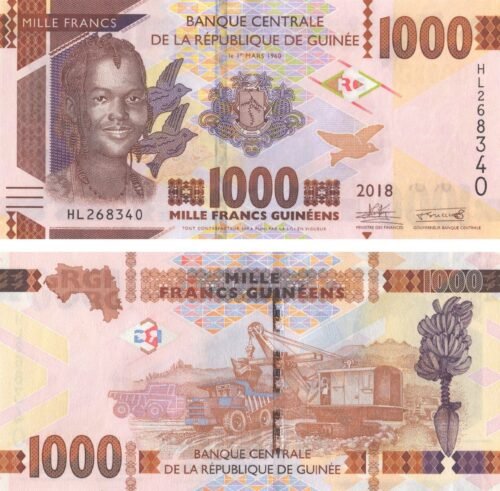
Guinea 1000 Francs 2018, P-48, UNC
1,49 € -
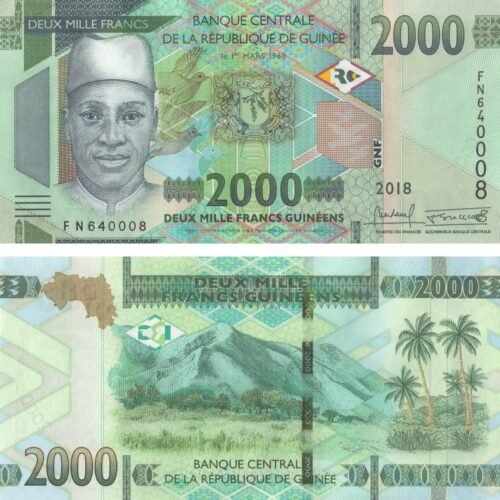
Guinea 2000 Francs 2018, P-48A, UNC
2,99 € -

Guinea 1000 Francs 2022, P-48, UNC
1,49 € -

Guinea 2000 Francs 2022, P-48A, UNC
2,49 € -
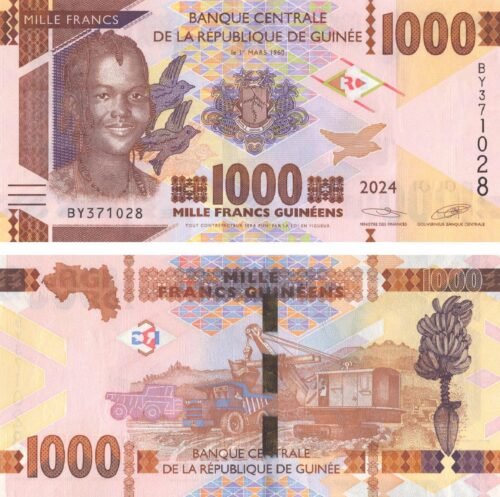
Guinea 1000 Francs 2024, P-48, UNC
1,49 € -
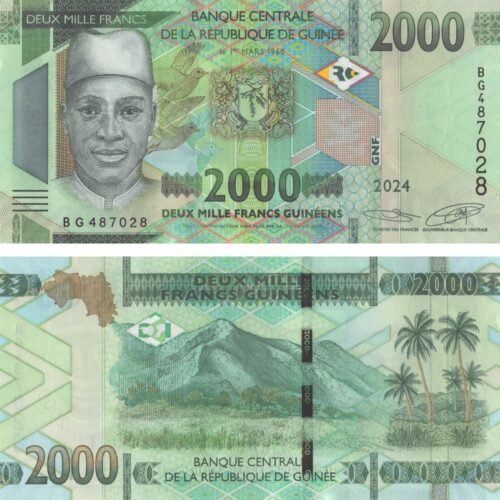
Guinea 2000 Francs 2024, P-48A, UNC
2,49 € -
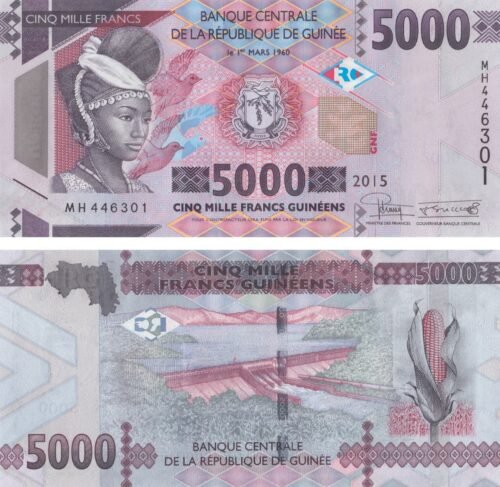
Guinea 5000 Francs 2015, P-49, UNC
2,99 € -
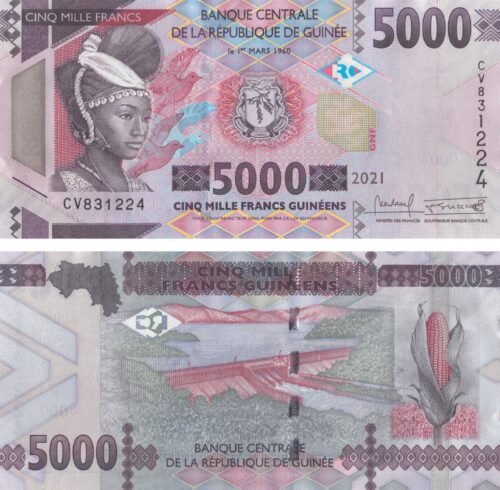
Guinea 5000 Francs 2021, P-49, UNC
4,99 € -

Guinea 5000 Francs 2022, P-49, UNC
3,99 € -
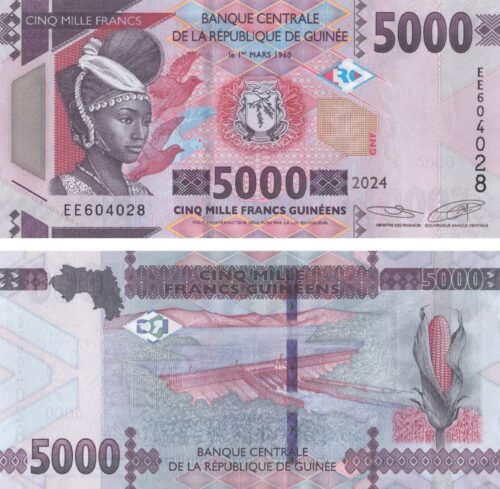
Guinea 5000 Francs 2024, P-49, UNC
3,99 € -
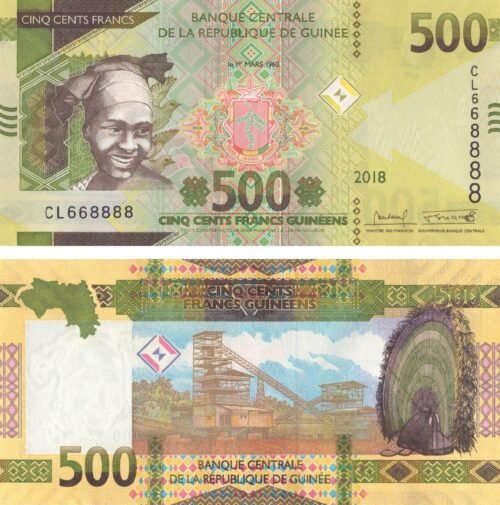
Guinea 500 Francs 2018, P-52, UNC
1,49 € -

Guinea 500 Francs 2022, P-52, UNC
1,49 € -
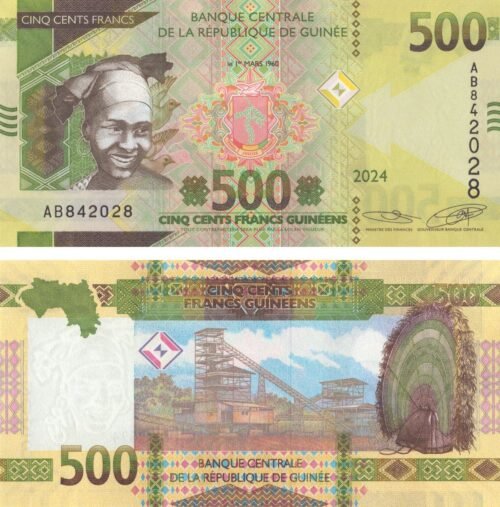
Guinea 500 Francs 2024, P-52, UNC
0,99 €