Hungarian Forint
The Hungarian forint rises from the ashes of collapse—born from the most extreme inflation in history and forged into a currency of precision.
Quick Facts
Country: Hungary
Code: HUF
Symbol: Ft
System: Decimal (1 Forint = 100 Fillér)
Status: In circulation
Issuer: Hungarian National Bank
The Story of the Hungarian Forint
The Forint was introduced in 1946 as a direct response to the most devastating hyperinflation ever recorded. Prices had been doubling in a matter of hours, and the pengő had spiraled into absurdity. The transition to the Forint was a monetary miracle that restored order almost overnight. Its name, rooted in the Florentine gold "fiorino," reconnects Hungary’s modern currency to the prestige of Renaissance Europe.
Design & Symbolism
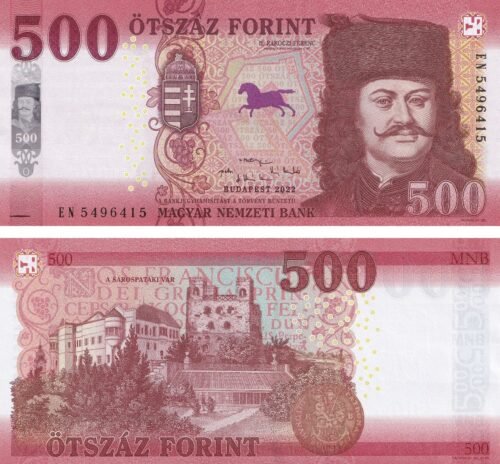
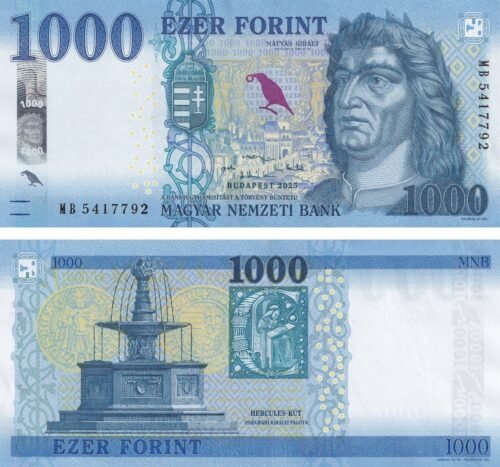
Hungarian banknotes are defined by renaissance iconography and national authority. King Matthias Corvinus appears on the 1000 Forint note, embodying intellectual and cultural power. The Holy Crown of Hungary is subtly embedded within the design, reinforcing continuity and legitimacy. Architectural elements such as the Chain Bridge and the Hungarian Academy of Sciences evoke the 19th-century golden age.
For collectors
For collectors, the Hungarian Forint offers a dramatic contrast in numismatics. On one side stand the inflationary relics of the pengő. On the other stands the disciplined elegance of the modern Forint. High-grade pre-2014 banknotes are becoming increasingly scarce, making them valuable survivors of a withdrawn era. Each note represents not only monetary function, but a story of collapse, recovery and engraving mastery.
The Hungarian forint remains Hungary’s official currency, symbolizing a stable monetary system born from extreme hyperinflation.