
Philippine Piso
The Philippine piso carries the pulse of island resilience, where wartime survival and modern reinvention converge.
Quick Facts
Country: Philippines
Code: PHP
Symbol: ₱
System: Decimal (1 Piso = 100 Sentimo)
Status: In circulation
Issuers: Bangko Sentral ng Pilipinas, Central Bank of the Philippines, Japanese Government
The Story of the Philippine Piso
The Piso emerged through layered monetary transitions, from Spanish and American systems to full national sovereignty. Its most dramatic chapter unfolded during World War II, when Japanese occupation currency—dismissively called “Mickey Mouse money”—lost all trust, while locally produced “Guerrilla Currency” circulated as a symbol of resistance. Following liberation, the 1944 “Victory” series, printed under U.S. authority and marked with distinctive overprints, restored monetary credibility. The post-independence era saw the establishment of central banking institutions and the gradual evolution toward a modern, stable currency under the Bangko Sentral ng Pilipinas.
Design & Symbolism
Philippine banknotes combine historical narrative with strong visual identity. Traditional issues feature national heroes such as José Rizal and Andres Bonifacio, while modern New Generation Currency designs highlight biodiversity and ecological heritage. The 2022 introduction of the blue 1000 Piso polymer note—featuring the Philippine Eagle—marked a major shift, replacing historical figures with national wildlife and earning international recognition, including IBNS Banknote of the Year. Distinct denomination colors and tactile marks for the visually impaired reflect both accessibility and advanced design thinking.
For collectors
For collectors, the Philippine Piso is a complete narrative system—from WWII guerrilla notes and Japanese occupation issues to Victory overprints and award-winning modern polymer banknotes. Its combination of conflict-era rarity, bold color identity and technological evolution makes it one of the most dynamic and historically layered currencies in Asia.
The Philippine piso remains the official currency of the Philippines, reflecting modern security innovation and island resilience.
Explore the Philippine Piso Banknotes Collection
-

Philippines 5 Centavos 1942, P-103a, UNC
2,49 € -

Philippines 10 Piso 1969, P-144a, UNC
2,99 € -

Philippines 50 Piso 1969, P-146b, UNC
3,99 € -
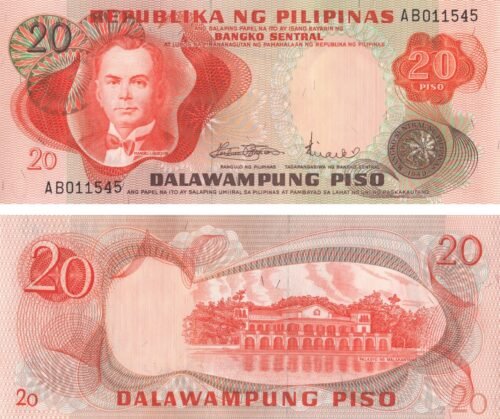
Philippines 20 Piso 1970, P-150, UNC
2,99 € -

Philippines 50 Piso 1970, P-151, UNC
3,99 € -
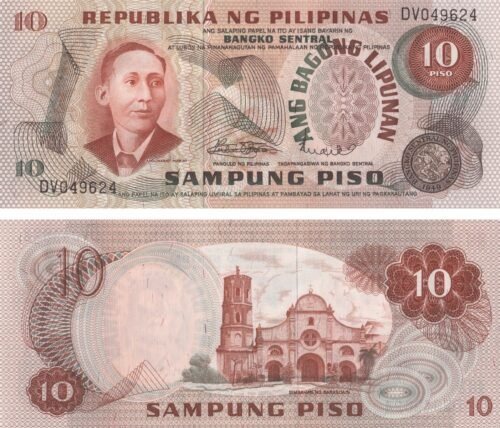
Philippines 10 Piso 1973, P-154, UNC
3,99 € -

Philippines 20 Piso 1973, P-155, UNC
3,99 € -
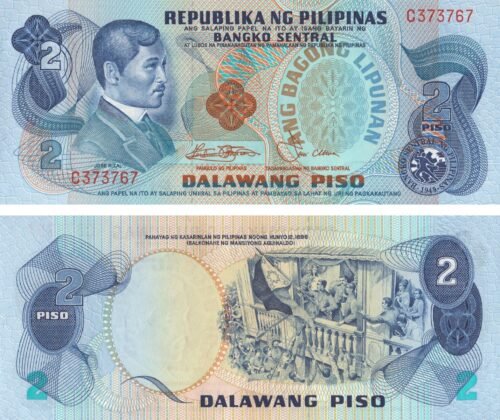
Philippines 2 Piso 1978, P-159c, UNC
2,99 € -

Philippines 5 Piso 1978, P-160a, UNC
2,99 € -

Philippines 10 Piso 1978, P-161d, UNC
2,49 € -
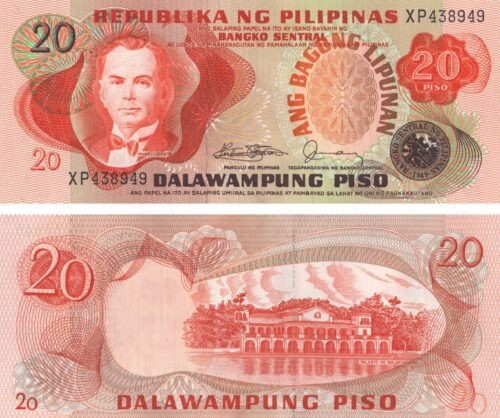
Philippines 20 Piso 1978, P-162c, UNC
2,99 € -

Philippines 50 Piso 1978, P-163b, UNC
3,99 € -

Philippines 2 Piso 1981, P-166, UNC
3,99 € -
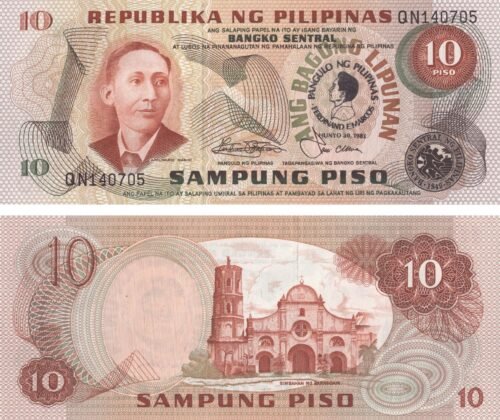
Philippines 10 Piso 1981, P-167, UNC
2,99 € -

Philippines 20 Piso 2012, P-182k, UNC
2,49 € -

Philippines 10 Piso 1998, P-187c, UNC
2,99 € -

Philippines 50 Piso 2008, P-193b, UNC
4,99 € -

Philippines 50 Piso 2012, P-211A, UNC
3,99 € -

Philippines 50 Piso 2013, P-215, UNC
3,99 € -

Philippines 50 Piso 2013, P-216, UNC
3,99 € -

Philippines 50 Piso 2022, P-224, UNC
3,99 € -
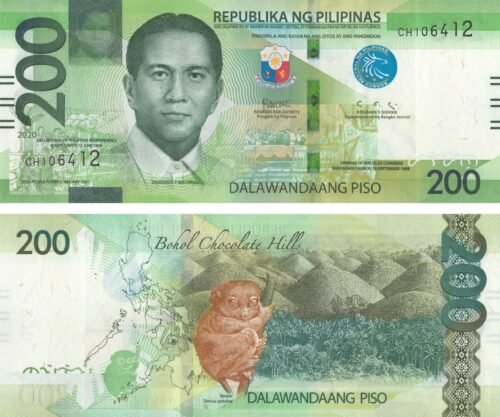
Philippines 200 Piso 2020, P-226, UNC
8,99 € -

Philippines 20 Piso 2023, P-230, UNC
2,49 € -
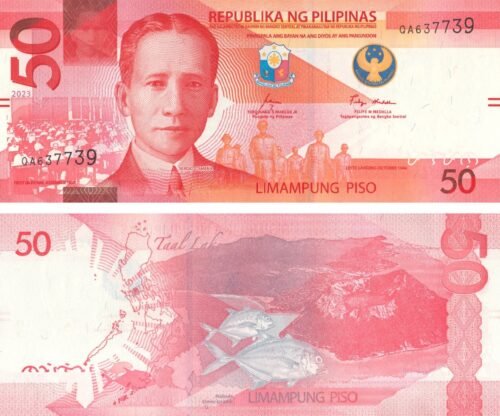
Philippines 50 Piso 2023, P-231A, UNC
3,99 €