
Polymer
Polymer is a modern banknote substrate made from durable plastic film, most commonly biaxially oriented polypropylene (BOPP), used to enhance durability, security, and resistance to environmental damage.
It represents a fundamental shift from traditional cotton-based paper, enabling a new generation of banknote design and protection.
Romania · 1 leu · P-117 · front

The eagle-shaped window area
How It Appears
Many polymer banknotes begin as transparent plastic film. Opaque coatings, printed designs and security features are then applied in separate production stages; their combination varies between issues.
In this construction, a clear window is formed by leaving part of the film without the opaque coating. The window can still carry printed, metallic or embossed features, as the Reserve Bank of Australia’s production description explains.
The window is integral to the film rather than a separate transparent patch. Its presence alone does not establish authenticity.
The film has a different feel from banknote paper, but a finished note need not be uniformly smooth. Polymer notes can carry raised intaglio print and tactile features; the Bank of Canada’s $5 guide identifies several raised elements.
Clear windows can help identify a polymer design, but neither print sharpness nor the absence of visible fibres is a sufficient material or authenticity test.
Functional Role
Polymer serves as both a structural foundation and a security platform for modern banknotes.
A major advantage is durability. Issuers report longer circulation lives and resistance to dirt and moisture compared with their earlier paper notes. The benefit depends on the note’s design, denomination and conditions of use.
Polymer provides a platform for combining windows, printed elements, foils and other security features. These can be integrated into the film or applied during later production stages; not every polymer note uses the same combination.
Authentication depends on checking the features specified for the particular note. Paper and polymer designs can both combine visual, tactile and machine-readable elements.
The feel of the film is one useful check where the issuer recommends it. It should be considered alongside the note’s other security features, rather than judged by a particular sound or stiffness alone.
Why It Matters to Collectors
For collectors, polymer banknotes represent a clear technological and philosophical shift in currency production.
Clear windows and optical features offer distinctive design possibilities. Raised engraved printing is not exclusive to paper: intaglio is also used on polymer banknotes.
Polymer can crease, and its printed surface can wear or become damaged. When assessing condition, examine folds, surface wear, tears and the state of the windows rather than assuming the material prevents handling damage.
Preservation does not mean trying to remove signs of wear. The Reserve Bank of New Zealand’s handling guidance advises avoiding creasing and heat, and specifically warns against ironing polymer notes.
An apparently smooth surface alone does not prove originality or a particular grade. Assess the whole note, including its edges, corners, printed layers and security features.
For advanced collectors, polymer issues often mark transitions into modern monetary systems, giving them both technological and historical significance.
Polymer vs Paper Banknotes
Paper banknotes have a fibre-based substrate. Depending on the design, their security features can be formed in the paper, printed on it or applied to its surface.
Fully polymer banknotes use a plastic-film substrate, with coatings, printed layers and security features added according to the design.
A simple distinction:
Paper has a fibre-based substrate.
Fully polymer notes have a plastic-film substrate.
Both can combine printed, tactile and optical security features.
Related Terms
- Transparent Window
- Hologram
- Microprinting
- Security Thread
- Ultraviolet (UV) Features
Frequently Asked Questions
What is polymer in banknotes?
Polymer is a plastic-based material used to produce durable and secure banknotes.
Why are polymer banknotes used?
Issuers use polymer for its durability and the security-design options it offers, including clear windows. Performance depends on the particular issue and its use.
Do polymer banknotes have watermarks?
Fully polymer notes do not have traditional paper watermarks. Some use shadow images or other features viewed through light; their appearance should be checked against the issuer’s description.
Are polymer banknotes better than paper?
Neither material is automatically better in every setting. Issuers weigh durability, security, production costs and practical handling when choosing a substrate and design.
Related Polymer Banknotes
-
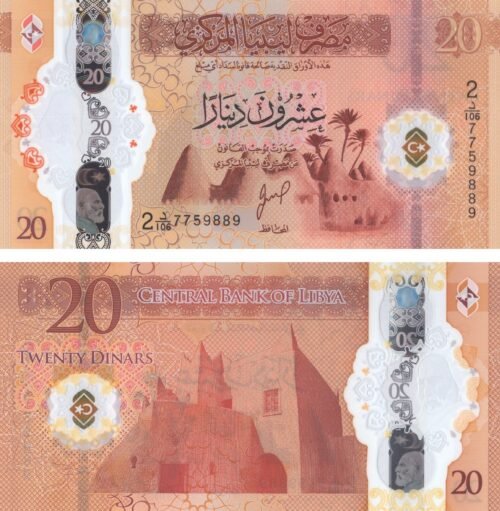
Libya 20 Dinars 2025, P-87, UNC
9,99 € -

Libya 5 Dinars 2021, P-86(1), UNC
3,99 € -

Thailand 100 Baht 2024, P-143, UNC
8,99 € -
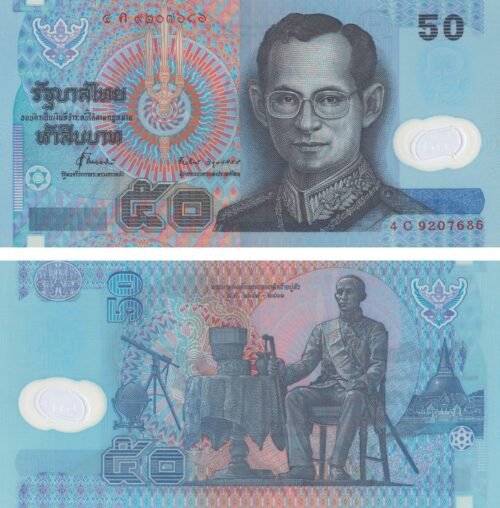
Thailand 50 Baht 1997, P-102a(2), UNC
8,99 € -
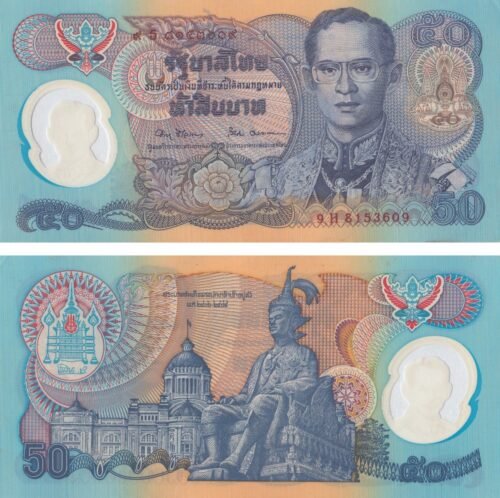
Thailand 50 Baht 1996, P-99(2), UNC
6,99 € -

Thailand 50 Baht 1996, P-99(1), UNC
6,99 € -

Zambia 1000 Kwacha 2011, P-44h, UNC
2,99 € -
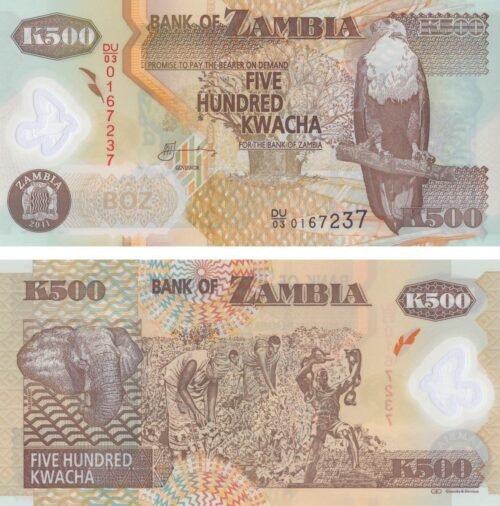
Zambia 500 Kwacha 2011, P-43h, UNC
2,49 €