Bank of Eritrea
The Bank of Eritrea operates as the central monetary authority of a post-independence system, notably defined by the controlled introduction of a new currency following separation from Ethiopia.
Quick Facts
Institutional Identity
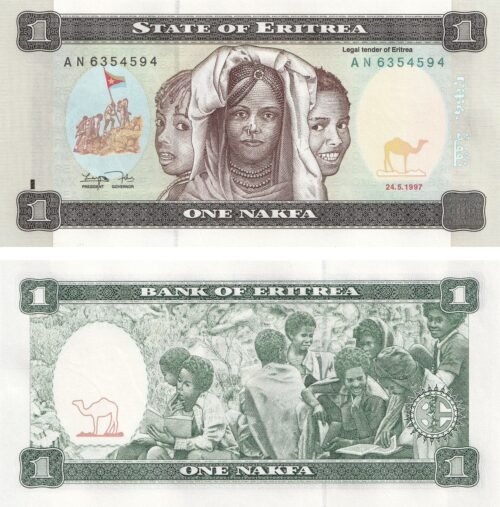
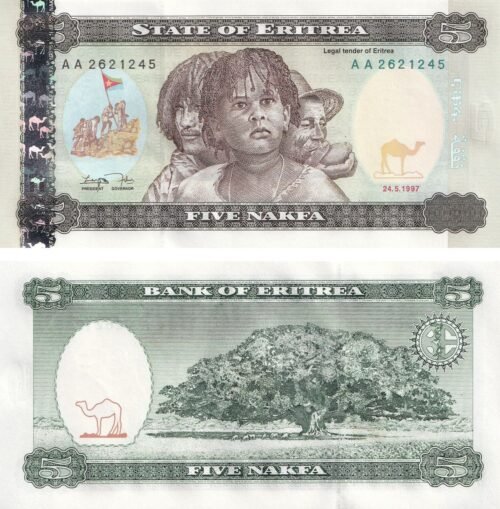
The Bank of Eritrea, established in 1994, introduced the nakfa in 1997 as a sovereign currency following independence, replacing the Ethiopian birr and anchoring national identity to the historic resistance stronghold of Nakfa. This marked the foundation of Eritrea’s independent monetary system, built on controlled issuance and strong state oversight.
Historical Evolution
A decisive transformation occurred in November 2015, when the Bank executed a full currency exchange (monetary reset), invalidating all pre-2015 banknotes in an effort to combat black-market activity and regain monetary control. The resulting 2015 series, produced by Thomas De La Rue, retained the original visual compositions but introduced enhanced security threads, refined microprinting and improved anti-counterfeiting structures, creating a clear distinction between pre- and post-2015 issues.
Design Philosophy
Eritrean banknotes are uniquely defined by their human-centred iconography, deliberately excluding political leaders and instead portraying ordinary citizens across the nation’s ethnic spectrum. A defining visual element is the recurring “Three Sisters” motif, symbolising unity among Eritrea’s communities, while the camel watermark—drawn from the national emblem—serves as a consistent symbol of endurance and statehood.
For collectors
For collectors, Eritrean banknotes represent a dual-era system shaped by strict monetary control and decisive intervention. The contrast between pre-2015 and post-2015 issues, combined with consistent design and subtle technical differences, creates a focused collecting field where chronology and context define rarity within one of Africa’s most tightly managed currency systems.