Bank of Israel
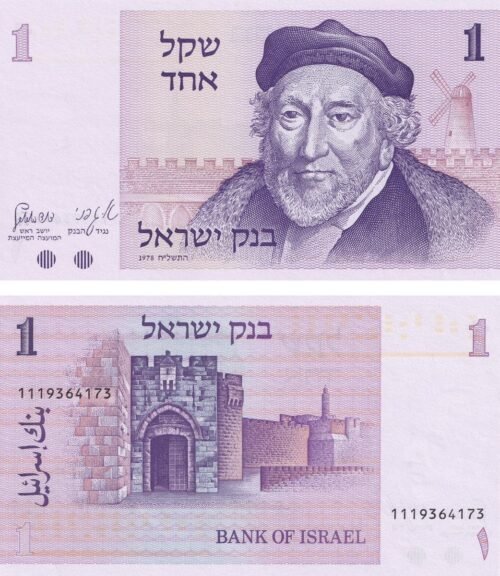
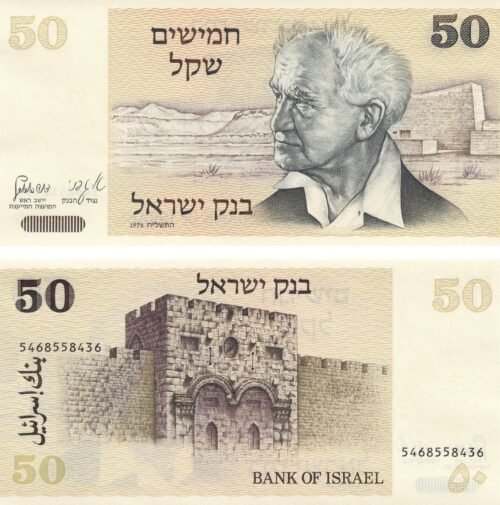
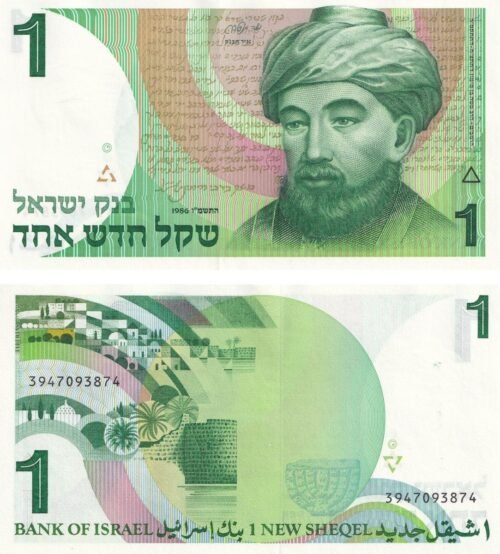
The Bank of Israel (בנק ישראל) operates as the central monetary authority overseeing a system shaped by successive currency reforms, notably transitioning from the lira to the modern New Shekel.
Quick Facts
Institutional Identity
The Bank of Israel, established in 1954, serves as the country’s central monetary authority, managing currency issuance, monetary policy and financial stability. Its institutional history is closely tied to the transition from the Israeli lira to the shekel, and later to the New Israeli Shekel (NIS), reflecting the country’s broader economic transformation.
Historical Evolution
A decisive turning point came with the replacement of the lira by the shekel in 1980, followed by the major 1985 redenomination, when 1 New Shekel replaced 1,000 old shekels after a period of severe inflation. This reform created a clearly segmented collecting structure, with transitional high-denomination notes such as the 10,000 shekels standing out as key artifacts of the inflationary era.
Design Philosophy
Modern Israeli banknotes are distinguished by their vertical orientation and strong literary identity, featuring poets such as Rachel Bluwstein, Leah Goldberg, Nathan Alterman and Shaul Tchernichovsky. The series incorporates microprinted poetic text, transparent windows, colour-shifting security features and carefully structured layouts. Varying note lengths improve denomination recognition and reinforce accessibility for the visually impaired, giving the series both technical clarity and cultural depth.
For collectors
For collectors, the Bank of Israel offers a sharply defined collecting field shaped by the lira–shekel–New Shekel transition, the inflation-era high-denomination notes and the modern poet-themed vertical series. The combination of monetary reform, literary symbolism and innovative format makes Israeli banknotes one of the most distinctive modern series in world numismatics.