Bank of Italy
The Bank of Italy (Banca d'Italia) served as the issuing authority of the Italian lira, notably defined by high-denomination banknotes prior to euro adoption.
Quick Facts
Institutional Identity
The Bank of Italy operates within the Eurosystem today, contributing to euro issuance and financial stability, while historically serving as the sole issuer of the Italian lira across a unified national monetary system shaped by inflation, growth and eventual European integration.
Historical Evolution
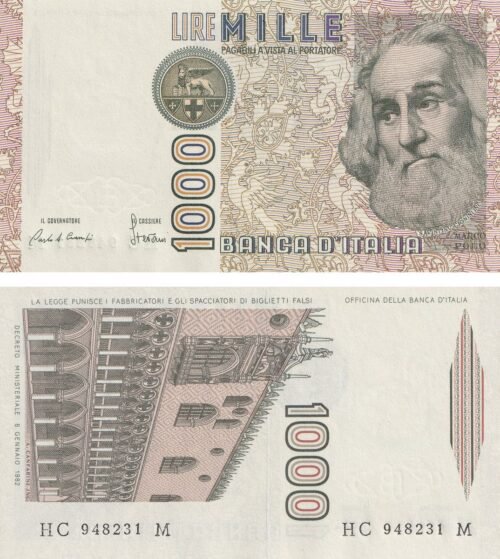
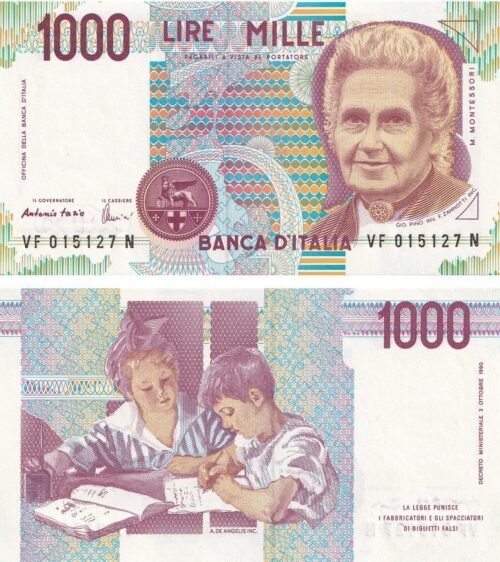
Founded in 1893, the institution unified regional banks into a central authority, guiding lira issuance through monarchy, fascist rule and republic. The late 20th century marked the peak of Italian banknote artistry, culminating in large-format issues such as the 500,000 lire Raffaello note and widely collected types like the 1,000 lire Marco Polo and 100,000 lire Caravaggio, before conversion to the euro at 1 EUR = 1936.27 lire.
Design Philosophy
Italian banknotes are renowned for their large-format intaglio engraving, often described as Renaissance masterpieces on paper, featuring artists such as Leonardo da Vinci, Michelangelo, Raffaello and Bernini. Designs combine architectural backdrops, sculptural detail and manuscript-inspired ornamentation, enhanced by multi-tone watermark portraits and vibrant UV fluorescence that reveals colored fibers under light, alongside deeply embossed engraving textures.
For collectors
For collectors, the Bank of Italy represents one of the most artistically accomplished banknote traditions in the world, with late lira issues offering exceptional engraving quality, iconic cultural figures and visually striking high denominations, making Italian banknotes a cornerstone of advanced European numismatics.