
Bank of the Lao P.D.R.
The Bank of the Lao P.D.R. (ທະນາຄານແຫ່ງສປປລາວ) operates as the central monetary authority within an inflation-affected system, notably defined by high-denomination banknote circulation.
Quick Facts
Institutional Identity
The Bank of the Lao P.D.R. manages issuance of the kip, maintains monetary stability and regulates a centrally influenced financial system where cash remains dominant and high-value denominations structure everyday transactions.
Historical Evolution
Established in 1975 following the formation of the Lao People’s Democratic Republic, the bank replaced earlier royal-era currencies and gradually expanded the denomination range, reflecting inflationary pressures that led to the introduction of large-value notes such as 50,000 and 100,000 kip.
Design Philosophy
Lao banknotes are defined by the recurring portrait of Kaysone Phomvihane across most denominations, combined with the sacred Pha That Luang stupa—Laos’s central national symbol—alongside scenes of hydroelectric dams, rural life and Vientiane landmarks. Designs incorporate Lao textile-inspired patterns, soft colour gradients and modern features such as color-shifting threads, forming a distinctive blend of socialist Buddhist aesthetics and gradual modernization.
For collectors
For collectors, the Bank of the Lao P.D.R. offers a unique combination of ideological continuity, sacred architectural symbolism and high-denomination inflation-driven design, making Lao banknotes a compelling and culturally layered series within Southeast Asian numismatics.
Explore Banknotes Issued by Bank of the Lao P.D.R.
-

Laos 5 Kip 1979, P-26r, UNC
0,99 € -
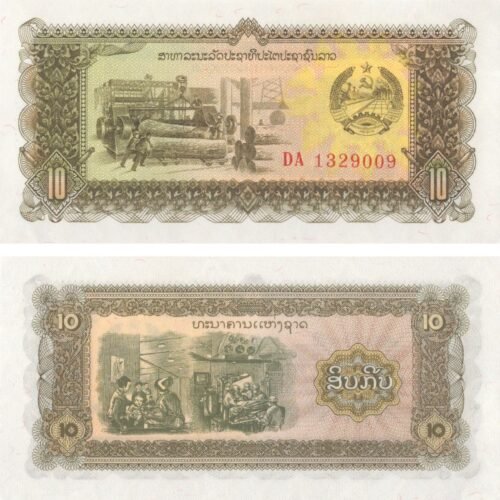
Laos 10 Kip 1979, P-27r, UNC
1,49 € -

Laos 20 Kip 1979, P-28b, UNC
1,49 € -

Laos 50 Kip 1979, P-29b, UNC
1,49 € -

Laos 100 Kip 1979, P-30r, UNC
1,49 € -

Laos 500 Kip 1988, P-31, UNC
1,49 € -
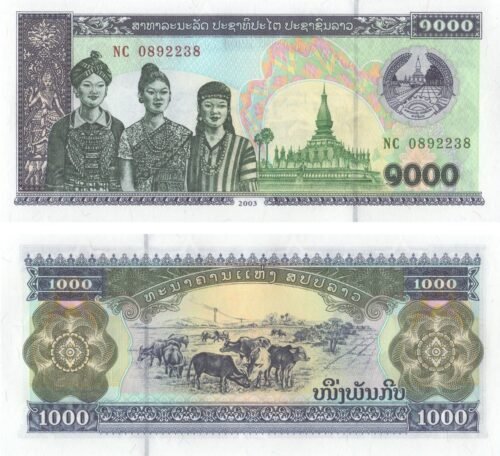
Laos 1000 Kip 2003, P-32Ab, UNC
0,99 € -

Laos 2000 Kip 2011, P-41, UNC
1,49 € -
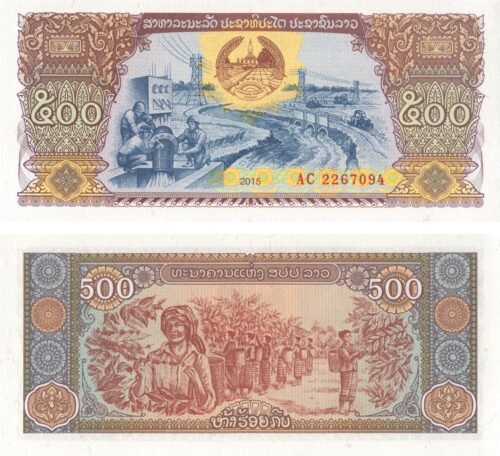
Laos 500 Kip 2015, P-A41, UNC
0,99 € -

Laos 5000 Kip 2020, P-41A, UNC
2,49 €