Bank of Latvia
The Bank of Latvia (Latvijas Banka) served as the issuing authority of the lats, notably defined by consistent design identity and the iconic “Milda” banknote prior to euro adoption.
Quick Facts
Institutional Identity
The Bank of Latvia manages monetary policy within the Eurosystem today, while historically issuing the lats and maintaining financial stability through independence, occupation and post-Soviet transition.
Historical Evolution
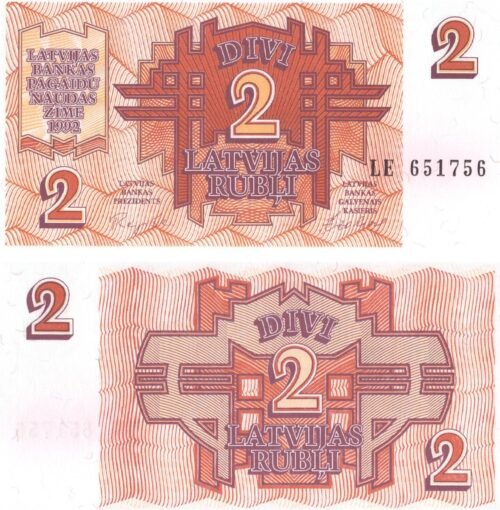
Founded in 1922, the bank introduced the lats as a symbol of sovereignty, later restoring it in 1993 after a transitional period using the Latvian ruble (repsiks). The restored lats, printed by Giesecke+Devrient, became one of the highest-quality currencies in Europe, maintaining strong nominal value until Latvia joined the eurozone in 2014.
Design Philosophy
Latvian banknotes are defined by refined intaglio portraiture and deep cultural symbolism, most notably the 5 lats featuring “Milda,” a personification of freedom closely linked to the Freedom Monument. Designs incorporate national figures such as Krišjānis Barons alongside Lielvārde belt patterns, folklore motifs and Art Nouveau elements, executed with exceptional engraving precision and balanced colour composition.
For collectors
For collectors, the Bank of Latvia offers one of the most artistically celebrated European banknote traditions, where the restored lats series—especially the iconic 5 lats—holds global recognition for its design excellence, cultural symbolism and status as a centerpiece of Baltic numismatics.