
Bank of Lebanon
The Bank of Lebanon (مصرف لبنان) operates as the central monetary authority within a system shaped by recent monetary instability, notably reflected in rapid denomination expansion.
Quick Facts
Institutional Identity
The Bank of Lebanon manages issuance of the pound, supervises the financial system and maintains payment infrastructure within an economy defined by severe devaluation and a shift toward high-denomination cash usage.
Historical Evolution
Established in 1963, the bank oversaw a relatively stable currency until the financial collapse beginning in 2019, which triggered a dramatic expansion of denominations, including widespread use of 100,000 pound notes. Earlier low-value denominations have effectively disappeared from circulation, becoming finite historical issues for collectors.
Design Philosophy
Lebanese banknotes are defined by architectural imagery and the constant presence of the Cedar of Lebanon, a national emblem featured across all denominations. Designs incorporate Phoenician and Roman heritage, including sites such as Baalbek, alongside a distinctive bilingual Arabic-French layout reflecting Lebanon’s Franco-Arabic cultural fusion. Modern issues include polymer commemorative notes with transparent windows, while standard series employ intricate guilloché and color-shifting elements.
For collectors
For collectors, the Bank of Lebanon offers a powerful contrast between cultural elegance and economic crisis, where cedar symbolism, bilingual design and rapidly rising denominations create a historically charged and visually distinctive Middle Eastern banknote series.
Explore Banknotes Issued by Bank of Lebanon
-

Lebanon 1 Livre 1980, P-61c, UNC
1,49 € -
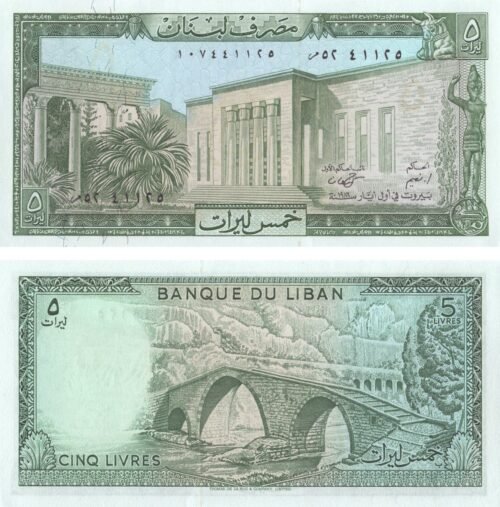
Lebanon 5 Livres 1986, P-62d, UNC
1,49 € -
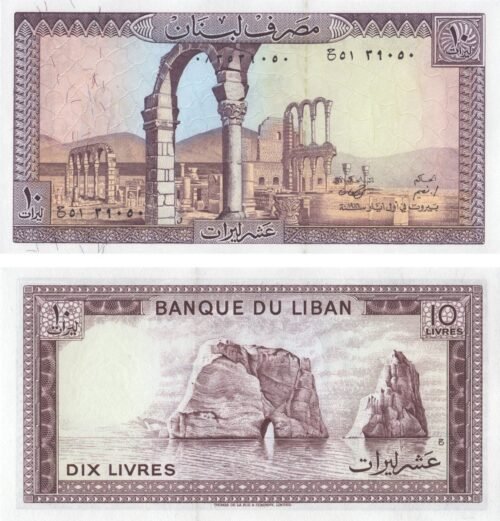
Lebanon 10 Livres 1986, P-63f, UNC
1,49 € -
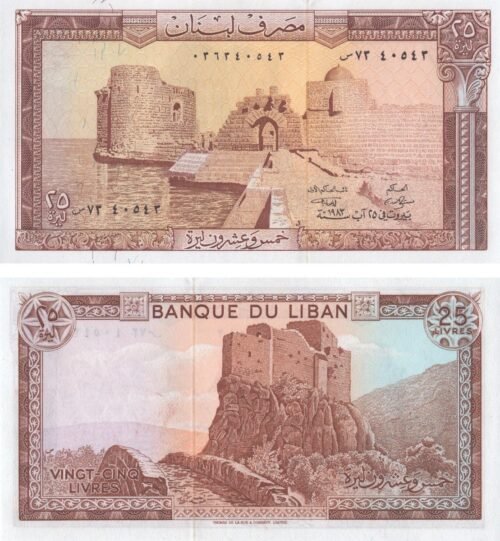
Lebanon 25 Livres 1983, P-64c, UNC
2,99 € -

Lebanon 50 Livres 1988, P-65d, UNC
2,49 € -
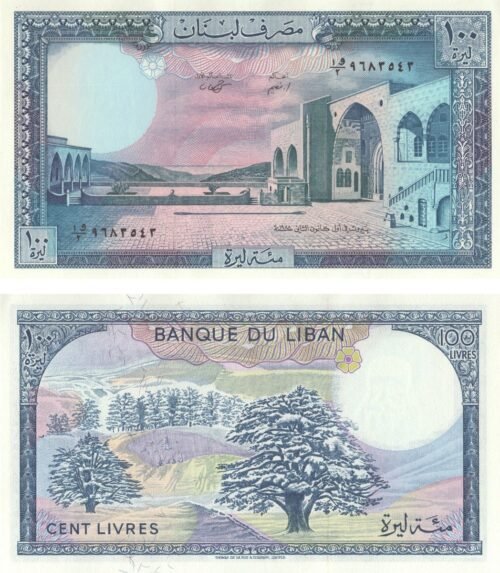
Lebanon 100 Livres 1988, P-66d, UNC
2,49 € -

Lebanon 250 Livres 1988, P-67e, UNC
2,49 € -
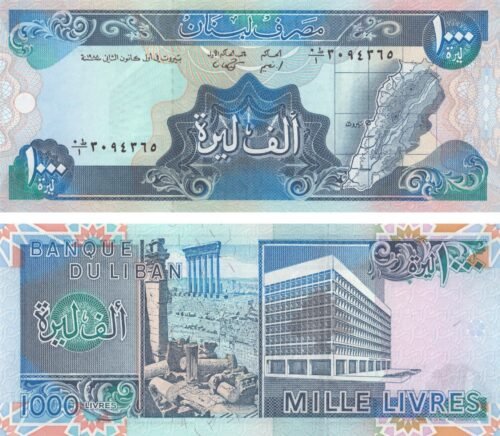
Lebanon 1000 Livres 1988, P-69a, UNC
1,49 € -
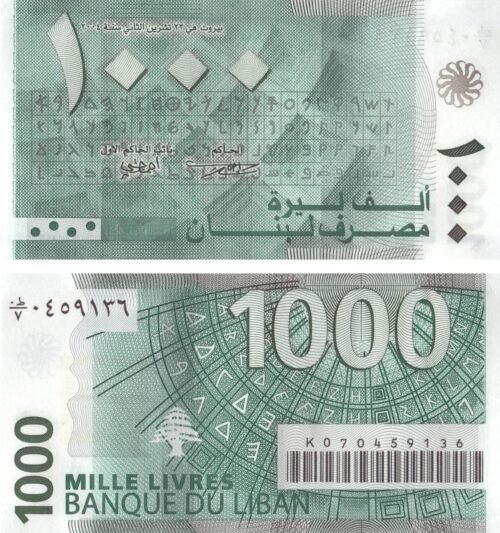
Lebanon 1000 Livres 2004, P-84a, UNC
2,49 € -

Lebanon 10000 Livres 2008, P-86b, UNC
5,99 € -
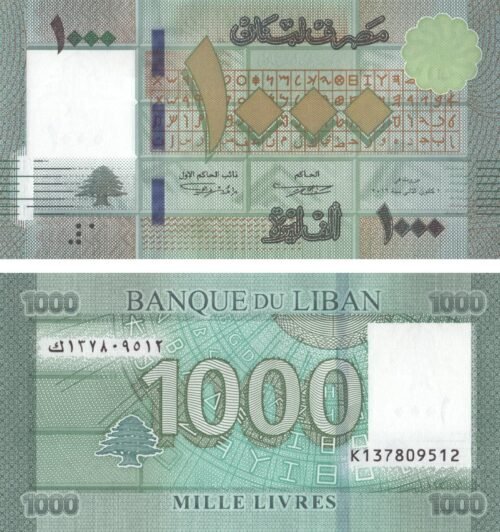
Lebanon 1000 Livres 2016, P-90c(1), UNC
0,99 € -

Lebanon 1000 Livres 2016, P-90c(1)r, UNC
1,49 € -

Lebanon 5000 Livres 2014, P-91b, UNC
1,49 € -
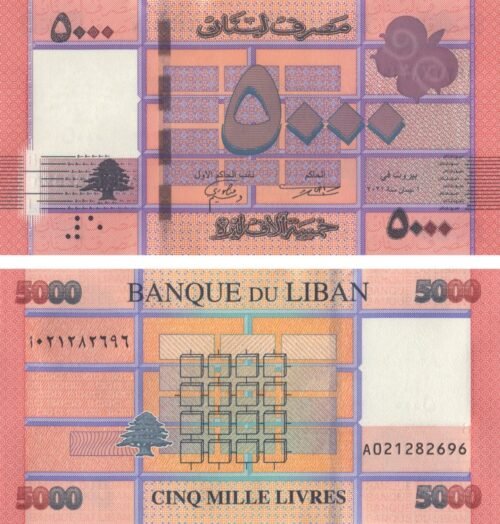
Lebanon 5000 Livres 2021, P-91c, UNC
0,99 € -
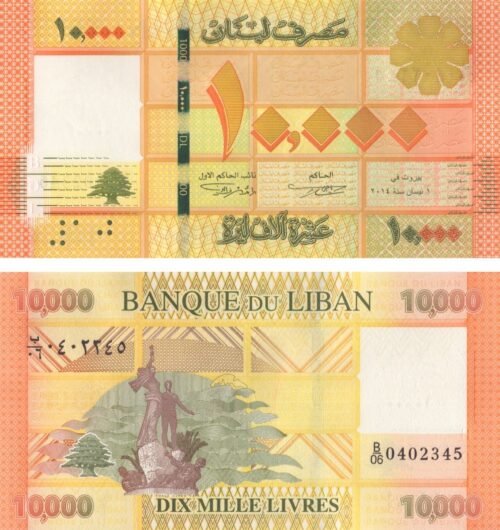
Lebanon 10000 Livres 2014, P-92b, UNC
0,99 € -
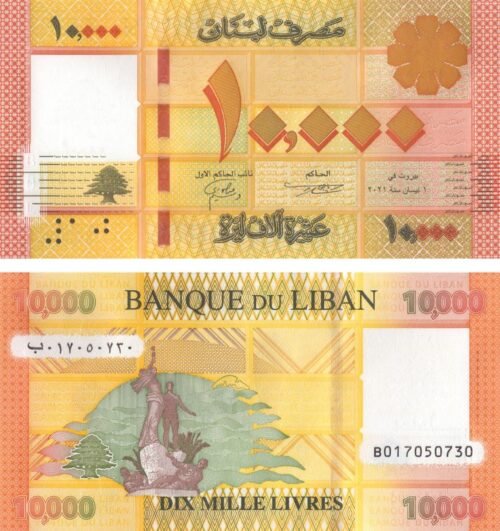
Lebanon 10000 Livres 2021, P-92c, UNC
1,49 € -
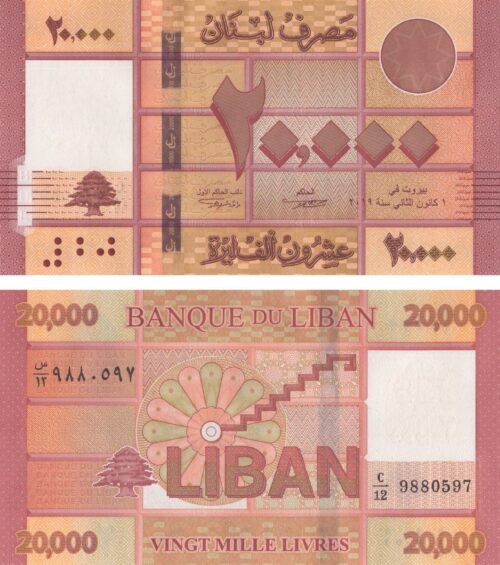
Lebanon 20000 Livres 2019, P-93c, UNC
0,99 € -
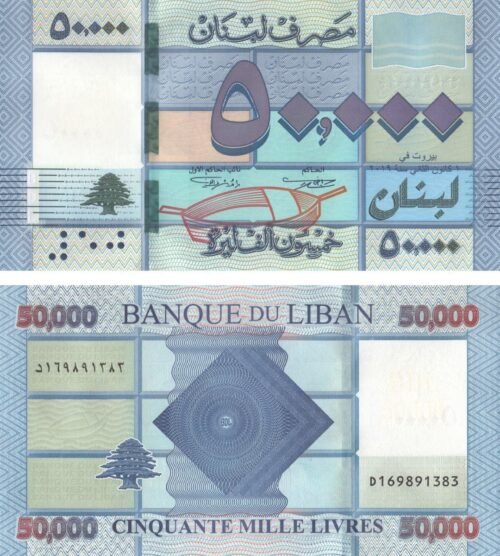
Lebanon 50000 Livres 2019, P-94d, UNC
2,99 € -
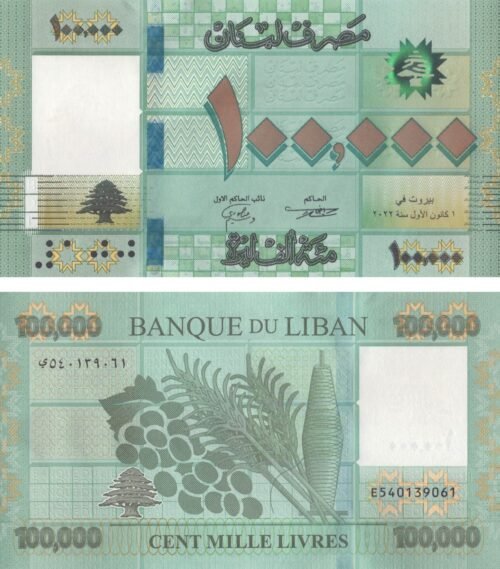
Lebanon 100000 Livres 2022, P-95, UNC
3,99 € -
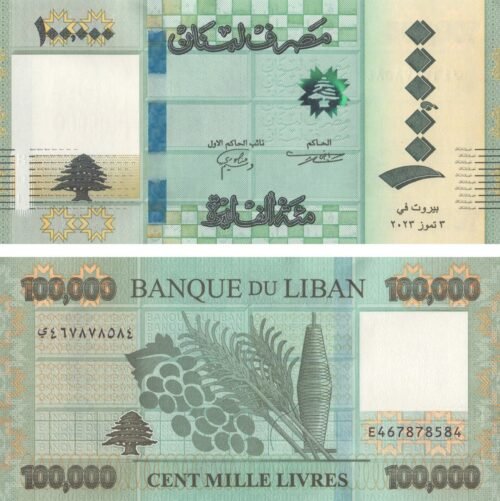
Lebanon 100000 Livres 2023, P-105(1), UNC
3,99 €