
Bank of Papua New Guinea
The Bank of Papua New Guinea operates as the central monetary authority overseeing a fully polymer currency system defined by a non-portrait tradition and indigenous symbolism.
Quick Facts
Institutional Identity
The Bank of Papua New Guinea, established in 1973, serves as the nation’s central monetary authority, managing currency issuance, monetary policy and financial stability. Banknotes are produced by Note Printing Australia, ensuring durability and resilience in the country’s demanding tropical climate.
Historical Evolution
The kina was introduced in 1975, replacing the Australian dollar and marking a decisive step toward monetary independence. Its name derives from traditional shell money once used in local exchange systems, embedding pre-colonial economic heritage into the structure of the modern currency.
Design Philosophy
Papua New Guinean banknotes are distinguished by their deliberate absence of political portraiture, focusing instead on cultural identity. Designs feature ceremonial objects such as Kundu drums, shell valuables and ritual axes, alongside the national Kumul bird-of-paradise, forming a cohesive visual language rooted in indigenous tradition. The full polymer substrate allows for transparent windows, vivid colour systems and enhanced durability adapted to high-humidity circulation environments.
For collectors
For collectors, the Bank of Papua New Guinea offers a uniquely coherent and culturally driven series, where the absence of portraiture, the use of full polymer technology and the strong emphasis on indigenous symbolism create a distinctive and highly recognisable collecting field within global numismatics.
Explore Banknotes Issued by Bank of Papua New Guinea
-

Papua New Guinea 2 Kina 1989, P-5c, UNC
2,99 € -
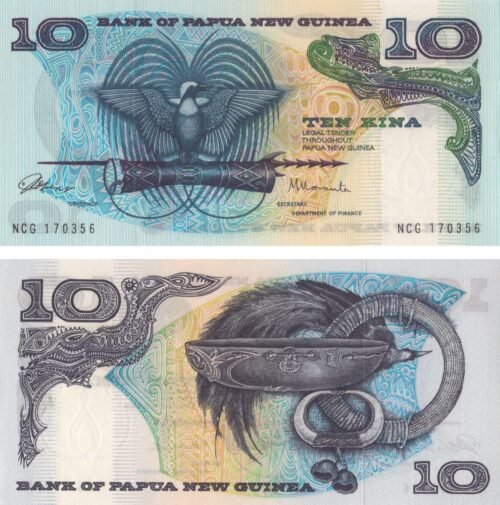
Papua New Guinea 10 Kina 1980, P-7, UNC
5,99 € -

Papua New Guinea 2 Kina 1997, P-16b, UNC
4,99 € -
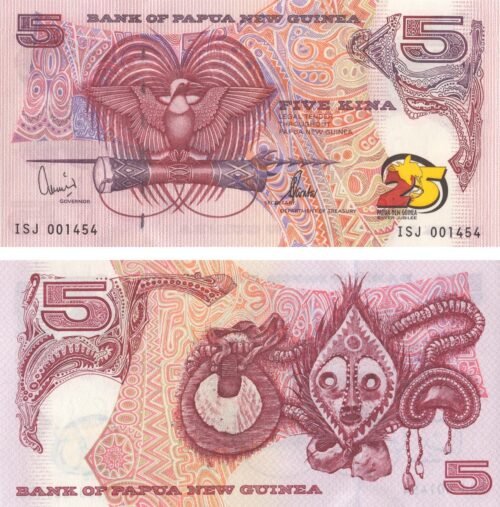
Papua New Guinea 5 Kina 2000, P-22, UNC
19,99 € -
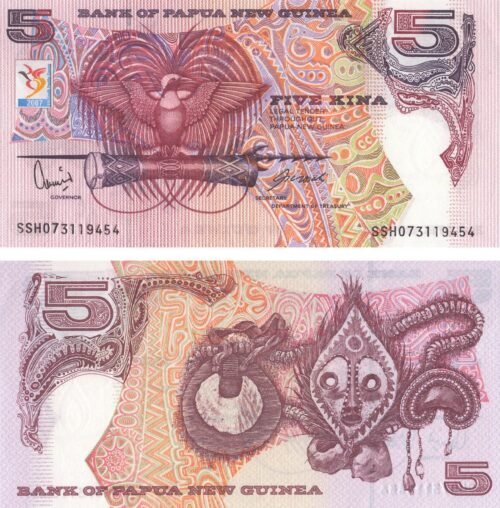
Papua New Guinea 5 Kina 2007, P-34, UNC
9,99 € -
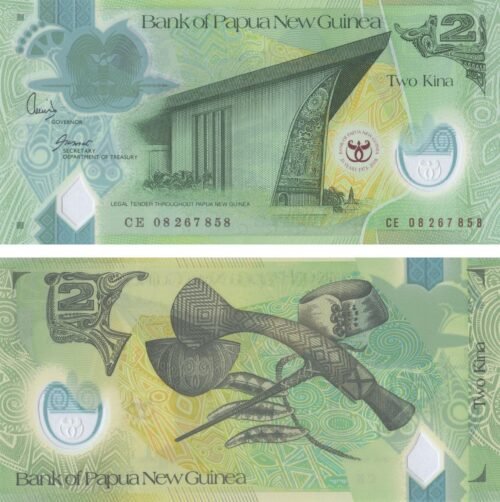
Papua New Guinea 2 Kina 2008, P-35, UNC
3,99 € -

Papua New Guinea 20 Kina 2008, P-36, UNC
3,99 € -

Papua New Guinea 100 Kina 2008, P-37, UNC
7,99 € -

Papua New Guinea 5 Kina 2010, P-39, UNC
9,99 € -
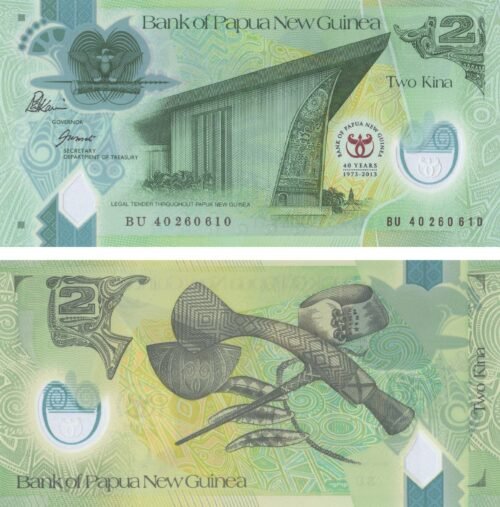
Papua New Guinea 2 Kina 2013, P-45, UNC
3,49 € -

Papua New Guinea 2 Kina 2023, P-50, UNC
2,49 € -

Papua New Guinea 5 Kina 2024, P-51, UNC
3,99 € -
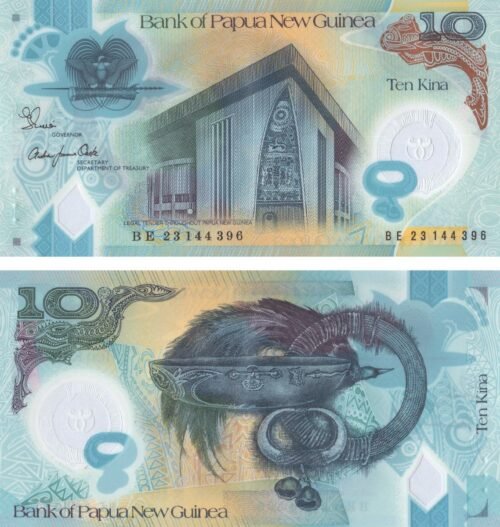
Papua New Guinea 10 Kina 2023, P-52, UNC
6,99 € -
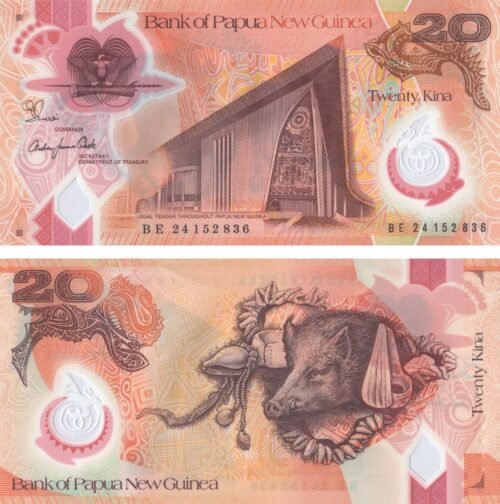
Papua New Guinea 20 Kina 2024, P-53, UNC
12,99 €