
Central Bank of Egypt
The Central Bank of Egypt (البنك المركزي المصري) operates as the central monetary authority overseeing a system defined by structured visual identity, notably combining Islamic architecture and Pharaonic symbolism in banknote design.
Quick Facts
Institutional Identity
The Central Bank of Egypt, established in 1961, assumed full authority over the issuance of the Egyptian pound, continuing a monetary tradition rooted in earlier National Bank issues. A defining institutional hallmark is its strict bilingual format—Arabic on the obverse and English on the reverse—combined with a highly controlled design structure: Islamic architecture on the front and Pharaonic antiquity on the back, forming one of the most consistent and recognisable banknote systems in the world.
Historical Evolution
This duality is expressed through iconic compositions such as the 200-pound note featuring “The Seated Scribe” paired with monumental mosque architecture, creating a deliberate visual dialogue between Egypt’s ancient and Islamic identities. Traditional paper issues are further defined by the highly recognisable Tutankhamun mask watermark and exceptionally intricate Arabic micro-calligraphy, representing one of the most technically refined engraving traditions in modern banknote production.
Design Philosophy
A major institutional transformation began with the 2022 transition to polymer banknotes, starting with the 10 and 20 pound denominations produced on Guardian™ polymer substrate. These notes are manufactured at the high-security printing complex in Egypt’s New Administrative Capital (NAC), one of the most advanced banknote production facilities in the region. The polymer 10-pound note featuring the Al-Fattah Al-Aleem Mosque introduced transparent windows and next-generation anti-counterfeiting features, marking a clear technological shift in Egyptian currency production.
For collectors
For collectors, Egyptian banknotes represent a highly structured visual system where symbolism is governed by strict design rules. The enduring architectural-versus-Pharaonic pairing, the iconic Tutankhamun watermark and the transition to Guardian™ polymer issues produced in the NAC create a layered and evolving collecting field, where continuity and controlled innovation define one of the most recognisable currencies in global numismatics.
Explore Banknotes Issued by Central Bank of Egypt
-
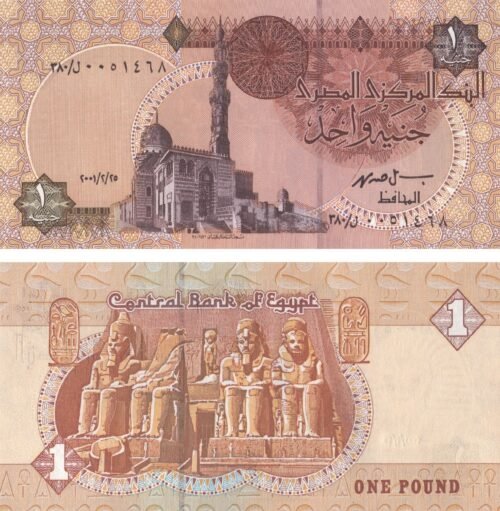
Egypt 1 Pound 2001, P-50e, UNC
2,99 € -
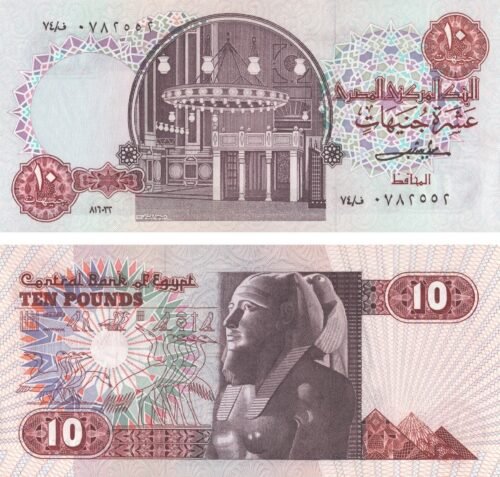
Egypt 10 Pounds 1982, P-51b, UNC
8,99 € -

Egypt 20 Pounds 1986-12-16, P-52b(3), UNC
9,99 € -

Egypt 20 Pounds 1988-01-04, P-52c(1), UNC
9,99 € -
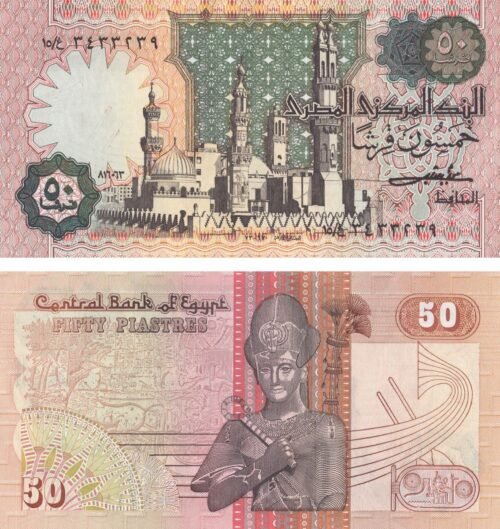
Egypt 50 Piastres 1983-06-16, P-55b, UNC
5,99 € -

Egypt 25 Piastres 1999-12-02, P-57b(2), UNC
1,49 € -
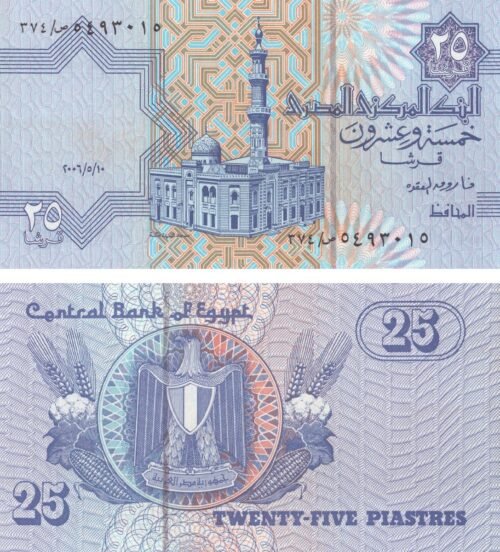
Egypt 25 Piastres 2006-05-10, P-57g(1), UNC
1,49 € -

Egypt 25 Piastres 2008-07-13, P-57h, UNC
1,49 € -

Egypt 25 Piastres 2008-12-28, P-57h, UNC
0,99 € -

Egypt 50 Piastres 1992-10-22, P-58c(1), UNC
1,49 € -

Egypt 50 Piastres 1994-08-25, P-58c(2), UNC
1,49 € -

Egypt 5 Pounds 1995-08-01, P-59b, UNC
6,99 € -

Egypt 50 Piastres 2008-01-24, P-62o, UNC
1,49 € -

Egypt 50 Piastres 2017-02-06, P-70b, UNC
0,99 € -
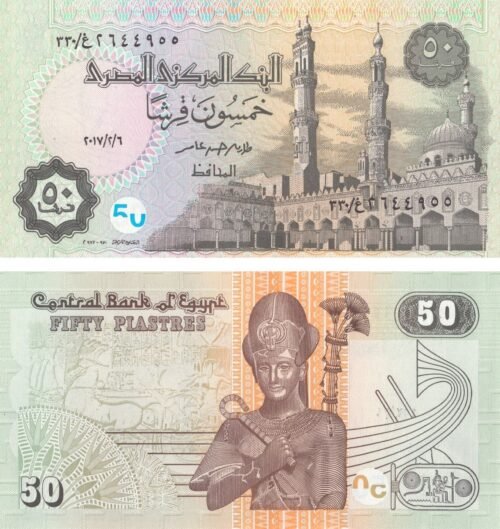
Egypt 50 Piastres 2017-02-07, P-70b, UNC
0,99 € -

Egypt 1 Pound 2016-05-18, P-71br, UNC
1,49 € -

Egypt 1 Pound 2018-08-01, P-71d, UNC
1,49 € -

Egypt 1 Pound 2021-09-15, P-71d, UNC
0,99 € -
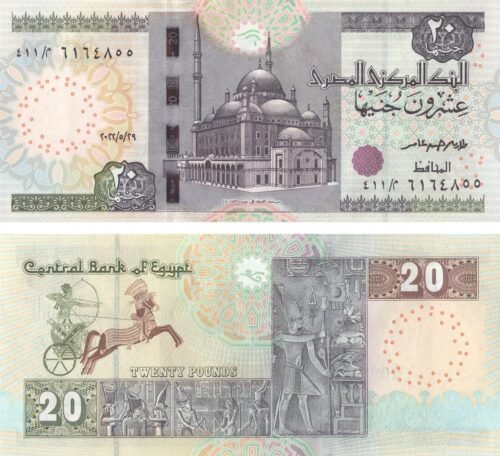
Egypt 20 Pounds 2022-05-29, P-74e, UNC
2,99 € -

Egypt 50 Pounds 2025-07-31, P-75, UNC
4,99 € -

Egypt 10 Pounds 2022, P-81(1), UNC
2,49 € -

Egypt 10 Pounds 2023, P-81(2), UNC
1,49 € -

Egypt 20 Pounds 2023, P-82, UNC
2,49 €