Central Bank of Iceland
The Central Bank of Iceland (Seðlabanki Íslands) operates as the central monetary authority within a fully sovereign system, notably defined by controlled issuance and distinctive national banknote design.
Quick Facts
Institutional Identity
The Central Bank of Iceland, established in 1961, is responsible for issuing the Icelandic króna (ISK), conducting monetary policy and maintaining financial stability in a highly independent currency environment. Operating outside the eurozone, the Bank retains full control over currency design and issuance within a compact and self-contained economy.
Historical Evolution
Iceland’s monetary structure is characterised by relatively low issuance volumes and a clearly defined denomination system, shaped by the country’s small population and geographic isolation. This creates a naturally limited banknote supply, with circulation patterns that differ markedly from larger European economies and contribute directly to collector interest.
Design Philosophy
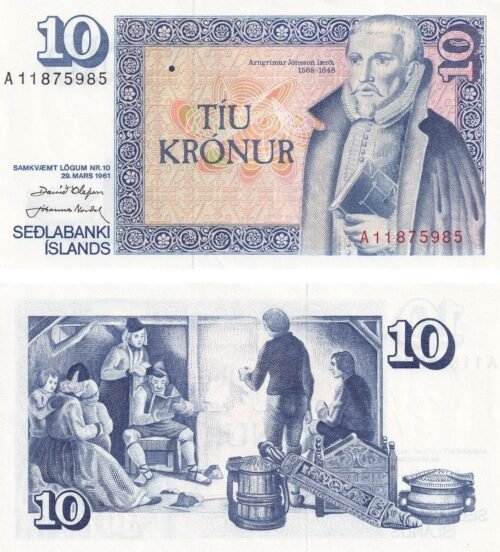
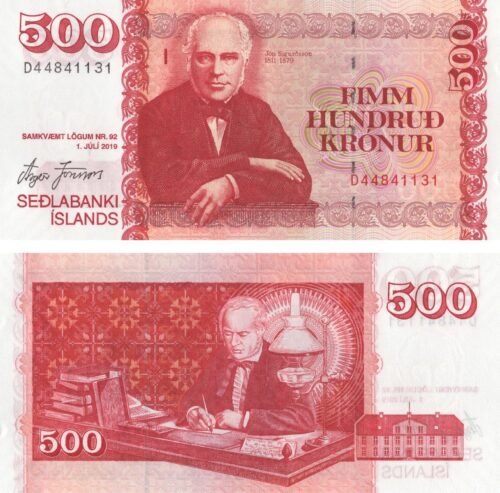
Design governance reflects a strong cultural and intellectual identity, with banknotes centred on figures such as Jón Sigurðsson, Brynjólfur Sveinsson and Halldór Laxness. These portraits are paired with detailed representations of traditional crafts and cultural life. The 5000 krónur banknote stands out for its intricate textile-inspired composition, depicting embroidery and lacework with exceptional precision. Production incorporates refined intaglio printing, watermark portraits and optically variable security elements, executed with a restrained Nordic aesthetic.
For collectors
For collectors, the Central Bank of Iceland offers a tightly defined and increasingly desirable European series, where low print volumes, strong literary and cultural themes and the distinctive textile-based design of the 5000 krónur create a focused collecting field that differs markedly from mainstream continental issues.