Central Bank of Kuwait
The Central Bank of Kuwait (بنك الكويت المركزي) operates as the central monetary authority within a high-value currency system, notably defined by strong exchange rate positioning and consistent monetary stability.
Quick Facts
Institutional Identity
The Central Bank of Kuwait manages issuance of the dinar, maintaining stability through a tightly controlled monetary framework supported by strong foreign reserves and a currency structure designed to preserve long-term purchasing power.
Historical Evolution
Established in 1969, the bank introduced the Kuwaiti dinar to replace the Gulf rupee and later executed one of the most decisive currency recoveries in modern history following the 1990 Iraqi invasion. A complete banknote replacement invalidated looted currency stocks, restoring full monetary control and creating a clearly defined break between pre- and post-invasion issues—now a key distinction for collectors.
Design Philosophy
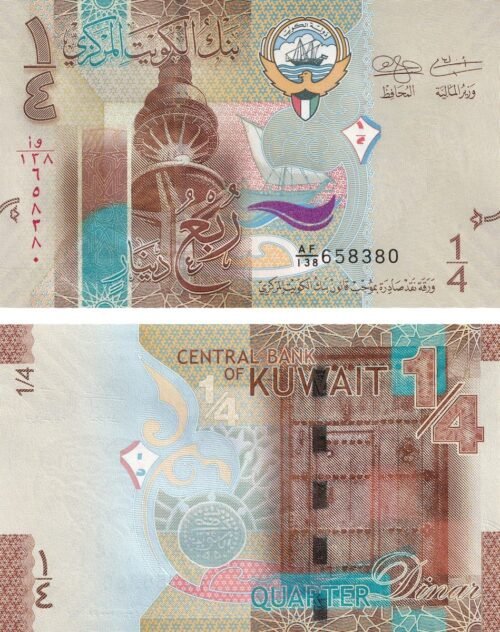
Kuwaiti banknotes reflect a refined visual identity built on maritime heritage and state symbolism, featuring Boom dhow vessels, pearl diving traditions and landmarks such as Seif Palace. Modern series emphasize clarity and hierarchy, enhanced by Optically Variable Ink (OVI), multitone security threads and high-durability substrates, positioning Kuwait among the most technically advanced issuers in the Gulf region.
For collectors
For collectors, the Central Bank of Kuwait offers a high-prestige collecting field defined by the world’s strongest currency, the historically significant 1990–1991 replacement series and a consistent design language rooted in maritime heritage, making Kuwaiti banknotes both symbolically powerful and globally respected.