
Central Bank of Nigeria
The Central Bank of Nigeria operates as the central monetary authority overseeing a currency system shaped by structural reforms, polymer experimentation and recent redesign programs.
Quick Facts
Institutional Identity
The Central Bank of Nigeria, established in 1958, serves as the country’s central monetary authority, managing currency issuance, monetary policy and financial stability within one of Africa’s largest and most cash-intensive economies. Banknote production is primarily handled by Nigerian Security Printing and Minting Plc (NSPM), supported by selected international security printers.
Historical Evolution
The naira was introduced in 1973, replacing the Nigerian pound and marking a shift to a decimal system. Its development has been defined by periodic structural changes, including the introduction of polymer substrates for lower denominations and the major 2022 redesign of the 200, 500 and 1000 naira notes, which created a clear division between earlier and current series.
Design Philosophy
Nigerian banknotes are characterised by portraiture of national figures such as Nnamdi Azikiwe and Obafemi Awolowo, combined with themes of national development, education and industry. Lower denominations utilise polymer substrates designed for high-frequency circulation, while notable issues include the 50 naira “Unity” note and the 100 naira commemorative featuring a functional QR code—one of the first such implementations on a circulating banknote.
For collectors
For collectors, the Central Bank of Nigeria offers a multi-layered modern collecting field, where distinctions between paper and polymer issues, pre- and post-2022 redesigns and technologically notable features such as QR-coded banknotes create clear segmentation and strong variety within African numismatics.
Explore Banknotes Issued by Central Bank of Nigeria
-
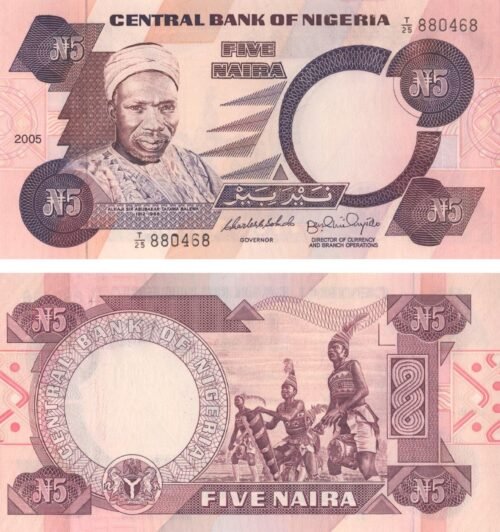
Nigeria 5 Naira 2005, P-24j, UNC
3,99 € -
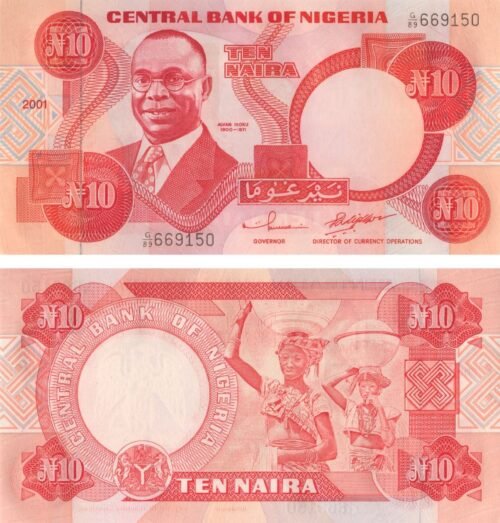
Nigeria 10 Naira 2001, P-25f(2), UNC
4,99 € -

Nigeria 5 Naira 2006, P-32a(2), UNC
1,49 € -
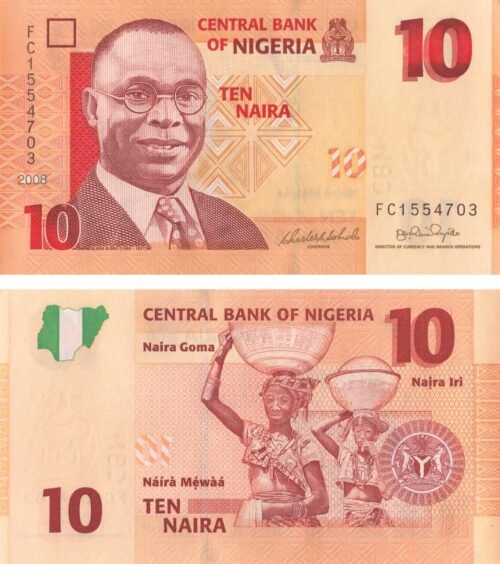
Nigeria 10 Naira 2008, P-33c, UNC
1,49 € -
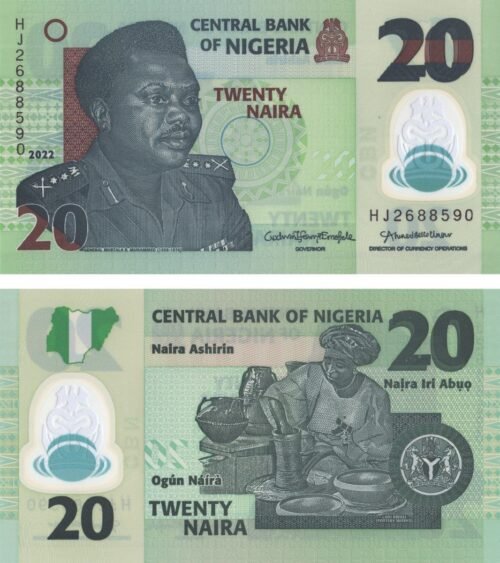
Nigeria 20 Naira 2022, P-34, UNC
1,49 € -

Nigeria 20 Naira 2024, P-34(2), UNC
0,99 € -

Nigeria 20 Naira 2025, P-34, UNC
0,99 € -

Nigeria 5 Naira 2016, P-38g, UNC
0,99 € -

Nigeria 5 Naira 2017, P-38h, UNC
0,99 € -

Nigeria 5 Naira 2018, P-38, UNC
0,99 € -

Nigeria 5 Naira 2020, P-38, UNC
0,99 € -

Nigeria 5 Naira 2024, P-38, UNC
0,99 € -
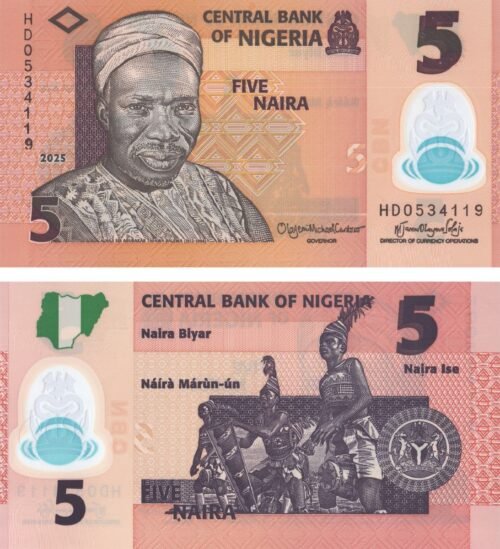
Nigeria 5 Naira 2025, P-38(1), UNC
0,99 € -

Nigeria 10 Naira 2019, P-39, UNC
0,99 € -

Nigeria 10 Naira 2022, P-39, UNC
0,99 € -
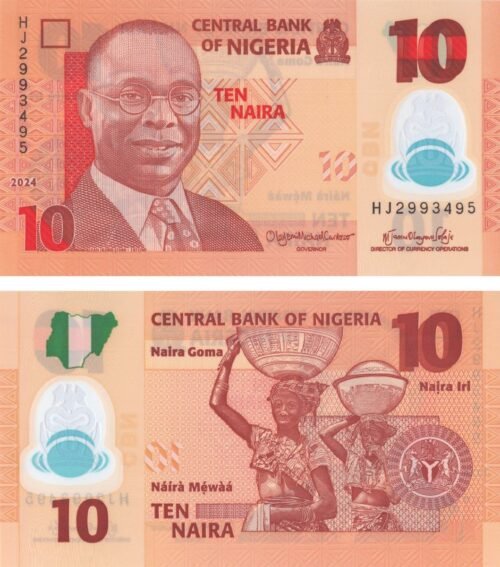
Nigeria 10 Naira 2024, P-39, UNC
0,99 € -
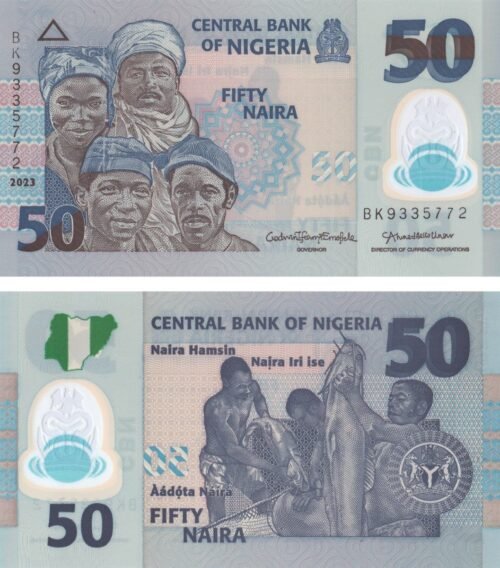
Nigeria 50 Naira 2023, P-40, UNC
1,49 € -

Nigeria 50 Naira 2024, P-40, UNC
0,99 € -

Nigeria 50 Naira 2025, P-40(2), UNC
1,49 € -

Nigeria 100 Naira 2014, P-41(2), UNC
2,99 € -
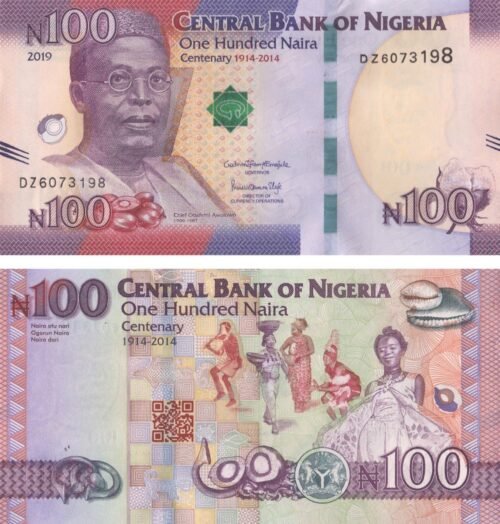
Nigeria 100 Naira 2019, P-41, UNC
2,99 € -

Nigeria 200 Naira 2023, P-47(2), UNC
3,99 € -

Nigeria 200 Naira 2026, P-47, UNC
2,49 € -
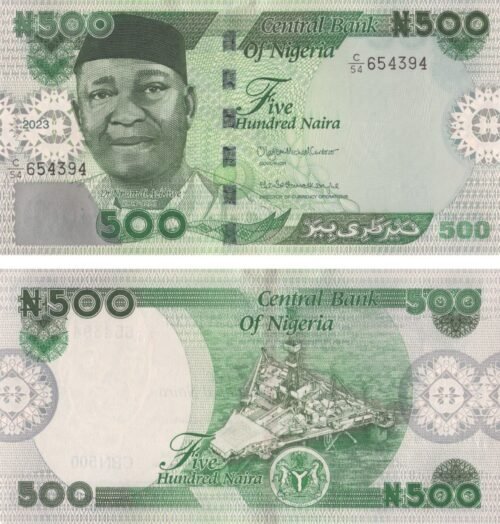
Nigeria 500 Naira 2023, P-48(2), UNC
3,99 €