
National Bank of Angola
The National Bank of Angola (Banco Nacional de Angola) operates as the central monetary authority managing a system defined by repeated monetary reforms, notably reflected in high-inflation transitional banknote series of the 1990s.
Quick Facts
Institutional Identity
Banco Nacional de Angola is responsible for issuing the kwanza, maintaining monetary stability and supervising the financial system. Its role has been shaped by prolonged inflationary pressure, during which banknote circulation required frequent adjustments. This is evident in the use of provisional solutions such as overprinted notes, where existing banknotes were revalidated with new denominations to maintain liquidity during periods of currency instability.
Historical Evolution
Established in 1976 following independence, Banco Nacional de Angola introduced the kwanza as the national currency. The system underwent multiple reforms, including the novo kwanza (AON) in 1990 and the readjusted kwanza (AOR) in 1995, both reflecting inflation-driven adjustments. In 1999, the current kwanza (AOA) was introduced, marking a stabilization phase after years of monetary restructuring.
Design Philosophy
Banknotes issued by Banco Nacional de Angola feature national figures and cultural symbols alongside themes of development and identity. Agostinho Neto appears prominently, while traditional elements include the “O Pensador” (The Thinker) mask, one of Angola’s most recognized cultural symbols. Earlier issues, particularly during the 1990s, include overprinted banknotes, while later series present more structured layouts, detailed engraving and consistent colour schemes.
For collectors
For collectors, Angolan banknotes are notable for their inflation-era issues and provisional overprints, which provide direct evidence of monetary instability. The multiple kwanza reforms (AON, AOR, AOA) create a clearly defined collecting framework, while cultural elements such as the O Pensador mask add strong visual identity. These banknotes are particularly relevant for collections focused on inflation, currency reform and African monetary history.
Explore Banknotes Issued by National Bank of Angola
-

Angola 500000 Kwanzas 1991, P-134, UNC
5,99 € -
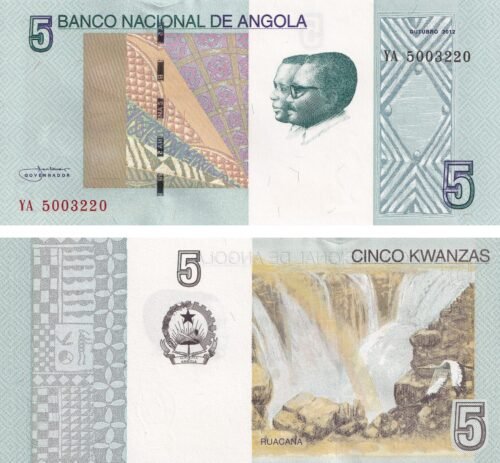
Angola 5 Kwanzas 2012, P-151A, UNC
1,99 € -
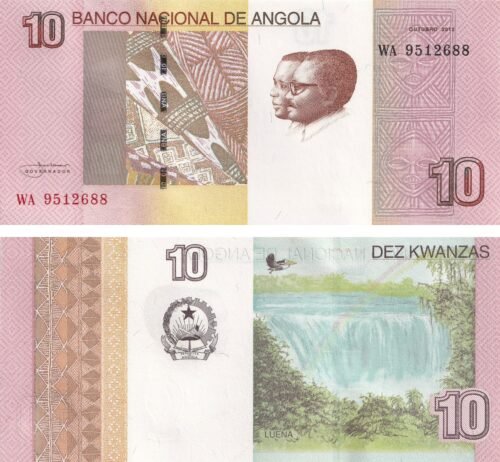
Angola 10 Kwanzas 2012, P-151B, UNC
1,99 € -
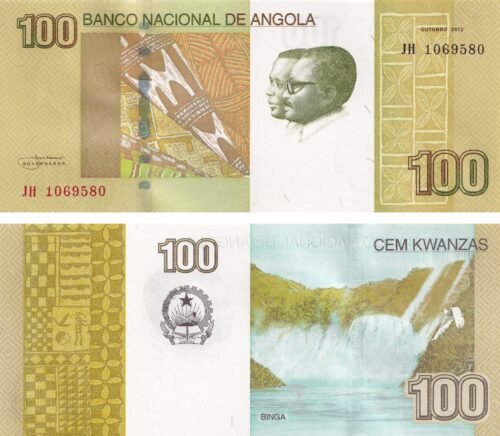
Angola 100 Kwanzas 2012, P-153a, UNC
2,99 € -
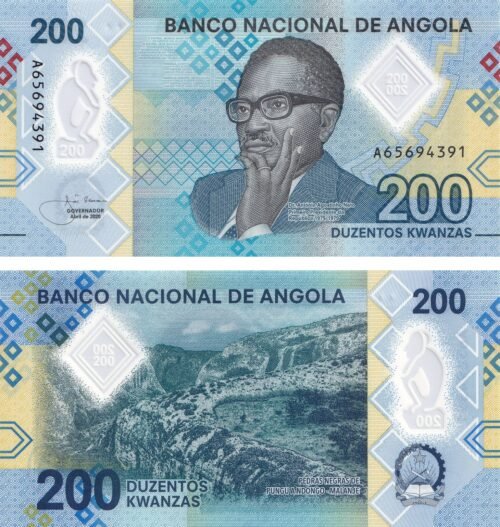
Angola 200 Kwanzas 2020, P-160, UNC
2,99 € -
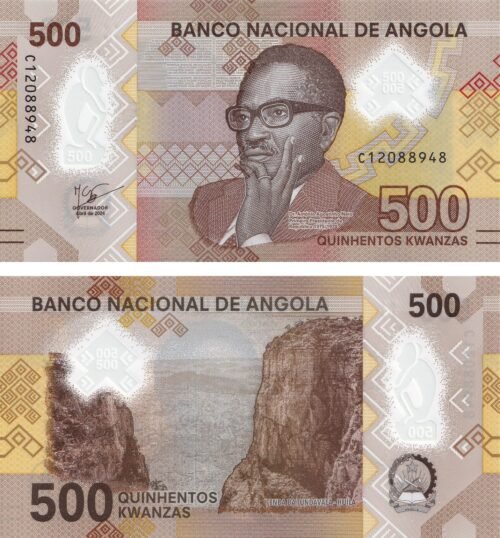
Angola 500 Kwanzas 2024, P-161, UNC
4,99 € -
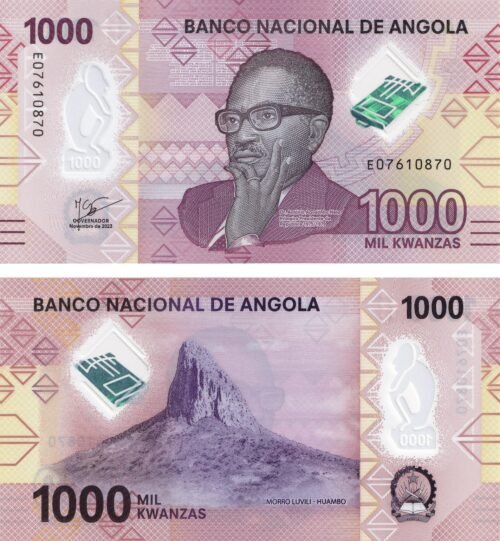
Angola 1000 Kwanzas 2023, P-162, UNC
7,99 € -
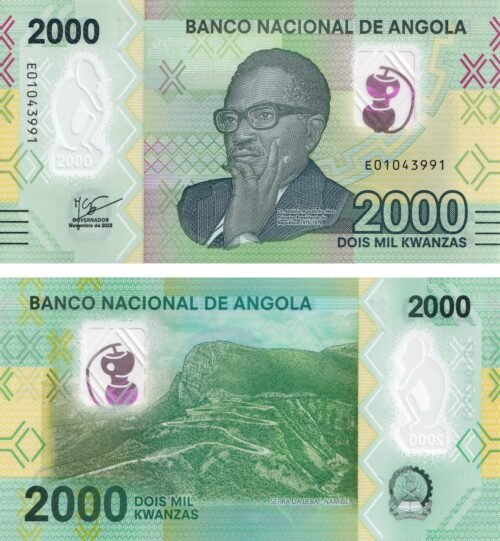
Angola 2000 Kwanzas 2023, P-163, UNC
14,99 € -
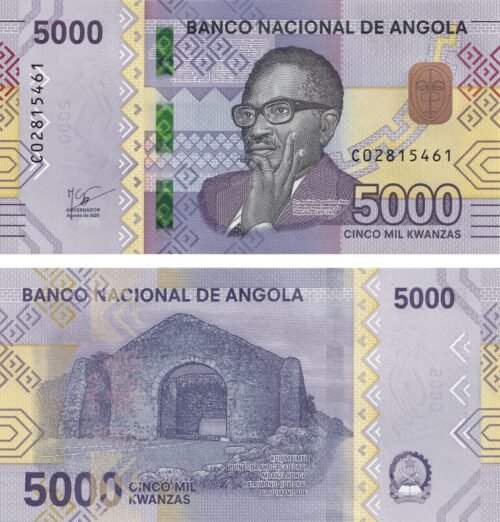
Angola 5000 Kwanzas 2025, P-164, UNC
27,99 €