
National Bank of Tajikistan
The National Bank of Tajikistan (Бонки миллии Тоҷикистон) operates as the central monetary authority overseeing a post-reform currency system introduced in 2000, including distinctive fractional denominations.
Quick Facts
Institutional Identity
The National Bank of Tajikistan operates within a cultural and historical framework deeply rooted in Persian and Central Asian traditions. Its banknotes reflect not only monetary authority but a broader narrative of identity, where national revival, scholarship and statehood are expressed through carefully constructed visual symbolism.
Historical Evolution
The historical evolution of Tajikistan’s currency is marked by a distinctive transition. Introduced in 1995 as the last post-Soviet currency, the Tajikistani ruble was printed by Russia’s Goznak and deliberately mirrored the design language of late Soviet banknotes—creating a striking numismatic anomaly. This short-lived system was replaced in 2000 by the somoni at a 1000:1 ratio, establishing a stable national currency anchored in pre-Soviet historical identity.
Design Philosophy
Tajik banknote design reflects a fusion of Persianate ornamentation and intellectual heritage. Portraits of rulers and scholars are framed by intricate geometric patterns, while architectural elements and mountainous landscapes reinforce a strong sense of place. The series notably retains the classic Soviet-era denomination structure, including the unusual and highly collectible 3 Somoni note. The highest denomination, 500 Somoni, honors Abu Abdullah Rudaki—the founder of Persian literature—positioning the currency within a broader cultural and literary tradition.
For collectors
For collectors, Tajik banknotes offer one of the most structurally unique collecting experiences in the post-Soviet world. The Soviet-mirroring 1995 ruble issues appeal to CIS specialists, while the introduction of fractional paper currency—the 1, 5, 20 and 50 Diram notes—adds a rare and fascinating dimension seldom seen in modern systems. Together with the cohesive somoni series, these elements create a complete and highly desirable narrative of monetary transition and cultural identity.
Explore Banknotes Issued by National Bank of Tajikistan
-

Tajikistan 1 Rouble 1994, P-1, UNC
0,99 € -

Tajikistan 5 Roubles 1994, P-2, UNC
0,99 € -

Tajikistan 10 Roubles 1994, P-3, UNC
0,99 € -

Tajikistan 20 Roubles 1994, P-4, UNC
0,99 € -
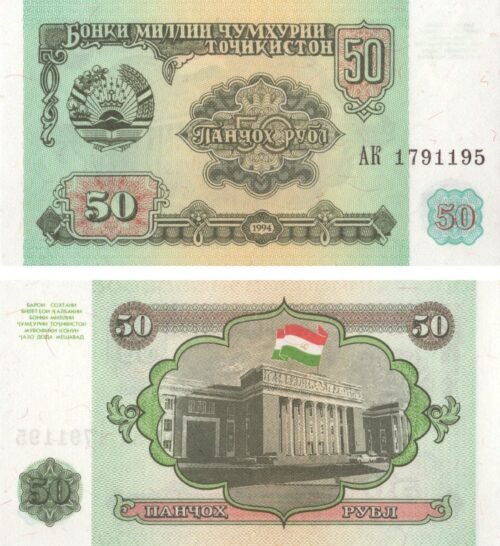
Tajikistan 50 Roubles 1994, P-5, UNC
0,99 € -

Tajikistan 100 Roubles 1994, P-6, UNC
0,99 € -
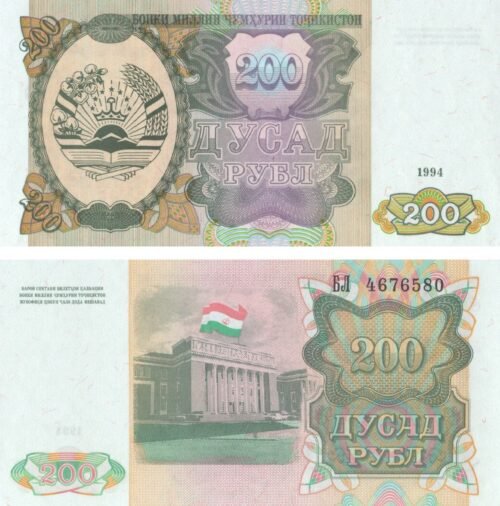
Tajikistan 200 Roubles 1994, P-7, UNC
1,49 € -
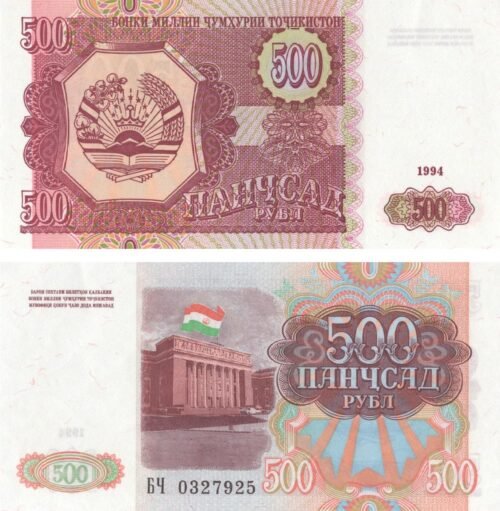
Tajikistan 500 Roubles 1994, P-8, UNC
2,99 € -
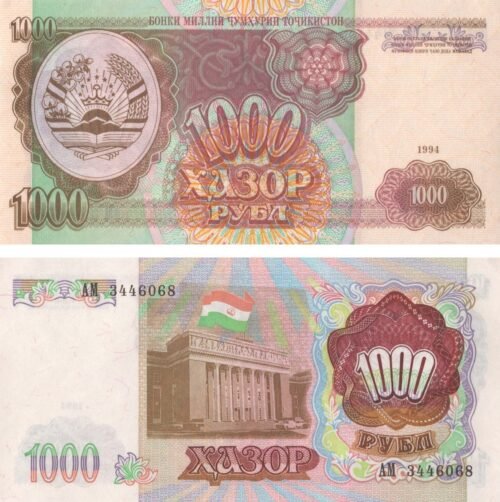
Tajikistan 1000 Roubles 1994, P-9, UNC
3,99 € -

Tajikistan 1 Diram 1999, P-10a(1), UNC
1,49 € -
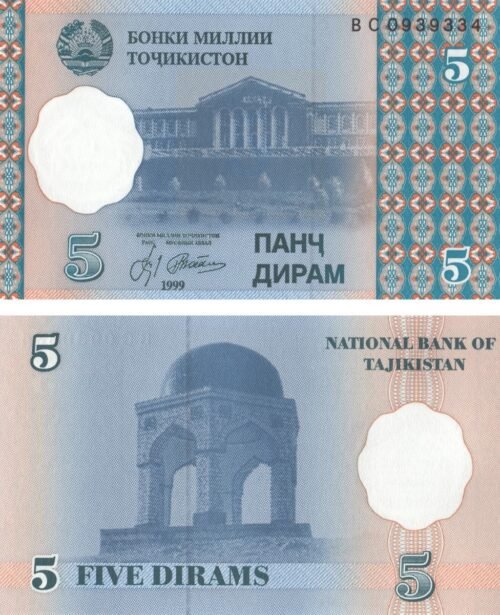
Tajikistan 5 Diram 1999, P-11a(2), UNC
1,49 € -

Tajikistan 20 Diram 1999, P-12a(2), UNC
1,49 € -
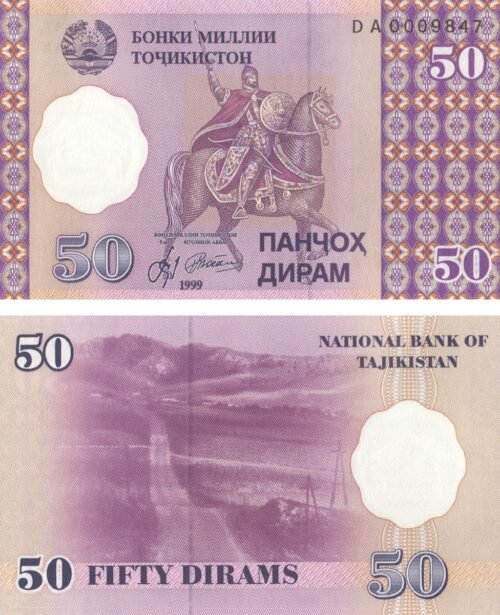
Tajikistan 50 Diram 1999, P-13b, UNC
2,49 € -
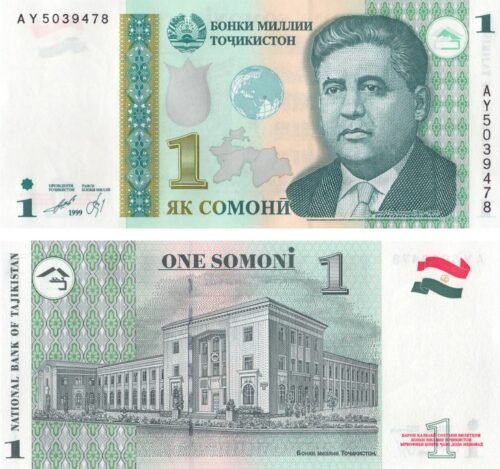
Tajikistan 1 Somoni 1999, P-14A, UNC
1,49 € -
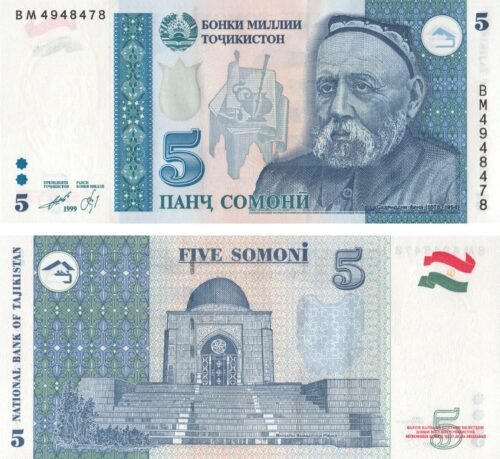
Tajikistan 5 Somoni 1999, P-15c, UNC
4,99 € -

Tajikistan 3 Somoni 2010, P-20, UNC
2,49 € -
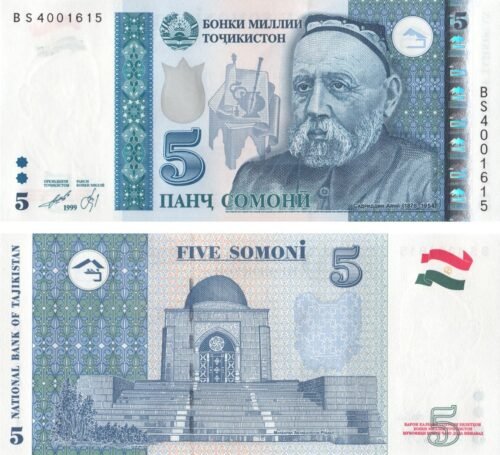
Tajikistan 5 Somoni 1999, P-23, UNC
2,99 € -
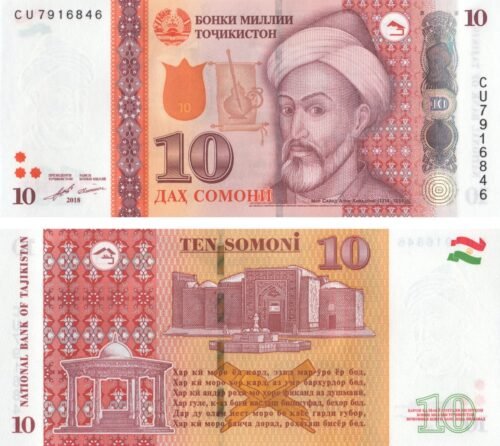
Tajikistan 10 Somoni 2018, P-24, UNC
4,99 € -

Tajikistan 20 Somoni 2021, P-25, UNC
5,99 €