Reichsschuldenverwaltung
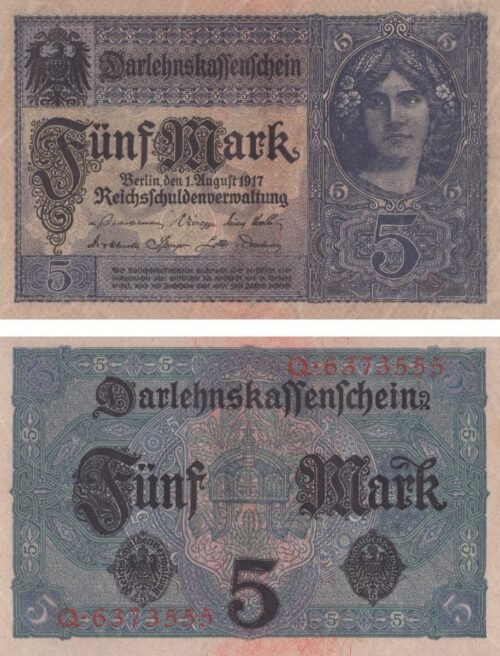
The Reichsschuldenverwaltung was the German Empire’s debt administration and an issuer of state paper money outside the Reichsbank’s regular note system. Its Reichskassenscheine and wartime loan-currency notes reveal how treasury credit supplemented central-bank money.
Quick Facts
Institutional Identity
Created in 1871 at German unification, the Reichsschuldenverwaltung succeeded the Prussian debt administration whose roots reached back to 1820. Based in Berlin, it managed imperial public debt and related state obligations.
Its paper issues were treasury or loan-currency instruments, not ordinary Reichsbanknoten. This legal distinction explains why notes denominated in the same mark system can carry different issuing authorities.
Historical Evolution
The administration issued Reichskassenscheine from 1874 into the early twentieth century. During the First World War, Darlehenskassenscheine provided additional means of payment backed through the wartime loan-office system.
Emergency and coupon-related forms also appeared amid the severe monetary disruption after the war and during the 1923 hyperinflation. Once the currency system was stabilised, these exceptional state-note functions receded.
Design Philosophy
Imperial eagles, formal guilloche, dense legal text and historicising typography establish the documents as obligations of the German state. The designs emphasise legal authority and anti-counterfeiting complexity more than personal portraiture.
Wartime issues often became simpler and more functional as demand accelerated. Comparing ornament, paper and printing quality across periods makes the pressure on the monetary system visible.
For collectors
For collectors, the heading is decisive: Reichskassenschein, Darlehenskassenschein and Reichsbanknote describe different legal categories even when all are denominated in marks. Date, law citation and signature panel should be read before assigning an issue.
Printer, watermark and serial variations can separate closely related notes. Clean paper and intact embossing are especially desirable on issues whose heavy circulation and acidic storage frequently caused wear.