
Polymer Banknotes for Sale
Polymer banknotes are made on a specialised plastic-film substrate rather than conventional banknote paper. Browse collectible issues from around the world, with original catalogue scans, Pick references, prices and the stated condition of each listed note.
-
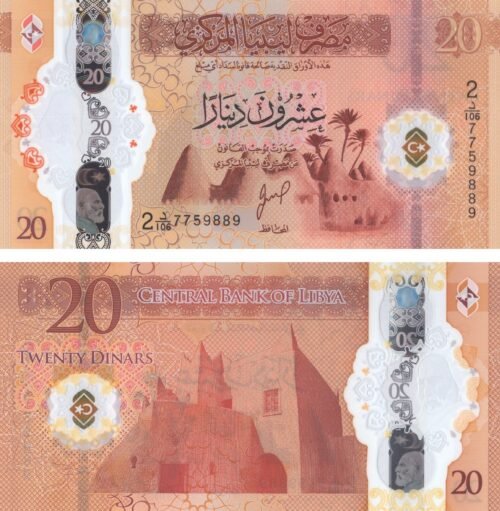
Libya 20 Dinars 2025, P-87, UNC
9,99 € -

Malaysia 1 Ringgit 2021, P-51c, UNC
1,49 € -

Malaysia 5 Ringgit 2012, P-52a, UNC
3,99 € -

Malaysia 5 Ringgit 2012, P-52c, UNC
3,99 € -

Maldives 5 Rufiyaa 2017, P-A26, UNC
1,49 € -

Maldives 10 Rufiyaa 2018, P-26, UNC
2,99 € -

Maldives 20 Rufiyaa 2015, P-27, UNC
3,99 € -

Maldives 20 Rufiyaa 2020, P-27, UNC
4,49 € -

Maldives 10 Rufiyaa 2025, P-33, UNC
2,49 € -

Maldives 20 Rufiyaa 2025, P-34, UNC
3,99 € -

Maldives 50 Rufiyaa 2022, P-35, UNC
7,99 € -

Mauritania 1000 Ouguiya 2014, P-19, UNC
1,49 € -

Mauritius 100 Rupees 2024, P-65A, UNC
6,99 € -

Mexico 20 Pesos 2010, P-122n, UNC
5,99 € -

Mexico 20 Pesos 2021-10-05, P-132c(2), UNC
2,99 € -

Mexico 20 Pesos 2022-10-10, P-132g(4), UNC
3,99 € -

Mexico 20 Pesos 2023-07-10, P-132k(3), UNC
3,99 € -

Mexico 50 Pesos 2023-12-06, P-133e(5), UNC
9,99 € -

Mexico 100 Pesos 2021-05-21, P-134d(3), UNC
19,99 € -

Mexico 50 Pesos 2024-06-27, P-138a(1), UNC
5,99 €
What Are Polymer Banknotes?
Often called plastic banknotes, polymer notes use a film substrate as the body of the note. This is different from applying a protective coating to a paper banknote. Transparent areas can be incorporated into the film, creating windows that become part of the design alongside the printed portraits, lettering and patterns.
This selection contains banknotes classified as Polymer in our catalogue. Hybrid banknotes, which combine paper and polymer in a layered construction, are catalogued separately and are not included here. Our guide to paper, polymer and hybrid banknotes explains the material differences through original scans and comparisons of related issues.
Polymer Banknote Designs in the Collection
Polymer is a shared material, not a uniform style. The Australian 5-dollar note dated 2021 has a horizontal layout with a clear window running from top to bottom. The Canadian 10-dollar note dated 2018 uses a vertical design. Their original catalogue scans show how the orientation, printed imagery and transparent areas give two polymer issues quite different appearances.
A change from paper to polymer does not always bring an entirely unfamiliar design. A denomination or portrait may continue across a material change, making paper–polymer pairs a distinct collecting theme. The documented Mauritius, Hong Kong and Thailand comparisons in our material guide illustrate that transition.
Condition and Reference Images
Polymer describes the material, not the condition. Individual listings state the grade, including UNC or aUNC where applicable, alongside the catalogue images. Our banknote grading guide explains those condition terms and why a flat scan cannot reveal every aspect of a note’s physical state.
Serial numbers and prefixes may differ from the reference images. Use the individual listing’s description when comparing an issue or variety.