Bank of Finland Printing Works and Setec

The Bank of Finland Printing Works created Finland’s domestic banknote-production tradition from 1885, with the operation incorporated into Setec Oy in 1991 during the final markka era.
Quick Facts
Official name: Bank of Finland Printing Works; operations incorporated into Setec Oy in 1991
Alternative names: Suomen Pankin setelipaino; Finlands Banks sedeltryckeri; Bank of Finland Printing Works; Setec Oy
Country: Finland
Headquarters: Helsinki, Finland; the historical security printing house operated beside the Bank of Finland
Established: Bank of Finland printing works established in 1885; operations incorporated into Setec Oy in 1991
Status: Historical under the Bank of Finland name; production continued through successor Setec Oy
Institution type: Historical central-bank security printing works and corporatised successor
Ownership or parent: Bank of Finland printing department until 1991; operations transferred to Setec Oy
Official website: suomenpankki.fi
Institutional Identity
The Bank of Finland Printing Works was the central bank’s own security-printing operation, known in Finnish as Suomen Pankin setelipaino. It should be distinguished from the Bank of Finland as issuing authority even though both functions belonged to the same institution. The Bank authorised and issued markka banknotes; the printing works manufactured them.
In 1991 the printing operation was incorporated into Setec Oy. This is not a minor change of name: it marks the end of the works as a direct Bank of Finland department and the beginning of a corporate successor. The WorldBanknotes.eu controlled printer value “Bank of Finland, Finland” spans this institutional lineage, so the page title explicitly includes Setec rather than silently attributing post-1991 production to the former department.
The page is therefore a historical production profile, not a description of a printer currently operating under the Bank of Finland name. It covers the domestic works and the immediate successor phase represented in the catalogue, while keeping the issuer, printer and later corporate identity visible.
Historical Development
Before the Bank established its own works, Finnish banknotes were produced through several domestic and foreign contractors. The decision to create a security printing house was taken in 1885, construction followed in 1886 on Bank of Finland property, and the operation initially functioned under a management contract with printer Ferdinand Tilgmann. The Bank financed the premises, machines, plates and paper.
In 1921 the Bank acquired the machinery and converted the operation into its own department, with the staff becoming Bank employees. Production later moved into modernised premises in Helsinki. The works supported successive markka series and accumulated the engraving, origination and industrial controls needed for domestic currency production.
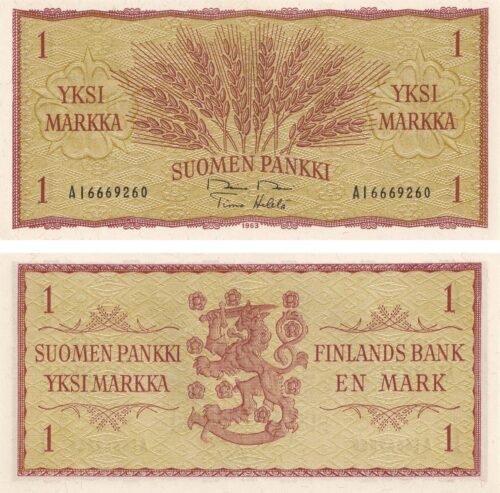
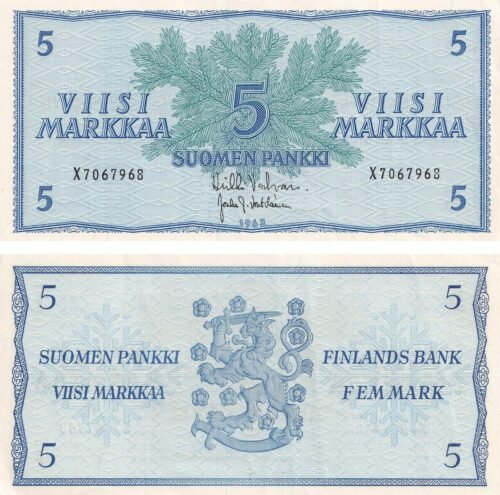
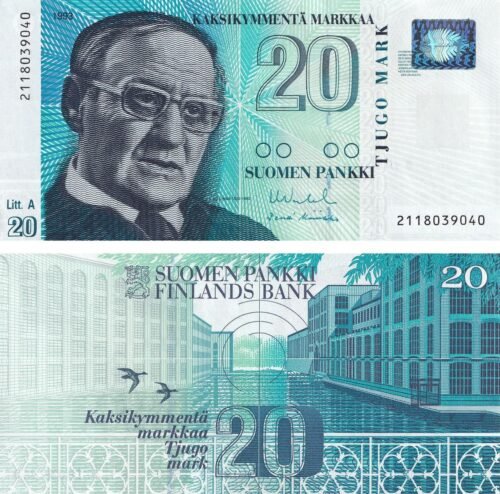
The operation was incorporated into Setec Oy in 1991. The timing matters for the current catalogue: the 1- and 5-markka notes dated 1963 belong to the direct Bank of Finland works period, while the 20-markka note introduced in 1993 belongs to the Setec successor phase. Bank of Finland material states that post-1991 notes retained the printed series year 1986 but received enhanced security features; the 20 markka entered circulation in 1993 and later gained a hologram.
Role in Banknote Production
The historical works converted Bank-approved designs into finished notes through plate preparation, background printing, intaglio, numbering, inspection and finishing. Earlier arrangements involved external designers and contractors, and even a domestic central-bank works could use imported machinery, paper or specialised expertise. The printer credit should therefore identify the physical producer without claiming sole authorship of the note.
WorldBanknotes.eu currently links three Finnish notes to the controlled term. The 1963 1- and 5-markka notes illustrate the mature in-house works. The 20-markka note dated 1993 is shown on the same page because it belongs to the direct institutional successor, Setec Oy. The public text states this transition so the display does not erase the 1991 corporate boundary.
This is a case where the database value and the most exact historical printer name are not identical for every date. The page resolves that mismatch editorially rather than creating two thin profiles that would split a continuous production history and leave the existing product taxonomy unexplained.
Security and Technology
Finnish banknote production developed from engraved plates and traditional security paper toward increasingly complex late-markka features. Intaglio provided tactile relief and portrait detail; watermarks, security threads, microprinting and carefully registered backgrounds supplied additional checks. Later notes introduced enhanced features while preserving familiar designs and printed series dates.
The 1993 20-markka note is especially instructive because its appearance belongs to the 1986 design family while its production and circulation history belongs to the post-1991 Setec phase. A collector must distinguish the printed series date from the actual issue or production period. The later hologram version adds another layer without creating a new printer institution.
Technical comparison should use transmitted light, magnification and tactile inspection as described in the guide to authenticating banknotes. Visual similarity alone cannot determine whether a note came from the Bank department or its successor.
For Collectors
The Finnish case demonstrates why printer history cannot be reduced to a single founding date or brand. The same production lineage moved from a managed works to a central-bank department and then to Setec Oy. Catalogue notes on either side of 1991 require different institutional wording even when collectors commonly group them under Bank of Finland.
The two 1963 notes provide direct examples of the historical works, while the 1993 20 markka tests date interpretation. Bank of Finland states that notes put into circulation after 1991 could still carry the issue year 1986 and additional security markings. The year printed on the note is therefore not enough to determine the printer phase.
For a rigorous record, note the controlled taxonomy value, the exact dated issue and whether the evidence points to the Bank of Finland department or Setec. This preserves collection usability while avoiding a false claim that the old department remained unchanged after corporatisation.