
Banknote Factory of the National Bank of Kazakhstan

Kazakhstan’s Banknote Factory transformed a newly independent currency system into a domestic high-security industry, producing tenge banknotes and a broad range of protected state documents.
Quick Facts
Official name: Republican State Enterprise “Banknote Factory of the National Bank of the Republic of Kazakhstan”
Alternative names: Banknote Factory of the National Bank of Kazakhstan; Banknote Factory of NBRK; Kazakhstan Banknote Factory
Country: Kazakhstan
Headquarters: Almaty, Kazakhstan
Established: 26 May 1992 by presidential decree; factory officially opened 19 May 1995
Status: Active
Institution type: State banknote and high-security printing enterprise
Ownership or parent: Republican State Enterprise within the National Bank of Kazakhstan system
Official website: bf.kz
Institutional Identity
The Banknote Factory of the National Bank of the Republic of Kazakhstan is a state security-printing enterprise based in Almaty. It belongs to the institutional system of the National Bank, but it is not the monetary issuer. The National Bank authorises the tenge, develops the banknote design and defines the issue programme; the factory manufactures the approved notes and other protected products.
Its present legal form is a Republican State Enterprise operating with the right of independent economic activity. That status dates from 2004 and should be distinguished from the earlier project, branch and production-directorate stages in the factory’s history. The full institutional name is therefore preferable to the looser expressions “Kazakhstan state printer” or “National Bank printing works”, which can obscure the legal and organisational sequence.
The factory has developed into a multi-product security operation. Alongside banknotes it produces electronic and machine-readable passports, identity documents, payment cards, certificates, excise and control labels and more than a hundred other protected printed products. These activities share secure-process disciplines, but they do not make every document or feature produced in Kazakhstan evidence of banknote manufacture.
Historical Development
The project began with a presidential decree of 26 May 1992 establishing a printing factory for the National Bank. Kazakhstan’s first tenge notes entered circulation in 1993, before the domestic works was ready. In early 1994 a turnkey construction contract was signed; design, building work and equipment installation then proceeded in parallel because the country wanted to establish its own production capacity quickly.
The factory was officially opened on 19 May 1995. More than 83 million banknotes were produced during that year, and output exceeded 104 million the following year as the works approached its design capacity. In 1997 the Securities Factory was merged into the Banknote Factory as a workshop, while production expanded to passports and national identity cards.
A further institutional change followed on 17 July 1998, when the Banknote Factory became a branch of the National Bank. On 1 April 2004 it was reorganised as the Republican State Enterprise that forms the basis of the current organisation. The chronology matters for catalogue work: the date printed on a tenge note is not automatically the date or place of manufacture, particularly for the first national series issued before the Almaty factory opened.
Role in Banknote Production
The factory’s primary monetary task is to produce tenge banknotes to specifications approved by the National Bank of Kazakhstan. National Bank specialists develop the designs, while the factory carries out the industrial translation of those designs into secure printed notes. Depending on the issue, this can include origination support, plate and screen preparation, background and relief printing, application of optical elements, numbering, automated inspection, cutting and secure finishing.
Its wider production base is relevant because banknote manufacture depends on controlled identity, traceability and document-security processes. The same enterprise operates lines for passports, ID cards, payment cards and controlled labels, supported by separate quality, information-security and secure-printing systems. These capabilities describe the factory as an institution; they do not prove that a particular feature on a banknote was designed or supplied by the factory unless issue documentation says so.
The WorldBanknotes.eu catalogue currently links the Almaty works to modern Kazakhstan issues dated from 2014 to 2025, including circulating and commemorative denominations. Those examples can be studied alongside the guide to banknote production, while the earliest tenge issues should be treated separately because domestic printing capacity was still being established.
Security and Technology
The factory states that its equipment can produce protected products containing security features across all principal categories. Its management systems include ISO 9001 for quality, ISO 14001 for environmental management, ISO 45001 for occupational health and safety, ISO/IEC 27001 for information security and ISO 14298 for secure-printing process management, together with INTERGRAF requirements.
Kazakhstan’s recent “Saka Style” notes illustrate the level of integration expected from the production system. Official descriptions identify micro-optic elements, two-colour dynamic security threads, locally applied optical patches, windows, tactile printing and detailed public-authentication features. The factory also documents conventional cotton-paper constructions using watermarks, embedded and windowed threads and machine-readable elements.
These examples should remain denomination-specific. Awards won by one Kazakhstan note, or a feature used in a later series, cannot be projected backwards onto every product of the factory. Accurate attribution requires the exact issue, series and production specification.
For Collectors
For collectors, the factory marks Kazakhstan’s transition from an externally produced first currency to a mature domestic banknote industry. A useful collection can follow the change from the early horizontal tenge issues to the strongly vertical “Baiterek” designs and then to the newer “Saka Style” family, comparing how national symbols, scripts, dimensions and security architecture evolved.
The factory name alone is not enough to date a note. The 1992 establishment decree, the 1995 opening, the 1998 branch status and the 2004 state-enterprise reorganisation are institutional milestones, not printed series dates. On the banknote itself, collectors should record the stated year, denomination, signature, series and visible security configuration before drawing conclusions about production.
Material and feature changes are particularly important. Cotton paper, transparent or colour-changing windows, micro-optic strips and different thread constructions age and authenticate in different ways. The WorldBanknotes.eu guides to banknote substrates and security features provide the appropriate comparison framework. Printer attribution should be supported by National Bank or factory documentation, not by the assumption that every Kazakhstan-dated note was necessarily printed at Almaty.
Banknotes Printed by Banknote Factory of the National Bank of Kazakhstan
-

Kazakhstan 5 Tiyn 1993, P-3b(2), UNC
2,99 € -
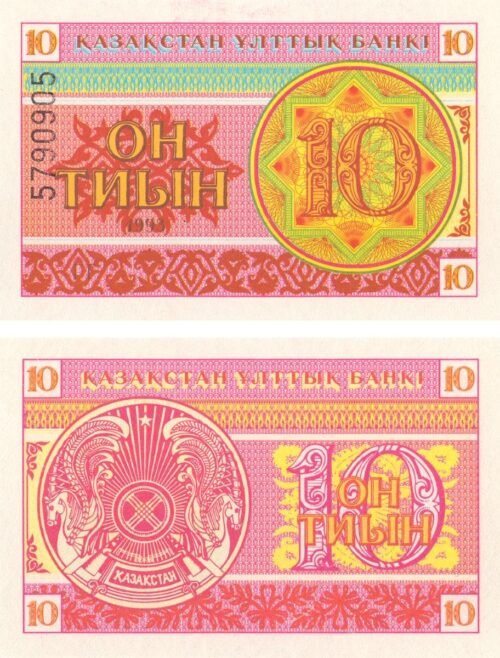
Kazakhstan 10 Tiyn 1993, P-4b(1), UNC
2,99 € -
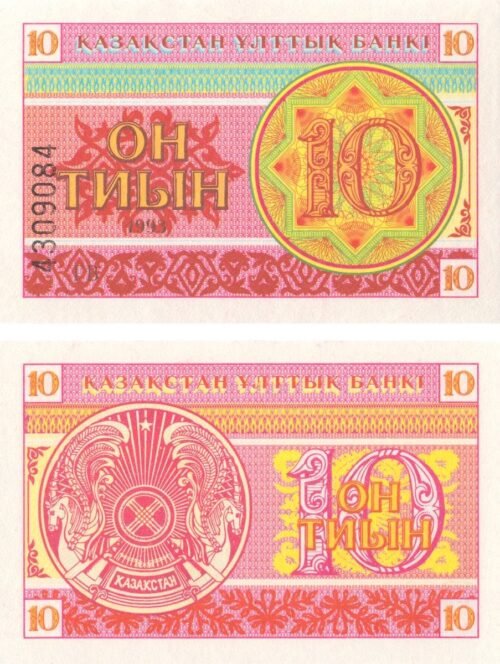
Kazakhstan 10 Tiyn 1993, P-4a(2), UNC
2,49 € -
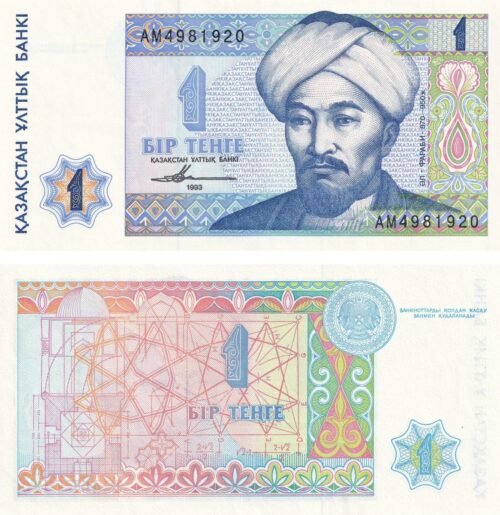
Kazakhstan 1 Tenge 1993, P-7a(2), UNC
2,99 € -

Kazakhstan 3 Tenge 1993, P-8a(2), UNC
3,99 € -

Kazakhstan 5 Tenge 1993, P-9a(2), UNC
4,99 € -
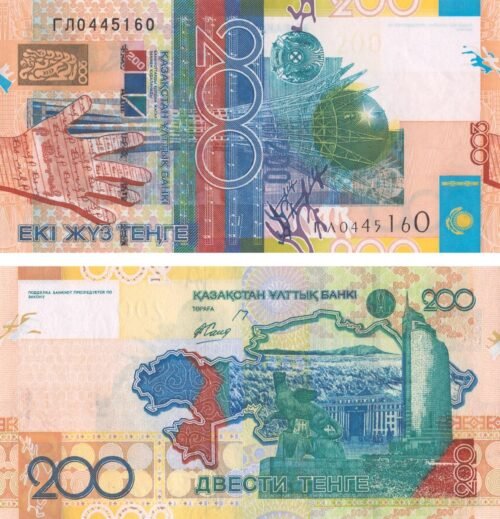
Kazakhstan 200 Tenge 2006, P-28, UNC
4,99 € -

Kazakhstan 2000 Tenge 2012, P-41(3), UNC
13,99 € -
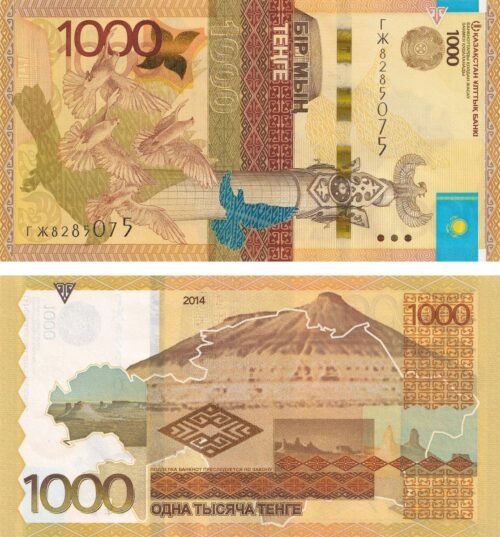
Kazakhstan 1000 Tenge 2014, P-45b, UNC
4,99 € -
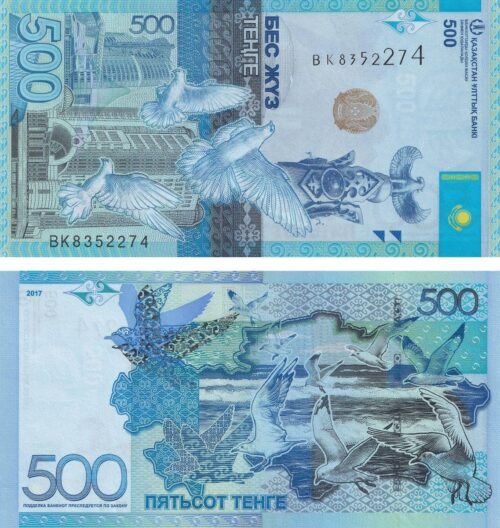
Kazakhstan 500 Tenge 2017, P-A45, UNC
3,99 € -

Kazakhstan 500 Tenge 2025, P-51, UNC
2,99 € -
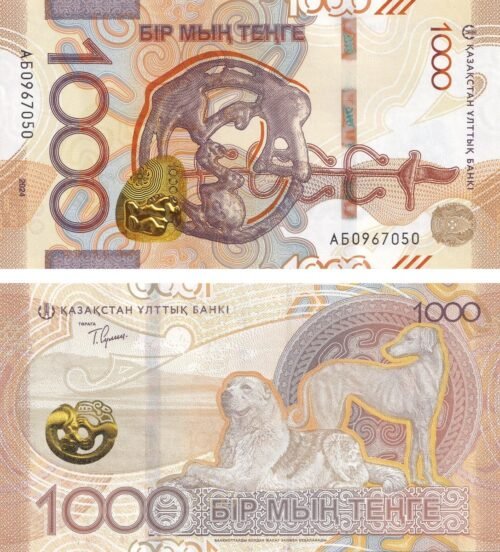
Kazakhstan 1000 Tenge 2024, P-52, UNC
4,99 € -
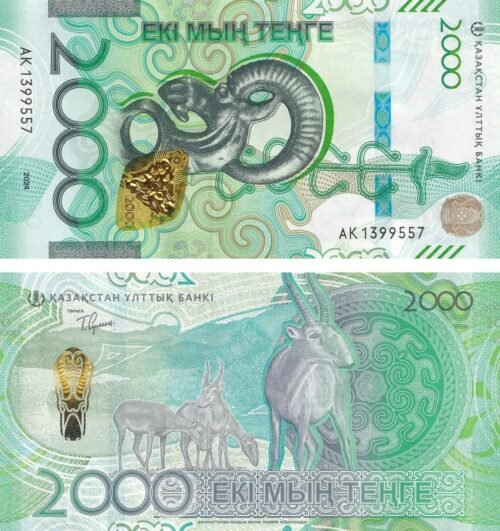
Kazakhstan 2000 Tenge 2024, P-53, UNC
7,99 € -
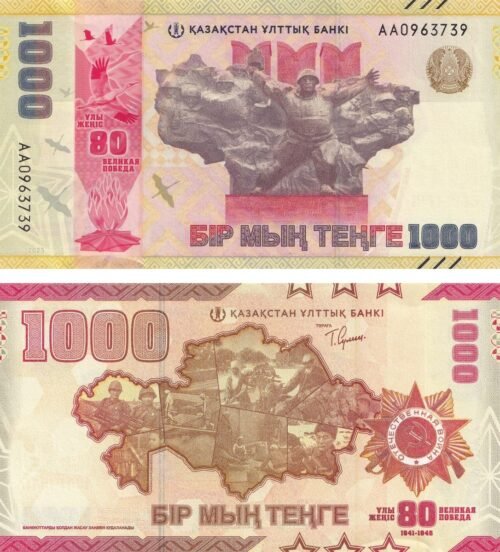
Kazakhstan 1000 Tenge 2025, P-57, UNC
5,99 €