
British American Bank Note Company

The British American Bank Note Company was a foundational Canadian security printer, shaping federal and Bank of Canada currency through engraving, design and production from 1866 until BA International closed in 2012.
Quick Facts
Official name: British American Bank Note Company Limited; later BA International Inc.
Alternative names: BABN; British American Bank Note Co.; BA International
Country: Canada
Headquarters: Historical Ottawa plant at 975 Gladstone Avenue, Ontario, Canada; company founded in Montréal
Established: Founded in Montréal in 1866; Ottawa Gladstone plant operated from 1948 to 2012
Status: Historical; BA International closed its Ottawa security-printing operation in 2012
Institution type: Private commercial banknote engraver and security printer
Ownership or parent: Part of Giesecke & Devrient at the time of closure
Institutional Identity
The British American Bank Note Company, generally abbreviated BABN, was founded in Montréal in 1866 by George Burland and W. C. Smillie. It became one of Canada’s principal commercial security printers, producing banknotes, passports, stamps, bonds, share certificates and lottery material for government and private clients.
The company later operated as BA International. Its Ottawa plant at 975 Gladstone Avenue served as the centre of production from 1948 until 2012. At closure, BA International belonged to Giesecke & Devrient. The historic printer must therefore be distinguished both from the separately founded Canadian Bank Note Company and from its later German parent.
BABN never issued Bank of Canada currency in its own name. The Bank of Canada was the issuing authority, while BABN and other contracted printers contributed design, engraving and manufacture. This division can be observed clearly in official museum records that list the issuer and printer separately.
Historical Development
Founded one year before Canadian Confederation, BABN developed alongside the country’s federal monetary and administrative institutions. It produced secure work for the Dominion, chartered banks and later the Bank of Canada. The company’s engraved archives preserve not only banknote designs but a visual record of Canadian industry, geography and public identity.
When the Bank of Canada prepared its first series for issue in 1935, BABN and Canadian Bank Note Company both contributed design and production expertise. BABN remained involved in later series, including the Canadian Landscape and Scenes of Canada notes. Its engravers produced portraits and vignettes that became part of Canada’s modern monetary image.
The company adopted the BA International name in its later period and closed the Gladstone Avenue operation in 2012. This date marks the end of the active security-printing tradition at the site. Museum donations made after closure preserve hundreds of dies and production tools, demonstrating the importance of the company’s physical archive to Canadian numismatic history.
Role in Banknote Production
BABN combined design, portrait and vignette engraving, geometric security work, plate preparation, background printing, intaglio printing, numbering and finishing. The exact role varied by contract. In some Bank of Canada series, design work and production were shared between two Canadian printers; an engraving could also be prepared by one specialist and printed within a wider production arrangement.
The Bank of Canada Museum directly identifies British American Bank Note Co. Ltd. as the printer of the 1973 one-dollar note represented in WorldBanknotes.eu. The official collection record separately names the Bank of Canada as issuer. This is strong note-level evidence.
The catalogue also links BABN to Singapore’s purple two-dollar Ship Series note dated 1998. Public MAS history confirms the currency and series context, while specialist banknote catalogues identify the printer. Because a public issuer contract was not located, the text keeps this as a catalogue-supported foreign attribution rather than implying direct MAS confirmation.
Security and Technology
BABN’s traditional strength lay in steel engraving and intaglio. The Bank of Canada Museum’s surviving dies show hand-engraved portraits, landscapes, borders and numerals used to create printing plates. Intaglio transferred dense line work and raised ink under pressure, making artistic detail part of the note’s security structure.
The Scenes of Canada series also illustrates multicolour security printing. The 1973 one-dollar note uses layered colour and engraved elements rather than the window, foil and polymer technologies familiar from later Canadian notes. This historical context matters when assessing authentication: older design systems must be judged by the features authorised for their period.
A printer’s archive can contain engravings, design elements and tools used across multiple contracts. The presence of a BABN engraving does not always prove that the entire finished note was printed by BABN. Final attribution should follow the official collection record, printed imprint or reliable catalogue entry for the exact issue.
For Collectors
BABN is central to Canadian printer collecting because it offers a documented link between private engraving houses and the national currency system. It also supports international study through assignments such as the Singapore Ship Series.
The 1973 Canadian one-dollar note is especially useful for separating roles: Bank of Canada as issuer, BABN as printer, and George Gundersen as a major engraver associated with the series portrait. The note’s 2021 loss of legal-tender status is a later legal event and does not change its historical printer attribution.
The 1998 Singapore two-dollar note should be recorded with an evidence note: printer attribution is well established in specialist catalogues, while the public issuer sources reviewed describe the series without naming the contractor. Preserving that distinction gives collectors more information than a simple unqualified label.
Banknotes Printed by British American Bank Note Company
-
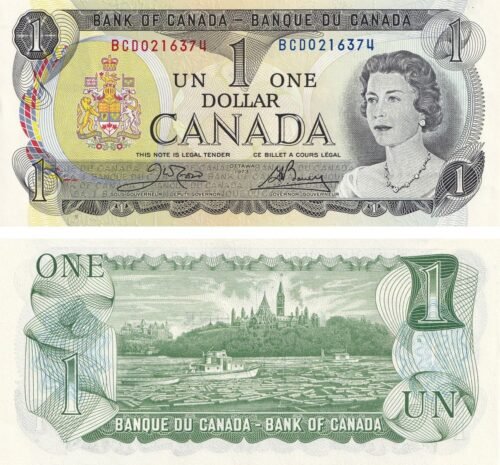
Canada 1 Dollar 1973, P-85c, UNC
8,99 € -
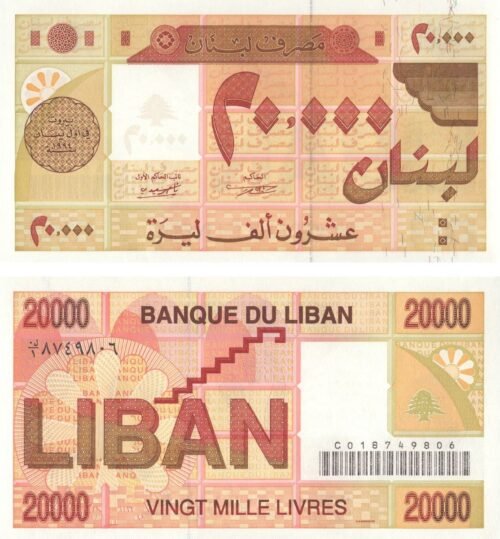
Lebanon 20000 Livres 1994, P-72, UNC
11,99 € -

Lebanon 20000 Livres 1995, P-72, UNC
11,99 € -

Lebanon 100000 Livres 1995, P-74, UNC
19,99 € -

Lebanon 5000 Livres 1999, P-75, UNC
9,99 € -

Lebanon 10000 Livres 1998, P-76, UNC
13,99 € -

Lebanon 50000 Livres 1999, P-77, UNC
14,99 € -
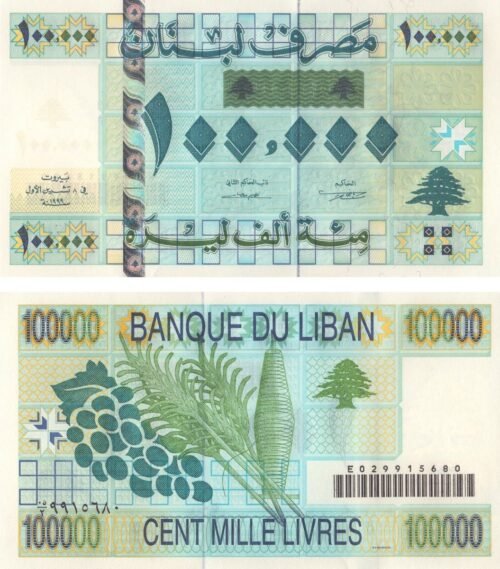
Lebanon 100000 Livres 1999, P-78, UNC
19,99 € -

Nepal 10 Rupees 1997, P-31b(1), UNC
2,49 € -

Nepal 1 Rupee 1993, P-37(1), UNC
1,49 € -
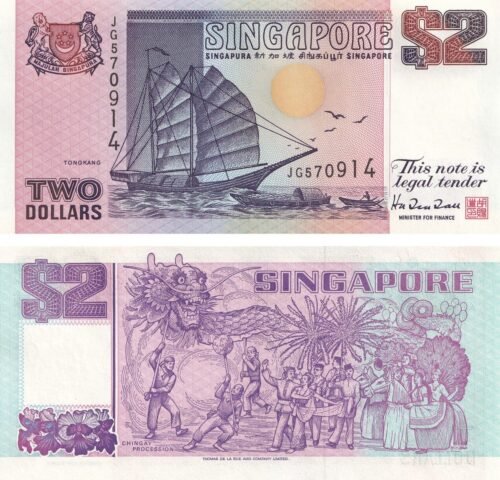
Singapore 2 Dollars 1998, P-37, UNC
4,99 €
Selected References
- Bank of Canada Museum — Print Dies and an Engraver’s View of Canada
- Bank of Canada Museum — Canada 1 Dollar 1973
- Bank of Canada — Portraits in Time
- Bank of Canada — The Art and Design of Canadian Bank Notes
- Numista — Singapore 2 Dollars, Purple Ship Series
- Monetary Authority of Singapore — Survey of Singapore’s Monetary History
- Banknotes.com — Singapore 2 Dollars 1991–1998