
Canadian Bank Note Company

Canadian Bank Note Company combines more than a century of currency production with modern security technology, serving the Bank of Canada and issuing authorities abroad.
Quick Facts
Official name: Canadian Bank Note Company, Limited
Alternative names: Canadian Bank Note Company; CBN
Country: Canada
Headquarters: Ottawa, Ontario, Canada
Established: 1897
Status: Active
Institution type: Private banknote printer and security-technology company
Ownership or parent: Privately owned Canadian company
Official website: cbnco.com
Institutional Identity
Canadian Bank Note Company, Limited is a privately owned Canadian security printer and technology company headquartered in Ottawa. Founded in 1897, it began with currency and remains the manufacturer of Canada’s current banknotes. The Bank of Canada, however, is the issuer: it chooses the note programme, approves designs and security policy, and places production orders; CBN converts those decisions into finished notes.
The company’s present identity extends beyond print. It develops secure physical and digital systems for currency, identity, border management, excise control and regulated gaming. That diversification is relevant because many modern banknote skills—authentication, controlled personalisation, optical security, traceability and secure data handling—are shared across product families. It does not mean that identity-document contracts or proprietary security devices should automatically be attributed to a banknote.
For cataloguing, “Canadian Bank Note Company” and the abbreviation CBN are the clearest references. The legal form “Canadian Bank Note Company, Limited” is appropriate in Quick Facts, while the shorter controlled-vocabulary value should remain attached to products.
Historical Development
CBN traces its corporate history to 1897, before Canada had a central bank. It worked within a market in which chartered banks and public authorities commissioned secure notes and documents from specialist private printers. When the Bank of Canada began issuing its own banknotes in 1935, CBN became one of the Canadian firms entrusted with their production.
That relationship evolved rather than remaining technically static. Canada’s note families moved through new portrait engraving, increasingly complex intaglio and offset structures, machine-readable elements, accessibility features and, from 2011, polymer. The Bank of Canada’s documentation of the Frontiers programme records that the first polymer series was printed in Ottawa by two private printers, CBN and BA International. The division of production between printers therefore has to be established for the specific issue or run, not assumed from the country alone.
CBN’s own account describes a gradual shift from a traditional currency printer towards a broader security-technology company. Currency nevertheless remains a core line: the company states that it has printed Bank of Canada notes since 1935, while the Bank of Canada now identifies CBN as the printer of its banknotes. The historical record should preserve both facts—long continuity and changing contractual arrangements.
Role in Banknote Production
CBN offers central banks support across banknote design, feature selection, production and lifecycle planning. Its published currency capability includes substrate assessment, security-feature integration, precision printing, durability testing and assistance with new or modernised series. Those services can range from technical consultation to complete manufacture, depending on the issuing authority’s contract.
A printer’s contribution may include portrait and ornamental engraving, prepress, intaglio and offset production, numbering, optical elements, inspection and finishing. Canada’s tactile identification system provides a useful example of collaborative development: Bank of Canada research records that CBN worked with accessibility organisations and specialists to develop and test the raised-dot feature used to help people who are blind or have low vision distinguish denominations.
The WorldBanknotes.eu catalogue currently links CBN to six individual issues from Canada, Guatemala, New Zealand, Nicaragua and Paraguay. The range demonstrates an international role but not a blanket relationship with those currencies. Each attribution must remain tied to the exact note. The broader manufacturing sequence is outlined in How Banknotes Are Printed.
Security and Technology
CBN presents security as an issuer-specific system rather than a menu of decorative devices. Its currency work includes tactile authentication, embedded holographic elements, advanced anti-counterfeit features, substrate selection and durability testing. Successful manufacture requires those components to be registered with fine-line artwork, intaglio relief, numbering and machine-readable controls in a repeatable production process.
Canada’s move to polymer illustrates the attribution discipline required. The Bank of Canada designed and issued the series; substrate and feature suppliers contributed specialised materials; private Ottawa printers manufactured the notes. “Canadian polymer note”, “printed by CBN” and “feature developed by CBN” are therefore different statements, even when all are true for a particular issue.
Collectors should also distinguish a printer’s institutional capability from the contents of one note. CBN can manufacture tactile marks or embedded optical features, but their presence on an overseas banknote does not prove CBN production without an issuer statement, printer record or reliable catalogue attribution.
For Collectors
CBN offers collectors a useful bridge between classic engraved paper money and contemporary polymer production. Canadian notes show long-term changes in portrait engraving, tactile accessibility, serial-number systems, substrate and optical security, while overseas contracts place the same printer within very different national design traditions.
The current WorldBanknotes.eu examples include a Canadian five-dollar polymer note, a New Zealand five-dollar polymer issue and paper notes from several Latin American issuers. Comparison should begin with the physical note: paper and polymer respond differently to folds, surface abrasion, raised print and window wear. The printer entry then helps place those observations within a wider production history.
The strongest identification combines the issuing authority, exact series, date, catalogue reference, substrate and documented printer. Where two printers shared a national series, serial-prefix or production-block evidence may be decisive. The WorldBanknotes.eu guides to paper and polymer banknotes and practical authentication provide a structured way to make those comparisons without treating one visible feature as proof of the whole attribution.
Banknotes Printed by Canadian Bank Note Company
-

Canada 5 Dollars 2013, P-106e, UNC
8,99 € -

Canada 10 Dollars 2018, P-113(2), UNC
14,99 € -

Guatemala 1/2 Quetzal 1989, P-72a, UNC
4,99 € -
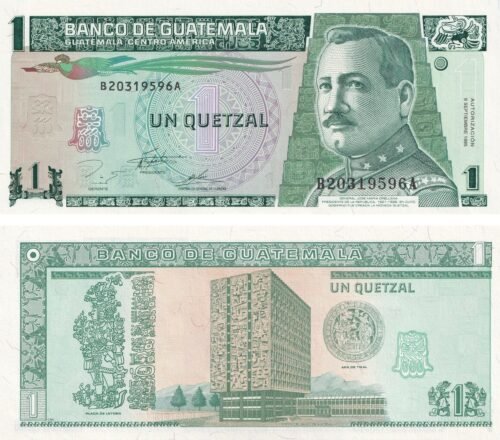
Guatemala 1 Quetzal 1995, P-87c, UNC
10,99 € -
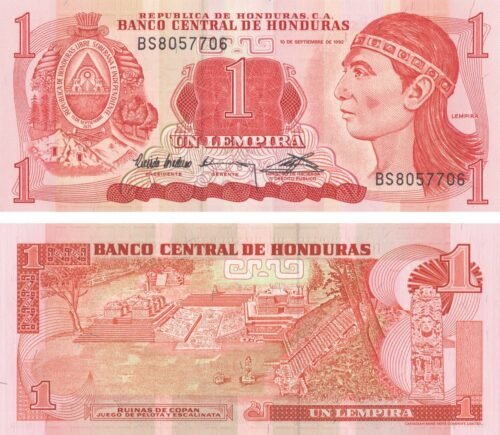
Honduras 1 Lempira 1992, P-71, UNC
2,49 € -
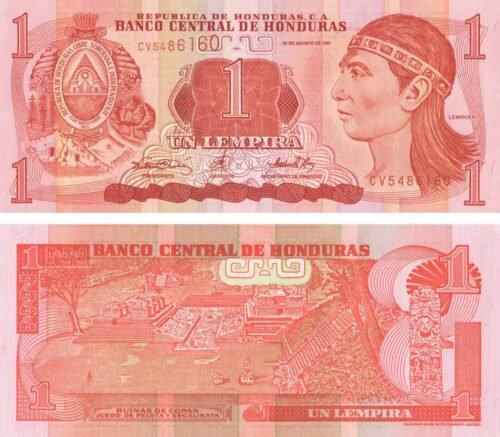
Honduras 1 Lempira 2001, P-84b, UNC
3,99 € -
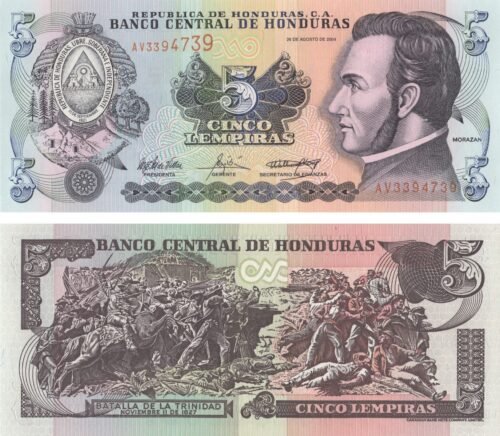
Honduras 5 Lempiras 2004, P-85d, UNC
2,99 € -
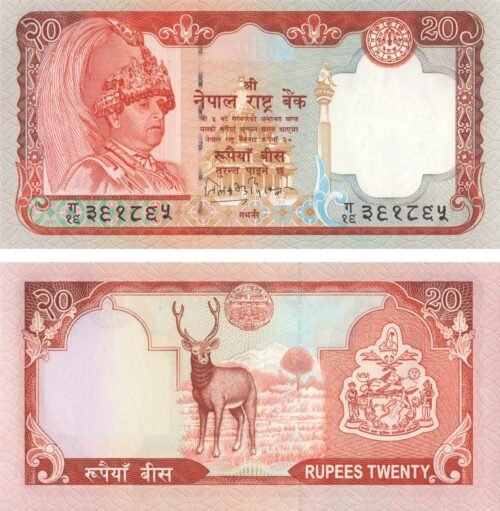
Nepal 20 Rupees 2002, P-47a, UNC
2,49 € -

New Zealand 5 Dollars 2015, P-191, UNC
7,99 € -

Nicaragua 1/2 Cordoba 1992, P-172, UNC
5,99 €