
Casa de la Moneda de Venezuela

Casa de la Moneda de Venezuela (CMV) is the Banco Central de Venezuela’s currency-production complex in Maracay, Aragua. BCV financial statements published in the Official Gazette record that CMV began operations on 15 September 1999 under Board Act No. 3.122, with a principal mandate to mint coins, print banknotes and produce valued items such as fiscal stamps. The facility gave the central bank a domestic industrial base for monetary production, but printer attribution remains issue-specific because Venezuelan banknotes have also been manufactured abroad. Official BCV anniversary material in 2025 continued to present CMV as an operating part of the institution and linked its work to national monetary autonomy.
Quick Facts
Official name: Casa de la Moneda de Venezuela
Alternative names: CMV; Casa de Moneda de Venezuela; Venezuelan Mint
Country: Venezuela
Headquarters: Maracay, Aragua, Venezuela
Established: Operations began 15 September 1999
Status: Active industrial unit of the Banco Central de Venezuela for coinage, banknotes and other valued/security print products
Institution type: Central-bank mint and banknote/security printer
Ownership or parent: Banco Central de Venezuela
Official website: bcv.org.ve
Institutional Identity
Casa de la Moneda de Venezuela is a production arm of the Banco Central de Venezuela rather than a separate issuing authority. The BCV authorises and issues the national currency; CMV is the physical manufacturer where a particular coin, banknote or other valued product is documented as having been produced at the Maracay complex. Keeping issuer and printer roles separate is essential when cataloguing Venezuelan paper money.
The strongest institutional date is 15 September 1999. In financial statements published in the Official Gazette, the BCV states that CMV began operations on that date, following Board Act No. 3.122 of 14 September 1999. The same source places the facility in Maracay, Aragua, and defines its principal purpose as minting coins, printing banknotes and producing valued items including fiscal stamps.
This profile refers specifically to the modern BCV industrial complex opened in 1999. It should not be used to back-date the present institution to earlier Venezuelan minting operations simply because historical facilities may be described in English as a Venezuelan mint. For WorldBanknotes.eu, the 1999 operational start is the secure chronological anchor for the current CMV identity.
CMV’s relationship with the central bank does not mean that every BCV note was printed domestically. Venezuela has used foreign security printers in different periods and denominations. The canonical printer term should therefore be assigned only when the exact type or variety is supported by a catalogue, institutional record, printer mark or other reliable issue-level evidence.
Historical Development
The modern Casa de la Moneda de Venezuela entered operation on 15 September 1999 as part of the BCV’s responsibility to ensure a timely and sufficient supply of notes and coins. Its establishment created a domestic production base in Maracay for both metallic and printed monetary products.
In its 2025 message marking CMV’s twenty-sixth anniversary, the Banco Central de Venezuela stated that the Maracay industrial complex opened in 1999 and that the first Venezuelan monetary pieces produced through the new operation entered circulation from 2000. The wording is broader than banknotes alone, so it should not be read as proof that every early issue was domestically printed.
Issue-level numismatic records nevertheless document banknote production at the facility from the beginning of the new century. The Catálogo Numismático de Venezuela attributes the 10,000 bolívares dated 25 May 2000 to Casa de la Moneda de Venezuela, and also records CMV as printer of a 10,000-bolívares issue dated 16 August 2001. These attributions provide concrete evidence for early circulating-note production rather than relying only on the institution’s general mandate.
CMV remained part of the BCV production system while Venezuela passed through successive changes in denomination and currency scale. Those monetary reforms should not be used as shortcuts for printer attribution: different notes within the wider Venezuelan sequence may have been produced by domestic or foreign printers, and the printer must be established at type or variety level.
Recent evidence shows that the Maracay works continue to participate in banknote production. The Catálogo Numismático de Venezuela attributes a 500 bolívares digital note dated 12 June 2025 to CMV, while official BCV anniversary material from September 2025 confirms the continued institutional presence of the complex. Together, the sources support continuity from the 1999 opening to contemporary production without implying that CMV is the sole printer of Venezuelan currency.
Role in Banknote Production
CMV’s documented banknote role is industrial production under central-bank authority. The BCV sets the monetary framework and issues the notes, while the Casa de la Moneda converts approved specifications into finished banknotes when it is the assigned manufacturer. The BCV’s own financial reporting explicitly includes the printing of banknotes among the facility’s principal purposes.
The production role must be read at note level. Early circulating examples dated 2000 and 2001 are catalogued as CMV products, and later specialist records also identify domestically printed issues. This establishes a genuine banknote-printing history rather than treating the institution merely as a coin mint.
At the same time, the name Banco Central de Venezuela on the face of a note is not evidence that CMV printed it. Issuer, designer and printer are separate catalogue functions, and Venezuela has contracted foreign security printers as well as using its own works. Printer fields should therefore follow the documented manufacturer of the exact issue rather than the country, issuing bank or design family.
For WorldBanknotes.eu, Casa de la Moneda de Venezuela is the canonical printer identity for notes supported by reliable CMV attribution. Where specialist catalogues disagree, the exact variety, date, source chronology and any printer-specific evidence should be reviewed before assigning the term.
Security and Technology
Public BCV sources establish CMV’s mandate but do not provide a current machine-by-machine inventory of its banknote works. This profile therefore avoids assigning press models, production capacities or proprietary systems that cannot be verified from primary material.
A CMV-attributed 500 bolívares digital note dated 12 June 2025 provides a useful issue-level view of the security environment. The specialist Venezuelan catalogue records a windowed security thread, watermark, ultraviolet-visible elements, perfect registration, an optically variable denomination and a latent BCV image. These features show the layered security specification of a recent note attributed to the Maracay facility.
Security features on a finished note should not automatically be described as components manufactured by CMV. Banknote paper, threads, specialised inks and other materials can be sourced from external suppliers even when final printing, numbering, inspection and finishing are carried out domestically. The correct distinction is between the printer of the note and the supplier of individual security components.
For cataloguing purposes, observable security features are most useful when they help distinguish varieties or confirm an issue description. They should not be used by themselves to infer the printer: the same broad technologies—watermarks, threads, ultraviolet responses, registration devices and variable inks—are used across the international banknote industry.
For Collectors
For collectors, Casa de la Moneda de Venezuela adds a production-history layer to modern Venezuelan currency. A CMV attribution identifies a note as part of the country’s domestic banknote-manufacturing capability rather than merely as a design issued by the Banco Central de Venezuela.
The 1999 operational start provides a useful chronological boundary. Early CMV-attributed issues from 2000 and 2001 document the first years of the Maracay complex, while later domestically printed notes show that the institution continued beyond its initial production phase.
Printer identity can create meaningful distinctions inside a broader currency sequence. Two Venezuelan notes may share an issuer, denomination family or design language while having different manufacturers. Collectors comparing dates, prefixes, catalogue varieties and security revisions should therefore treat the printer as an independent attribution rather than infer it from appearance alone.
The modern CMV should also be kept separate from earlier Venezuelan mint history. Using the documented 1999 start for this printer profile prevents older coinage institutions from being folded into the current entity and keeps the catalogue chronology precise.
Banknotes Printed by Casa de la Moneda de Venezuela
-

Venezuela 2 Bolivares 2012, P-88d, UNC
1,49 € -

Venezuela 2 Bolivares 2012, P-88e, UNC
0,99 € -

Venezuela 2 Bolivares 2013, P-88f, UNC
0,99 € -

Venezuela 5 Bolivares 2007, P-89a, UNC
1,49 € -

Venezuela 5 Bolivares 2011, P-89d, UNC
0,99 € -

Venezuela 5 Bolivares 2014, P-89f, UNC
0,99 € -
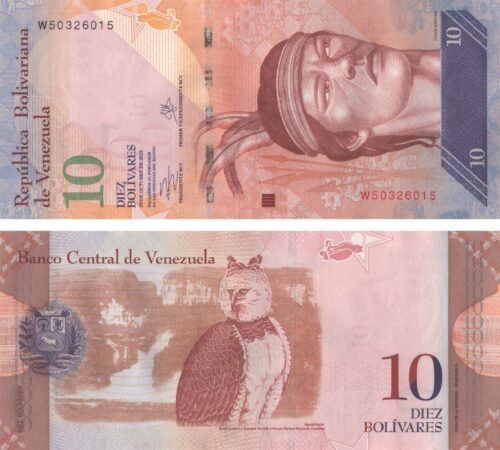
Venezuela 10 Bolivares 2013, P-90d, UNC
1,49 € -

Venezuela 10 Bolivares 2014, P-90e, UNC
1,49 € -

Venezuela 20 Bolivares 2013, P-91f, UNC
1,49 € -

Venezuela 50 Bolívares 2015, P-92k, UNC
1,49 € -

Venezuela 100 Bolivares 2013, P-93g, UNC
1,49 € -
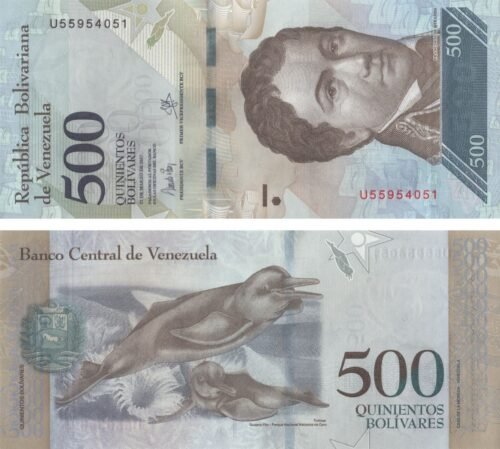
Venezuela 500 Bolivares 2017, P-94b, UNC
0,99 € -

Venezuela 1000 Bolivares 2017, P-95b, UNC
0,99 € -
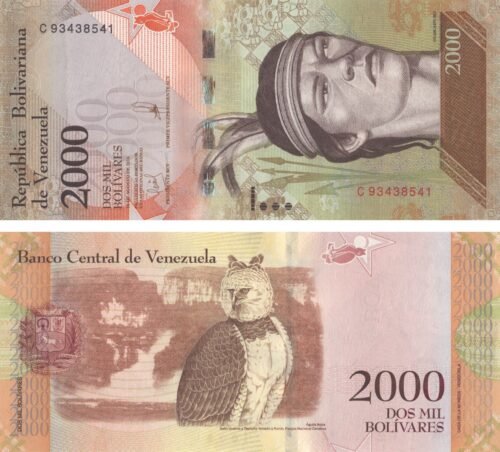
Venezuela 2000 Bolivares 2016, P-96b, UNC
0,99 € -

Venezuela 5000 Bolivares 2017, P-97b, UNC
0,99 € -

Venezuela 5000 Bolivares 2017, P-97c, UNC
1,49 € -
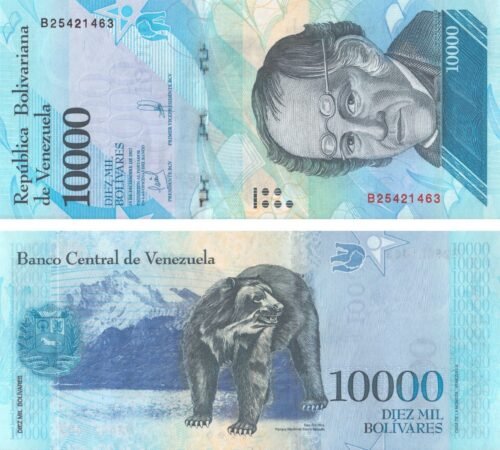
Venezuela 10000 Bolivares 2017, P-98b, UNC
0,99 € -
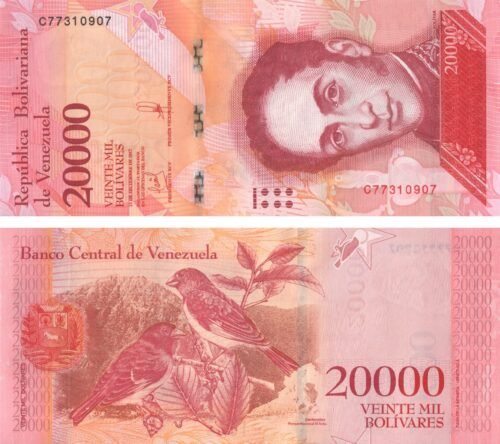
Venezuela 20000 Bolivares 2017, P-99c, UNC
0,99 € -

Venezuela 100000 Bolivares 2017, P-100b, UNC
0,99 € -

Venezuela 2 Bolivares 2018, P-101, UNC
0,99 € -

Venezuela 5 Bolivares 2018, P-102, UNC
0,99 € -

Venezuela 10 Bolivares 2018, P-103, UNC
0,99 € -

Venezuela 10 Bolivares 2018, P-103r, UNC
2,49 € -

Venezuela 50 Bolivares 2018, P-105a, UNC
0,99 €
Selected References
- Gaceta Oficial de la República Bolivariana de Venezuela — BCV financial statements recording CMV's 15 September 1999 operational start and mandate
- Banco Central de Venezuela — Casa de la Moneda de Venezuela
- Banco Central de Venezuela — 26th anniversary of Casa de la Moneda de Venezuela (official video)
- Catálogo Numismático de Venezuela — 10,000 bolívares dated 25 May 2000, printer CMV
- Catálogo Numismático de Venezuela — 10,000 bolívares dated 16 August 2001, printer CMV
- Catálogo Numismático de Venezuela — 500 bolívares digital dated 12 June 2025, printer and security details