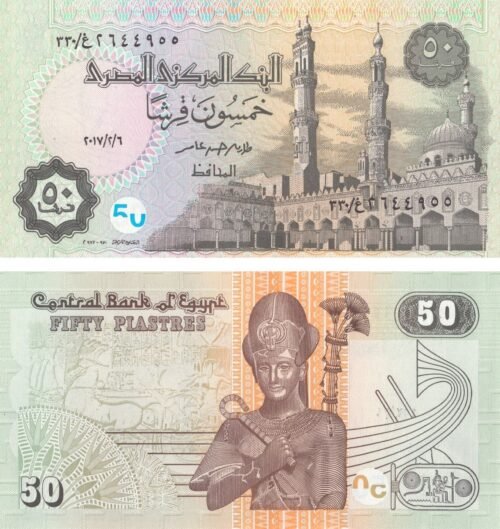
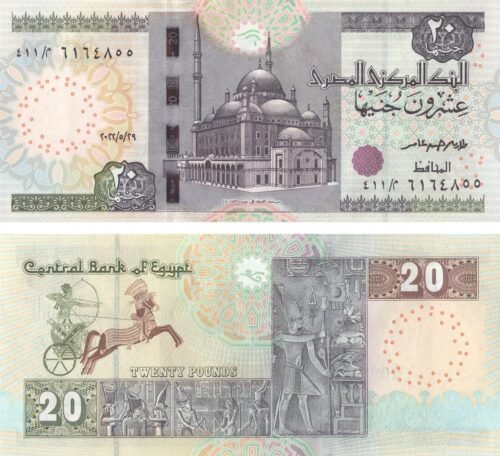
The Central Bank of Egypt Printing House brought large-scale Egyptian banknote production into the country during the 1960s. From its first production in 1967, it developed from the Giza works into a modern secure-printing operation serving the Egyptian pound.
Quick Facts
Official name: Central Bank of Egypt Printing House
Alternative names: CBE Printing House; Central Bank of Egypt; مطبعة البنك المركزي المصري
Headquarters: Egypt; historically Giza, with modern production facilities in the New Administrative Capital
Established: Established during the 1960s; banknote production began in 1967 and Egyptian denominations began transferring to local production from 1 December 1968
Status: Active
Institution type: In-house central-bank banknote printing works
The Printing House is an internal production arm of the Central Bank of Egypt. It manufactures notes to central-bank specifications but is distinct from the issuing function and from other Egyptian state printers responsible for selected low denominations.
Official CBE history presents the works as a national industrial project designed to replace dependence on printing abroad. Its name is therefore both a printer attribution and part of Egypt’s broader monetary institution.
The Printing House forms one part of the central bank’s cash cycle. Design approval, production planning, printing, vault control and issue are connected institutionally, but they remain different functions. This is why Central Bank of Egypt can appear in a database both as issuing authority and as printer without the two fields becoming duplicates.
Egyptian Government currency notes add a second layer. The Ministry of Finance was responsible for designated low denominations, and some were produced by the Survey Authority. A careful catalogue therefore distinguishes the obligation printed on the note from the factory that manufactured it.
Historical Development
The project was established in the 1960s, and the Printing House began production in 1967. The Central Bank records that Egyptian denominations started to be printed locally from 1 December 1968, after which domestic output expanded across the series.
The original Giza operation was later complemented by new facilities in the New Administrative Capital. This development added modern production and logistics capacity while preserving the CBE’s in-house model.
Before domestic production, Egyptian banknotes were supplied by foreign security printers. The 1960s project addressed cost, sovereignty, supply continuity and technical independence. Official CBE chronology places initial production in 1967 and the systematic move of Egyptian denominations to local printing from December 1968.
Expansion into the New Administrative Capital represents a modern capacity programme rather than the creation of a new issuing authority. Historical Giza and newer facilities belong to the same central-bank production lineage, although a specific issue should not be assigned to a site without evidence.
Role in Banknote Production
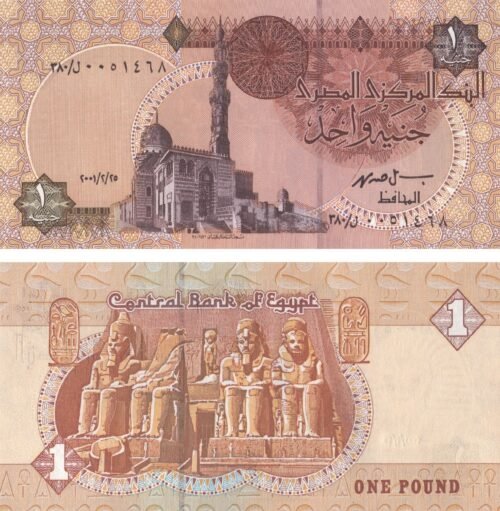
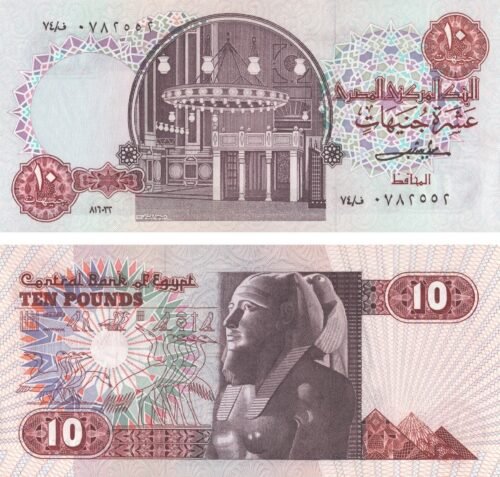
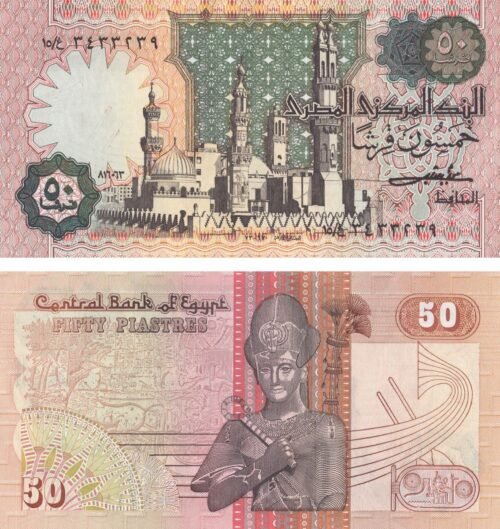
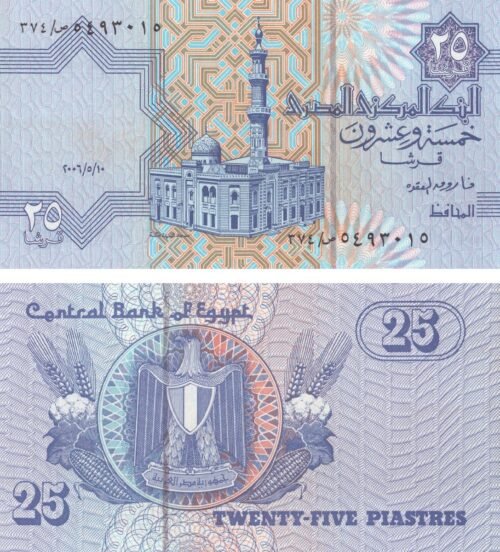
Catalogue entries attribute a wide range of Egyptian pound notes to the Central Bank of Egypt. Earlier series and certain government currency notes may instead name foreign firms or the Egyptian Survey Authority, so no blanket printer assignment is appropriate.
WBN uses the controlled term Central Bank of Egypt, Egypt where issue-level evidence supports it. The shorter taxonomy label maps to this Printing House profile.
CBE-printed notes span multiple visual generations, governors and security changes. The same mosque or historical subject can remain while date, signature, prefix and thread define a new catalogue entry. Printer continuity therefore does not mean variety continuity.
The Banknote Book’s issue-level printer line provides the principal WBN mapping evidence. Where an entry is silent or credits another producer, the CBE taxonomy term should not be added merely because the note was issued by the bank.
Security and Technology
The CBE documents a production chain that includes simultaneous multicolour printing, intaglio, numbering, inspection and finishing. Modern issues combine these processes with watermarks, security threads, tactile elements and other denomination-specific features.
The exact feature set changes by series. Collector descriptions should follow the physical note and official specifications rather than assuming every locally printed issue uses the newest equipment.
Official process descriptions identify simultaneous printing for multicolour backgrounds, intaglio for raised principal elements, separate serial-number application, automated inspection and finishing. Each stage creates different authentication evidence, from registration quality to tactile relief and serial alignment.
Newer machinery does not retrospectively describe earlier notes. A 1970s issue may have a simpler thread and watermark than a current series while still being a CBE Printing House product. Technology should always be dated to the note.
For Collectors
For collectors, the domestic printer attribution is a useful dividing line between older outsourced production and later CBE manufacture. Date, signature, thread type and serial prefix can further separate printings made within a continuing design.
Low-value government notes require particular care: an Egyptian state issue is not automatically a CBE Printing House product. The catalogue printer field remains the controlling evidence.
Arabic dates can separate printings that catalogues group within one design family, and prefixes may reveal additional production ranges. Reading the note directly is especially important where a seller title gives only a broad year span.
A complete Egyptian collection can use printer attribution to show the transition from imported banknotes to national manufacture. The narrative works only if Survey Authority and foreign contracts remain visible rather than being absorbed into the CBE term.
Banknotes Printed by Central Bank of Egypt Printing House