
Crane Currency

Crane Currency combines American banknote-paper heritage, Swedish papermaking and design expertise, and modern commercial banknote printing at its Malta facility.
Quick Facts
Official name: Crane Currency
Alternative names: Crane & Co., Inc., Crane AB, Crane Currency Malta Limited
Country: United States
Headquarters: Dalton, Massachusetts, United States
Established: No single modern founding date stated; banknote-paper heritage documented from 1775, Tumba acquired in 2002, and the Malta printing facility opened in February 2018.
Status: Active
Institution type: Private commercial banknote printer, designer and security-materials supplier
Ownership or parent: Crane NXT, Co.
Official website: cranecurrency.com
Institutional Identity
Crane Currency is a commercial banknote supplier within Crane NXT. Its current organisation brings together banknote design, security paper, micro-optic features, technical support and finished-note printing. The company’s headquarters and United States operations are in Dalton, Massachusetts; its principal commercial banknote-printing facility is at Ħal Far in Malta; and its international paper and design operations are centred at Tumba in Sweden.
This multi-site structure is essential to correct attribution. A banknote may use Crane paper or a Crane micro-optic feature without having been printed by Crane Currency. Conversely, a finished note printed in Malta may incorporate substrate or security elements from another supplier. The company can manage a complete project from concept to print, but it also participates in narrower assignments such as papermaking, feature supply, tender advice or technical support.
Crane Currency does not issue money. The central bank or other named issuing authority remains responsible for the monetary instrument. The company’s catalogue identity concerns the industrial and technical contribution: the organisation, facility or business unit that produced the paper, designed the note, supplied a feature or printed the finished banknote.
Historical Development
Crane’s American papermaking lineage reaches back to the period of the American War of Independence, when Stephen Crane supplied paper used for early securities. During the nineteenth century the family business developed specialised papers for banks and printers, including silk-threaded banknote paper. In 1879 W. Murray Crane secured a contract to provide paper for United States currency, beginning a relationship that made the Crane name closely associated with American banknote substrate.
The modern international group also incorporates the much older Tumba tradition. Sveriges Riksbank founded the Tumba paper mill in 1755 to obtain banknote paper that was harder to counterfeit. When the Riksbank outsourced production, Crane acquired Tumba Bruk in 2002. The Swedish site became the centre of international operations, banknote-paper production and design expertise.
Crane’s security portfolio expanded beyond conventional paper. The company developed demetallised security-thread technology and later commercialised MOTION®, a micro-optic security thread first used on the Swedish 1,000-kronor note. These developments shifted Crane from a specialist papermaker toward a broader banknote-technology supplier.
In February 2018 Crane opened a purpose-built 14,000-square-metre commercial banknote-printing plant at Ħal Far, Malta. The facility consolidated modern finished-note production after banknote printing at Tumba was closed at the end of 2018. The present organisation therefore combines historical capabilities from the United States and Sweden with a newer industrial printing base in Malta.
Role in Banknote Production
Crane Currency offers an integrated route from initial banknote concept through design, paper specification, security-feature selection and final printing. A central bank may commission the whole programme or use Crane for one defined stage. The company’s Malta operation is the principal finished-banknote production site, while Tumba remains important for paper and design and Dalton for United States operations and security-paper expertise.
The distinction between paper supply and printing is particularly important for United States currency. Crane has a long-standing role in producing the specialised paper used for federal notes, but United States banknotes are printed by the Bureau of Engraving and Printing. Describing those notes as “printed by Crane Currency” would therefore confuse substrate manufacture with final note printing.
WorldBanknotes.eu currently links finished-note attribution to examples from Angola, Aruba, Fiji, Kyrgyzstan and Liberia. Those catalogue records reflect specific issues and should not be generalised to all notes from the same country. When a source identifies a Crane feature, Crane paper, Crane design or a Crane printing facility, the database should preserve that exact level of certainty.
Security and Technology
Crane’s best-known contemporary contribution is micro-optics. Product families such as MOTION®, RAPID® and MOTION SURFACE® create controlled movement, depth and switching effects that can be recognised by the public without specialist equipment. The company also develops security papers, threads and other integrated features intended to connect visual design with authentication.
The group’s papermaking expertise includes durable cotton-based banknote papers and engineered products such as ENDURANCE™. Security may be embedded during papermaking through watermarks, threads or fibres, then reinforced by intaglio, offset, screen and numbering processes during printing. The finished result is a system rather than a collection of independent ornaments.
Collectors should avoid using a branded feature as automatic proof of the printer. A Crane micro-optic device may be supplied to another banknote works, and Crane paper may be printed elsewhere. Printer identification requires separate evidence such as official production information, catalogue attribution, printer codes or reliable facility documentation.
For Collectors
Crane-linked notes offer several distinct collecting paths: finished commercial banknotes, historical Tumba production, United States currency paper, and notes using Crane security technologies. These fields overlap but should remain separate in catalogue records. The same corporate group may appear under different names because the relevant attribution is tied to period, facility and production function.
For modern notes, the useful comparison points include the integration of micro-optic features with portraiture and denomination structure, the behaviour of security paper under transmitted light, and the consistency of intaglio and numbering. None of these observations replaces documentary attribution, but they help explain why notes from different issuing authorities may share a recognisable technical vocabulary.
The WorldBanknotes.eu guide to banknote security features provides a broader framework for examining these devices. The strongest collector record states whether Crane supplied paper, designed the note, provided a feature or printed the finished issue. Where only one role is documented, the other roles should remain unclaimed.
Banknotes Printed by Crane Currency
-
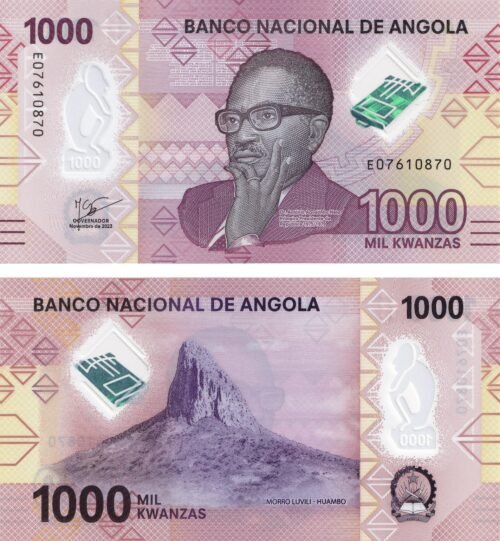
Angola 1000 Kwanzas 2023, P-162, UNC
7,99 € -
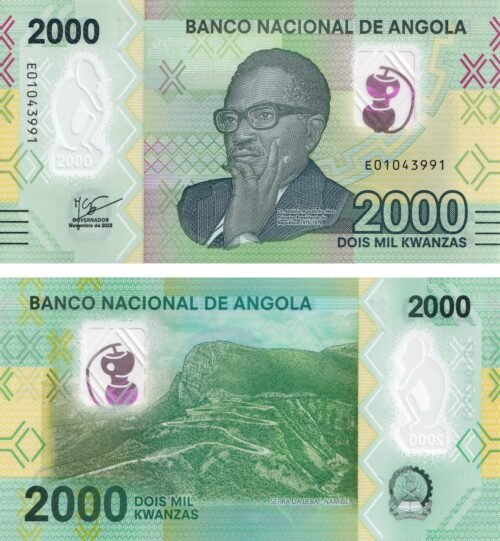
Angola 2000 Kwanzas 2023, P-163, UNC
14,99 € -
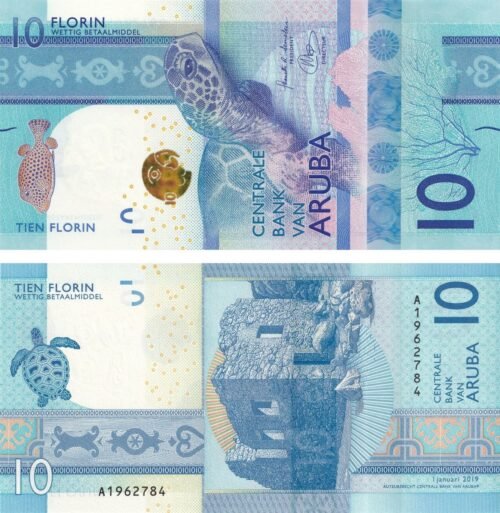
Aruba 10 Florin 2019, P-21, UNC
14,99 € -

Aruba 25 Florin 2019, P-22, UNC
35,99 € -

Aruba 50 Florin 2019, P-23, UNC
72,99 € -

Bahamas 10 Dollars 2022, P-87, UNC
25,99 € -

Curacao & Sint Maarten 10 Gulden 2025, P-1, UNC
14,99 € -
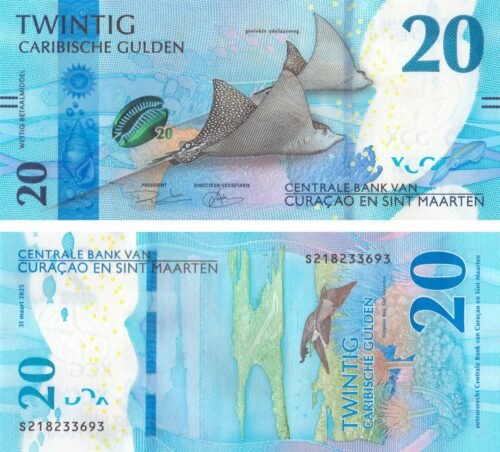
Curacao & Sint Maarten 20 Gulden 2025, P-2, UNC
29,99 € -
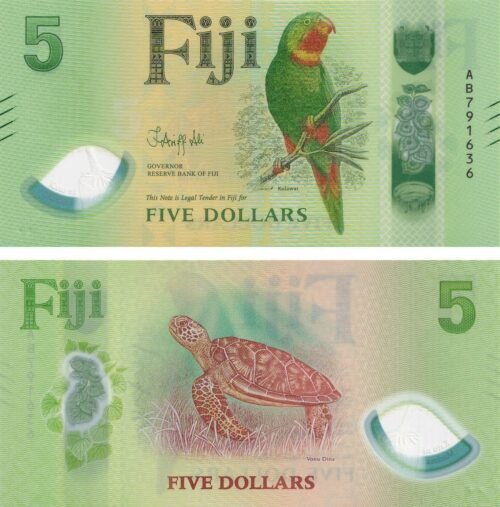
Fiji 5 Dollars 2026, P-125, UNC
9,99 € -
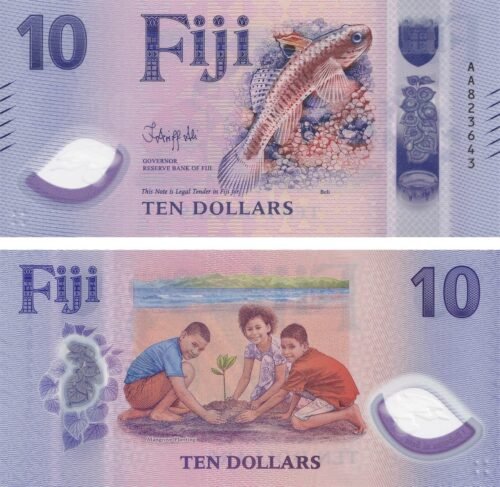
Fiji 10 Dollars 2026, P-126, UNC
15,99 € -
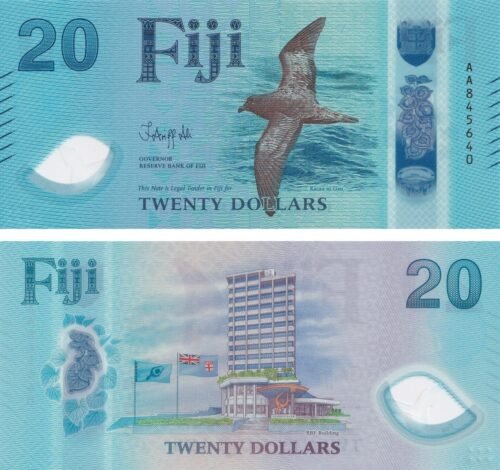
Fiji 20 Dollars 2026, P-127, UNC
29,99 € -
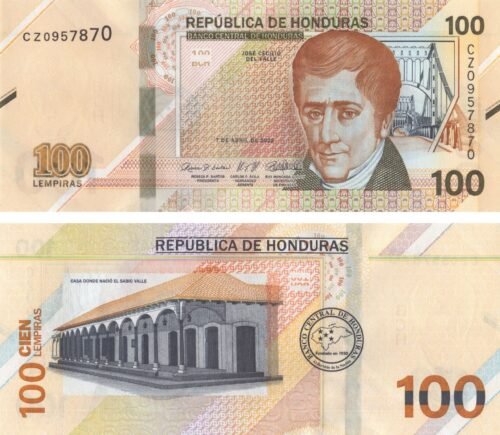
Honduras 100 Lempiras 2022, P-112, UNC
10,99 € -

Honduras 200 Lempiras 2023, P-114, UNC
17,99 €