
Fidelity Printers and Refiners

Fidelity Printers and Refiners (FPR) was Zimbabwe’s long-established domestic banknote and security printer, with an official corporate history that traces secure-banknote printing to 1966. The operation began in the basement of the old Reserve Bank building in Harare, was incorporated in 1978 and moved to the purpose-built Msasa complex opened in 1982. FPR later combined security printing with gold refining, but that structure changed in 2021: the company was renamed Fidelity Gold Refinery and a new Printing and Minting Company of Zimbabwe was formed to take over the printing division. The FPR name therefore remains important as a historic and catalogue printer identity, while post-2021 attribution requires careful separation from the successor company.
Quick Facts
Official name: Fidelity Printers and Refiners (Private) Limited
Alternative names: Fidelity Printers and Refiners; FPR; Fidelity Printers & Refiners; FPRZ
Country: Zimbabwe
Headquarters: No. 1 George Drive, Msasa, Harare, Zimbabwe
Established: Banknote-printing operation began in 1966; company incorporated 18 December 1978; Msasa complex opened 11 February 1982
Status: Historic FPR printer identity; in 2021 the company became Fidelity Gold Refinery and the printing division passed to Printing and Minting Company of Zimbabwe
Institution type: Historic central-bank-linked banknote and security printer with later precious-metals refining operations
Ownership or parent: Reserve Bank of Zimbabwe during the FPR printer period; printing successor: Printing and Minting Company of Zimbabwe
Institutional Identity
Fidelity Printers and Refiners was a production company, not the issuing authority for Zimbabwean currency. The Reserve Bank of Zimbabwe issued the notes; FPR supplied the physical security-printing capability for documented issues and other secure products. The Reserve Bank’s public subsidiary material describes FPR’s activities as printing currency and securities alongside gold refining, which reflects the combined business model that existed before the 2021 restructuring.
The legal and operational history is unusually important for this printer. Fidelity Gold Refinery, the successor to the former combined company, states that the business began in 1966 with secure-banknote printing carried out in secrecy in the basement of the old Reserve Bank Building at 79 Samora Machel Avenue with assistance from international technical partners.
The company was incorporated on 18 December 1978. Its operations were then relocated to No. 1 George Drive in Msasa, Harare, where a new secure complex was officially opened on 11 February 1982. Over time the business also developed a precious-metals refining function, creating the combined printing-and-refining identity reflected in the FPR name.
In 2021 the corporate structure changed decisively. Fidelity’s official history records that the printing and gold-refining businesses were unbundled: the existing company changed its name to Fidelity Gold Refinery, while a newly formed Printing and Minting Company of Zimbabwe took over the printing division. This means FPR is best treated as a historic printer identity for its documented production period rather than as the current legal name of the printing operator.
Historical Development
Fidelity’s banknote-printing history begins in 1966, when secure notes were produced inside the old Reserve Bank building in central Harare. The arrangement placed domestic production close to the monetary authority at a time when the operation was still developing its own institutional and technical base.
Incorporation followed on 18 December 1978. The move to No. 1 George Drive in Msasa gave the business a dedicated high-security site, and the new complex opened formally on 11 February 1982. That location became the long-term centre associated with Fidelity’s printing operations.
The company later expanded beyond printing. Fidelity’s current successor history records a 1987 decision to establish a gold refinery, producing the combined printing-and-refining structure known to collectors as Fidelity Printers and Refiners. The two functions should nevertheless be distinguished when describing banknote history: precious-metals activity explains the corporate name but does not alter the printer’s separate role in currency manufacture.
Specialist catalogues attribute a wide range of Zimbabwean monetary paper to FPR, including emergency bearer cheques and high-denomination inflation-era notes. For example, Numista attributes a 20,000-dollar emergency bearer cheque dated 2003 and the 100-trillion-dollar note dated 2008 to Fidelity Printers and Refiners. These issue-level records place the printer directly inside some of the most distinctive phases of Zimbabwe’s monetary history.
The 2021 unbundling is the modern boundary. Government procurement records from 2025 identify Printing and Minting Company of Zimbabwe at No. 1 George Drive, Msasa, providing independent evidence that the printing successor is operating at the historic Fidelity site. At the same time, some modern numismatic catalogues continue to use the FPR label for later Zimbabwe notes. That difference should be treated as a catalogue-attribution question, not as evidence that the pre-2021 corporate structure still exists.
Role in Banknote Production
FPR’s core historical function was the secure physical production of currency and related securities for Zimbabwe. The company’s own successor history says that secure-banknote printing was the business’s principal activity at inception in 1966, while Reserve Bank material identifies FPR as a printer of currency and securities.
The printer appears across very different monetary environments. Issue-level catalogue records associate FPR with conventional Reserve Bank notes, temporary emergency bearer cheques and the extraordinary high denominations of the 2000s inflation period. The production role is therefore broader than a single series or technology generation.
Printer attribution should remain exact. A note carrying the Reserve Bank of Zimbabwe name is not automatically an FPR product, and specialist sources can disagree on the manufacturer of particular modern issues. The printer field should follow the best evidence for the exact note—catalogue variety, dated source, printer mark where present and reliable institutional documentation.
For notes dated after the 2021 corporate split, an additional check is required. Fidelity’s official corporate history states that Printing and Minting Company of Zimbabwe took over the printing division, whereas some specialist catalogues retain the familiar FPR attribution. WorldBanknotes.eu should preserve the source-supported issue attribution while keeping the corporate succession visible so that a catalogue label is not mistaken for current legal identity.
Security and Technology
Fidelity’s public corporate history confirms a deliberately secure production environment and the use of international technical assistance at the start of banknote printing, but it does not publish a complete machine inventory for the historic FPR works. This profile therefore avoids assigning specific press models, annual capacity or proprietary systems without primary evidence.
Surviving FPR-attributed notes demonstrate the security disciplines used in production. A 20,000-dollar emergency bearer cheque dated 2003 is catalogued with an embedded security strip carrying RBZ lettering and ultraviolet activity. The 100-trillion-dollar note dated 2008 is likewise catalogued with a transmitted-light registration device and documented infrared and ultraviolet responses.
These note-level features are evidence of the security specification of particular FPR-attributed issues, not a claim that every component was manufactured by Fidelity itself. Paper, threads, inks and other specialist materials may be supplied by external firms, while the printer integrates them within controlled printing, numbering, inspection and finishing workflows.
The most important technical boundary is chronological. Security features on notes attributed to the post-2021 period should not automatically be used to describe historic FPR capability, because the printing division had formally transferred to Printing and Minting Company of Zimbabwe. Technology claims should therefore be tied to dated issues and the documented operator whenever possible.
For Collectors
For collectors, Fidelity Printers and Refiners is one of the key industrial names behind modern Zimbabwean paper money. Its history links domestic security printing with the country’s transitions from conventional currency to emergency instruments and extreme-denomination inflation issues.
The printer is especially useful as a way to organise Zimbabwean collections beyond Pick number and denomination. Bearer cheques, inflation-era dollars, replacement prefixes, serial formats and later note families can be compared not only as monetary issues but also as products of a domestic security-printing institution.
Corporate chronology matters after 2021. The FPR name did not simply continue unchanged: the former combined company became Fidelity Gold Refinery and the printing division moved to Printing and Minting Company of Zimbabwe. Collectors should therefore distinguish the historic printer identity from the current operator, even when a specialist catalogue continues to use FPR as a familiar attribution label.
Conflicting printer attributions should be preserved as a research problem rather than flattened into certainty. For later Zimbabwe notes in particular, catalogue entries, issue dates and corporate records should be compared together. A transparent attribution is more useful than applying the FPR name automatically to every domestically produced note.
Banknotes Printed by Fidelity Printers and Refiners
-

Zimbabwe 5 Dollars 1997, P-5b, UNC
3,99 € -

Zimbabwe 10 Dollars 1997, P-6, UNC
3,99 € -

Zimbabwe 50 Dollars 1994, P-8, UNC
3,99 € -

Zimbabwe 500 Dollars 2001, P-10, UNC
9,99 € -

Zimbabwe 500 Dollars 2004, P-11b, UNC
4,99 € -

Zimbabwe 1000 Dollars 2003, P-12b, UNC
3,99 € -

Zimbabwe 20000 Dollars 2003, P-23f, UNC
3,99 € -

Zimbabwe 1 Cent 2006, P-33, UNC
3,99 € -

Zimbabwe 5 Cents 2006, P-34, UNC
3,99 € -

Zimbabwe 10 Cents 2006, P-35, UNC
3,99 € -
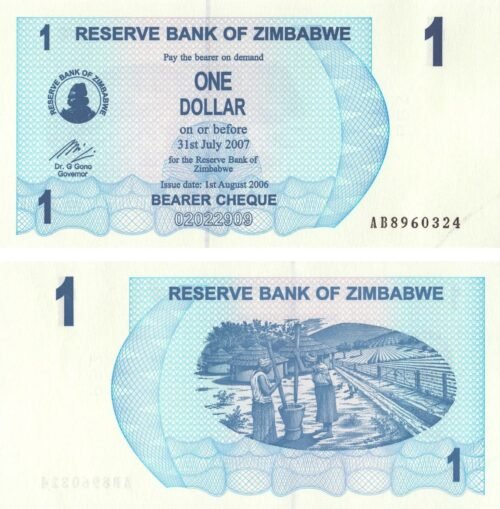
Zimbabwe 1 Dollar 2006, P-37, UNC
2,99 € -
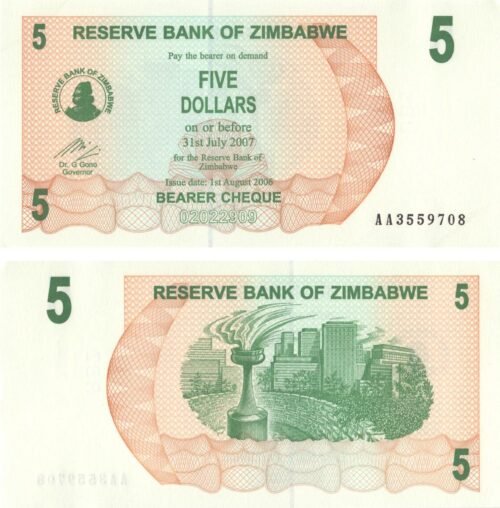
Zimbabwe 5 Dollars 2006, P-38, UNC
1,49 € -
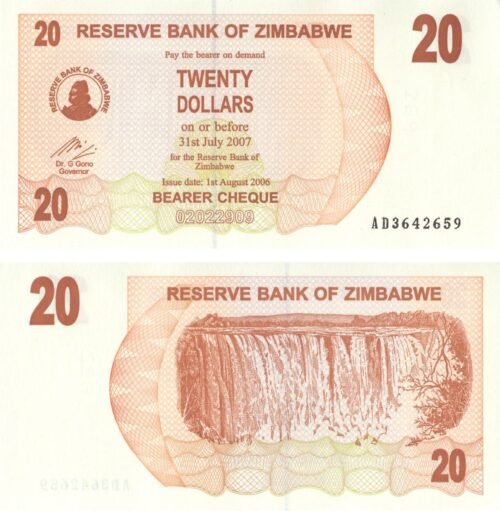
Zimbabwe 20 Dollars 2006, P-40, UNC
2,49 € -
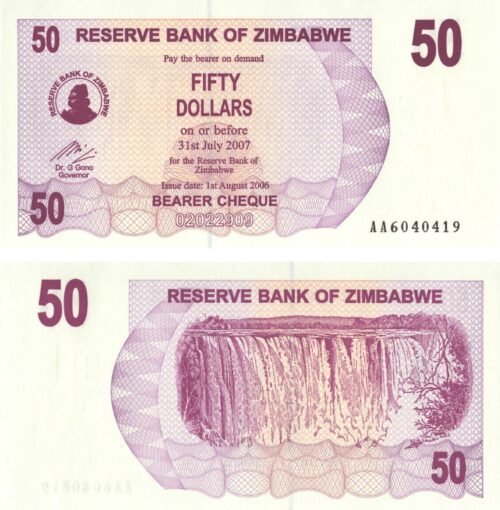
Zimbabwe 50 Dollars 2006, P-41, UNC
2,99 € -

Zimbabwe 100 Dollars 2006, P-42, UNC
2,99 € -

Zimbabwe 500 Dollars 2006, P-43, UNC
2,99 € -

Zimbabwe 1000 Dollars 2006, P-44, UNC
2,49 € -
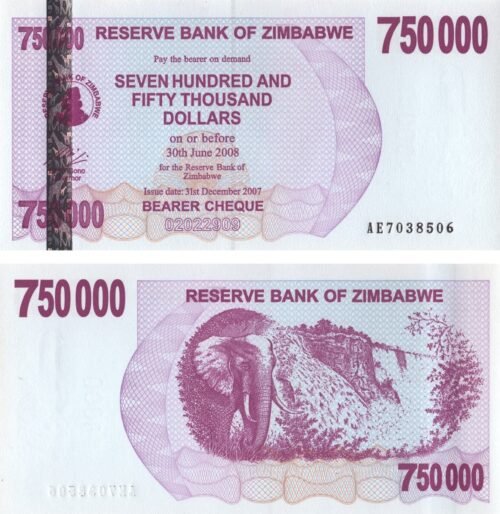
Zimbabwe 750000 Dollars 2007, P-52, UNC
3,99 € -

Zimbabwe 1000000 Dollars 2008, P-53, UNC
9,99 € -

Zimbabwe 5000000 Dollars 2008, P-54, UNC
15,99 € -

Zimbabwe 250000000 Dollars 2008, P-59, UNC
7,99 € -

Zimbabwe 1000 Dollars 2007, P-71, UNC
5,99 € -
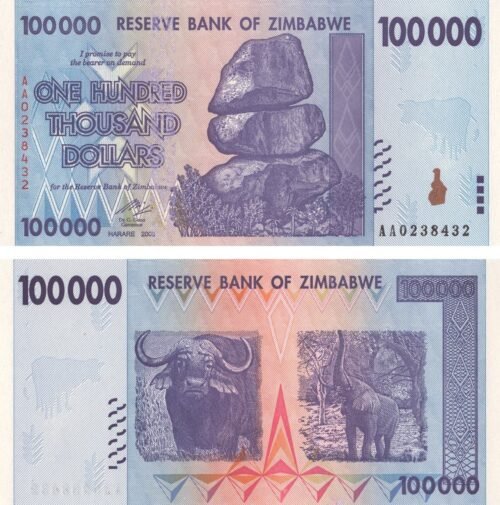
Zimbabwe 100000 Dollars 2008, P-75, UNC
12,99 € -
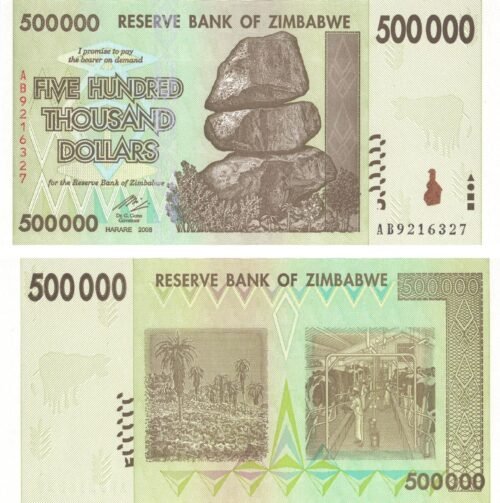
Zimbabwe 500000 Dollars 2008, P-76b, UNC
3,99 €
Selected References
- Fidelity Gold Refinery — Official corporate history of the former Fidelity Printers and Refiners business
- Fidelity Gold Refinery — Official chronology: 1966 banknote printing, 1978 incorporation and 31 March 2021 name change
- Reserve Bank of Zimbabwe — Subsidiary description of Fidelity Printers and Refiners as printer of currency and securities
- Zimbabwe Electronic Government Procurement System — 2025 award to Printing and Minting Company of Zimbabwe at 1 George Drive, Msasa
- Numista — Fidelity Printers and Refiners printer catalogue
- Numista — 20,000 dollars emergency bearer cheque dated 2003, printer FPR
- Numista — 100,000,000,000,000 dollars dated 2008, printer FPR and security observations