
Giesecke+Devrient

Giesecke+Devrient links the nineteenth-century craft of banknote printing with an integrated modern system of design, security paper, production, processing and currency technology.
Quick Facts
Official name: Giesecke+Devrient GmbH
Alternative names: Giesecke & Devrient, G+D
Country: Germany
Headquarters: Munich, Germany
Established: 1852
Status: Active
Institution type: Family-owned SecurityTech group
Ownership or parent: Privately held by the founding family
Official website: gi-de.com
Institutional Identity
Giesecke+Devrient, commonly abbreviated G+D, is a family-owned German SecurityTech group with currency at the centre of its historical identity. Its Currency Technology activities extend beyond printing alone, covering banknote design, security paper and elements, production, processing systems and end-of-life solutions. This makes G+D both a printer and a wider infrastructure provider within the cash cycle.
The company’s own description of an end-to-end currency portfolio is especially important for catalogue work. A G+D connection may concern the finished banknote, the paper made by Louisenthal, an optical or embedded security component, design support, processing equipment or several of these together. These roles should not be collapsed into one generic printer attribution unless the source specifically confirms complete production.
G+D remains headquartered in Munich and describes itself as completely family-owned. That continuity gives the modern group a direct institutional relationship to a firm founded in Leipzig in the mid-nineteenth century, even though expropriation, re-establishment and later global expansion profoundly changed its geography and scale.
Historical Development
Hermann Giesecke and Alphonse Devrient founded the company in Leipzig in 1852. It printed its first banknote in 1854 for the Weimar Bank and soon moved beyond local work: orders from Switzerland followed in the 1860s, with South American commissions beginning in the 1870s. This early internationalisation placed the firm among the private printers that helped standardise industrial banknote production across borders.
The twentieth century brought both disruption and reinvention. G+D first printed for the German Reichsbank in the 1920s. Its Leipzig property was expropriated after the Second World War, and the company was re-established in Munich in 1948. A major domestic milestone followed in 1958, when it began supplying a substantial share of Deutsche Mark banknotes for the Deutsche Bundesbank.
The acquisition of the Louisenthal paper mill in 1964 expanded the company from printing into specialised banknote and security paper. This was a decisive structural change: paper, embedded features and printing could now be developed within a connected technical system. G+D later became deeply involved in machine-readable banknotes, automated banknote processing and euro production, printing a major share of the first euro-banknote orders at the end of the 1990s.
The present group operates across Currency Technology, Digital Security and Financial Platforms. For collectors, however, the historical continuity lies in the way printing, paper, security elements and machine processing evolved together. The G+D name is therefore a gateway to several distinct production histories rather than a single unchanging factory.
Role in Banknote Production
G+D’s currency work begins with design and specification. Its teams translate national themes into banknote compositions while integrating public, professional and machine-readable security requirements. Production may include origination, plate preparation, printing, inspection, numbering and finishing, but the precise division of work varies by customer and issue.
The group’s ownership of Louisenthal adds an important materials dimension. Security paper, threads, foils and related elements can be supplied to other printers as well as integrated into G+D-produced notes. Consequently, a banknote may contain G+D or Louisenthal technology without having been printed by G+D. Conversely, a G+D-printed note may use material from another supplier. Accurate attribution depends on documented production roles, not brand recognition alone.
G+D also develops banknote-processing systems used by central banks, commercial banks and cash centres. This creates a feedback loop between note design and circulation: dimensions, substrate behaviour, machine-readable features and durability can be considered alongside sorting, authentication and fitness assessment. Few printer histories illustrate the connection between the physical note and the machinery of the cash cycle as clearly.
Security and Technology
Security technology within the G+D system spans paper, embedded elements, applied foils, design integration and machine authentication. The purchase and development of Louisenthal established a specialised base for banknote paper and security components, while later milestones included machine-readable banknotes and automated processing systems.
The company’s historical timeline records the introduction of automated banknote processing in the 1970s and its later development into a global field of activity. For the physical note, this means security is not only visual. A feature can be designed to work through touch, transmitted light, tilt, ultraviolet response or machine detection, with different layers serving the public and the professional cash cycle.
Recent sustainability programmes, including the Green Banknote™ initiative, reflect a broader shift from counterfeit resistance alone toward lifecycle performance. Fibre sourcing, resource use, durability, processing efficiency and end-of-life treatment now form part of how a currency technology provider evaluates the banknote as a system.
For Collectors
For collectors, Giesecke+Devrient is especially valuable because it connects visible design with less visible production structure. A catalogue entry may name Giesecke & Devrient, Giesecke+Devrient, G+D or a specific subsidiary or site. Historical spelling and corporate form should be preserved in detailed notes, while the modern Printer page can unite them under one institutional history.
Collector attribution should distinguish G+D printing from Louisenthal paper or security-feature supply. A thread, foil or paper characteristic associated with Louisenthal is not proof that G+D printed the note. Likewise, the company’s work on design or processing technology does not necessarily appear as an imprint on the finished banknote.
Printer changes involving G+D can be meaningful when they coincide with different paper, plate characteristics, imprints or security elements. Yet a printer change by itself does not automatically define a new banknote series. The strongest classification combines issuer documentation, catalogue evidence and direct comparison of the notes.
Banknotes Printed by Giesecke+Devrient
-
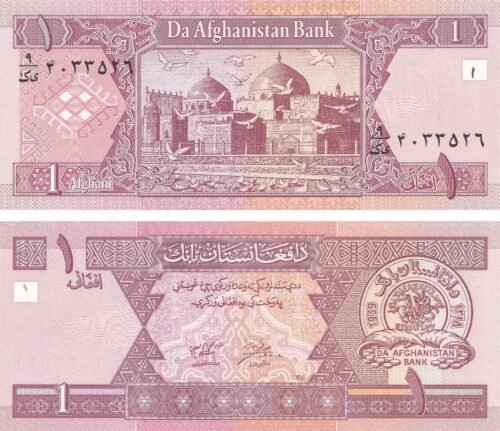
Afghanistan 1 Afghani 2002, P-64, UNC
0,99 € -
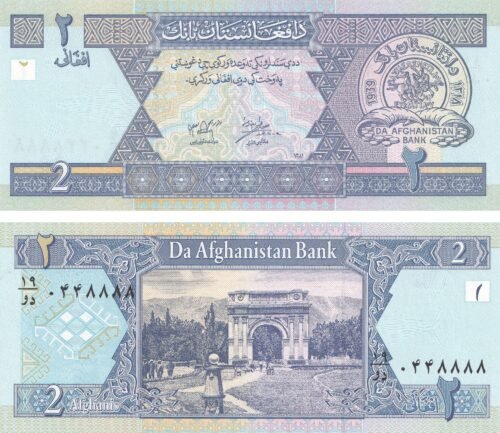
Afghanistan 2 Afghanis 2002, P-65, UNC
1,49 € -
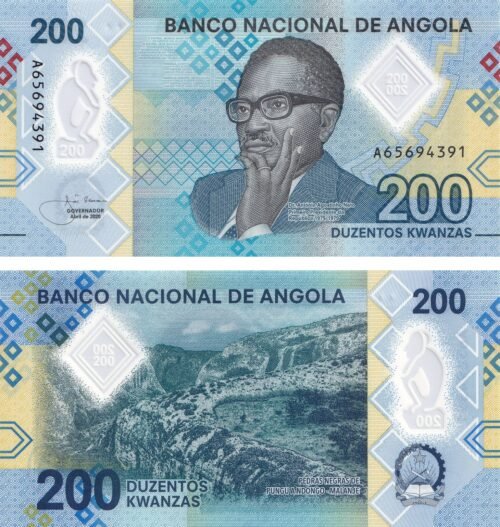
Angola 200 Kwanzas 2020, P-160, UNC
2,99 € -
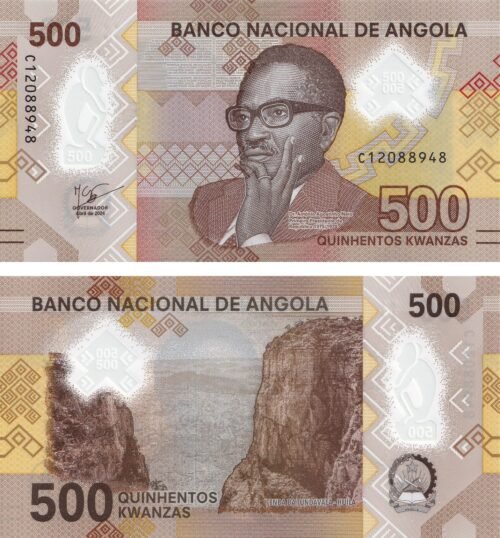
Angola 500 Kwanzas 2024, P-161, UNC
4,99 € -

Argentina 100 Pesos 2016, P-358c, UNC
3,99 € -

Armenia 10 Dram 1993, P-33, UNC
2,49 € -

Armenia 25 Dram 1993, P-34, UNC
2,99 € -

Armenia 50 Dram 1993, P-35, UNC
6,99 € -

Armenia 500 Dram 2017, P-60, UNC
12,99 € -

Armenia 1000 Dram 2018, P-61, UNC
5,99 € -

Armenia 2000 Dram 2018, P-62, UNC
11,99 € -

Azerbaijan 1 Manat 2020, P-38, UNC
2,99 € -

Azerbaijan 5 Manat 2020, P-39, UNC
7,99 € -

Azerbaijan 5 Manat 2022, P-39, UNC
6,99 € -
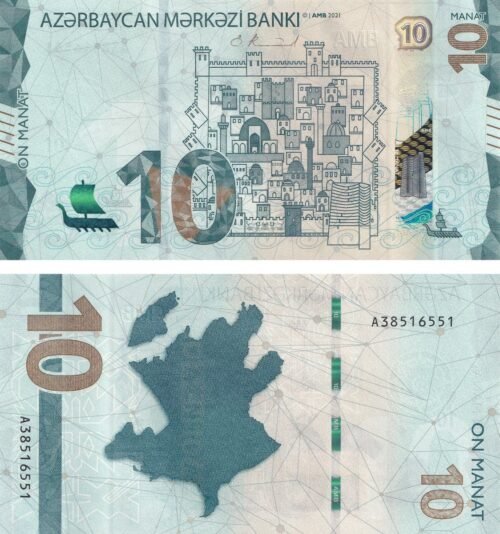
Azerbaijan 10 Manat 2021, P-40, UNC
14,99 € -

Azerbaijan 20 Manat 2021, P-41, UNC
26,99 € -

Bahamas 1 Dollar 2017, P-77, UNC
3,99 € -

Bahamas 1 Dollar 2024, P-77, UNC
3,99 €