

Goznak is an integrated state security manufacturer whose banknote work combines design, security paper, printing and authentication technologies within an institutional line dating to 1818.
Quick Facts
Official name: Joint Stock Company Goznak
Alternative names: Goznak; Expedition for Storing State Papers (historic predecessor); FSUE Goznak (former legal form)
Country: Russia
Headquarters: Saint Petersburg, Russia; Moscow office and specialised production branches across Russia
Established: 1818 institutional origins; Goznak name adopted in 1919; reorganised as a joint-stock company on 19 May 2016
Status: Active
Institution type: State-owned integrated security manufacturer producing banknotes, security paper, coins and identity products
Ownership or parent: 100% owned by the Russian state; designated a strategic joint-stock company
Official website: goznak.ru
Institutional Identity
Joint Stock Company Goznak is Russia’s state-owned security-manufacturing group. Its legal address is in Saint Petersburg, while management, export activity and production are distributed across a network of specialised branches. For banknotes, the important point is that Goznak is not merely a printing works: the group combines security-paper manufacture, design and origination, finished-note printing, minting and other protected-document activities within one industrial organisation.
This integrated structure can shorten the distance between the substrate, security-feature and printing stages, but those stages must still be recorded separately. Goznak may supply paper for a note printed elsewhere, print a note on externally supplied paper, or deliver a more complete manufacturing package. The name of the issuing central bank remains the monetary authority; Goznak’s role is the documented physical or technical work performed for that authority.
The company’s current legal form dates from 2016, when the former federal state unitary enterprise was converted into a joint-stock company with all shares retained by the state. That legal change did not create a new printing tradition. It reorganised an institution that traces its official history to the Expedition for Storing State Papers founded in Saint Petersburg in 1818.
Historical Development
The institutional starting point is 1818, when Emperor Alexander I established the Expedition for Storing State Papers. The new establishment brought the production of state papers into a controlled organisation and created the historical line from which Goznak developed. The Goznak name was adopted in 1919, after the political and monetary transformation of the preceding years.
Across the twentieth century the organisation developed a distributed production system rather than a single all-purpose factory. Printing works and paper mills acquired distinct functions, allowing the group to manufacture banknotes, documentary securities, stamps and identification products at industrial scale. For collectors, this matters because “Goznak” can identify the group while the actual work may have been performed by a particular branch, such as the Moscow or Perm printing works.
On 19 May 2016 the enterprise completed its conversion into Joint Stock Company Goznak. The official reorganisation notice states that 100% of its shares belong to the state and that the company is included among strategic joint-stock companies. The correct chronology is therefore three-layered: 1818 marks the institutional origin, 1919 the adoption of the Goznak name, and 2016 the present corporate form.
Role in Banknote Production
Goznak supplies central and national banks with banknotes and related services. Depending on the contract, its contribution can include concept and graphic development, origination, banknote paper, printing plates, offset and intaglio printing, numbering, inspection, cutting, secure packing and technical support. The Moscow Printing Works publicly identifies Bank of Russia banknotes among its products, while the Perm Printing Factory also maintains banknote-production capability.
The group’s paper mills form a separate but connected part of this chain. They produce paper with watermarks, fibres, embedded or windowed threads and other machine-readable or public-authentication elements. A note made on Goznak paper is not automatically a note printed by Goznak, and the reverse is also possible. WorldBanknotes.eu therefore treats paper supply, feature supply and finished-note printing as distinct attribution fields whenever the evidence permits.
The current catalogue links Goznak to selected issues from Afghanistan, Angola, Rwanda and Abkhazia. These examples demonstrate an export role beyond domestic Russian currency, but they do not justify applying the printer to every note from those issuers. Each attribution must remain tied to the individual issue, date and variety supported by issuer documentation or reliable catalogue evidence.
Security and Technology
Goznak’s technical strength lies in coordinating paper engineering with high-security printing. Its banknote-paper offering includes local, stripe and general watermarks, security fibres, threads containing microtext and threads that are fully embedded or exposed in windows. The company also describes figured-window technology in which a security thread becomes visible through shaped openings in the paper.
These paper features are only the foundation. Finished notes can combine multicolour offset backgrounds, raised intaglio elements, fine-line structures, microprinting, serial numbering and features intended for ultraviolet, infrared or machine examination. Exact feature claims should nevertheless be made at issue level. A capability listed by the manufacturer is evidence of what the organisation can produce, not proof that every Goznak-attributed banknote contains the same feature set.
Integrated manufacture also creates useful quality-control advantages: paper characteristics, print registration, numbering and finishing can be checked within a coordinated production system. For authentication, however, collectors should begin with the note’s documented design and expected security features rather than attempting to identify a printer from one generic visual characteristic.
For Collectors
Goznak is a productive collecting theme because its export work spans different monetary systems, substrates and design traditions. In the WorldBanknotes.eu catalogue, Afghan notes of the late twentieth century can be compared with Angolan and Rwandan issues and with the recent Abkhazian commemorative note. The value of that comparison lies in production evidence, not in assuming a single visual “Goznak style”.
Collectors should record the exact issuer, date, catalogue variety and source for the printer attribution. On some issues the printer may be stated in specialist catalogues or issuer material; on others it may be inferred from procurement records or a documented printer mark. Paper characteristics such as a security thread or watermark can support identification, but they cannot by themselves distinguish the finished-note printer from the paper supplier.
The most reliable workflow is to combine the printer record with the WorldBanknotes.eu guides to banknote printing and authentication. This keeps institutional history, production method and the physical evidence on the note connected without turning a broad company capability into an unsupported attribution.
Banknotes Printed by Goznak
-
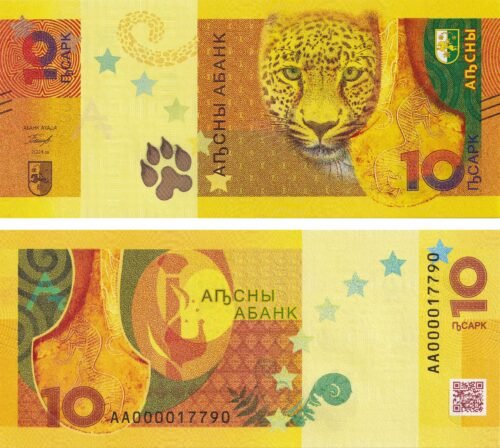
Abkhazia 10 Apsar 2024, P-3, UNC
4,89 € -
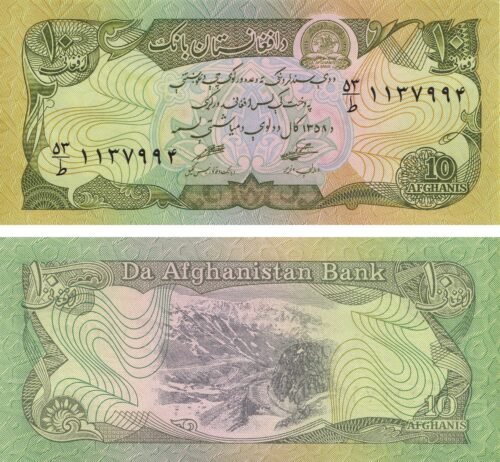
Afghanistan 10 Afghanis 1979, P-55, UNC
2,49 € -
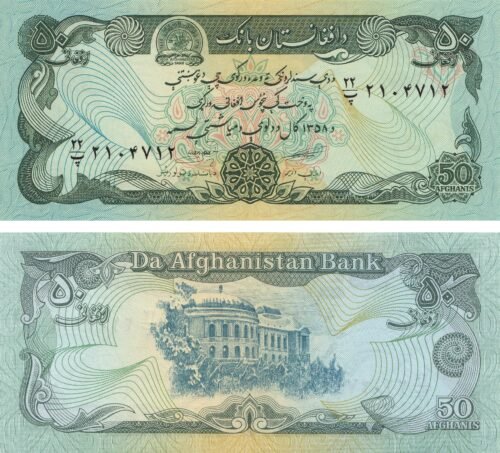
Afghanistan 50 Afghanis 1979, P-57a(2), UNC
1,99 € -
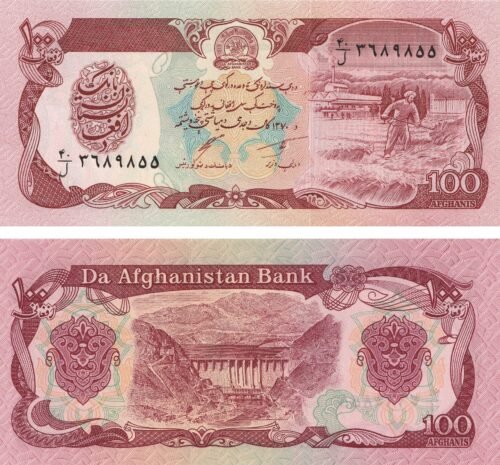
Afghanistan 100 Afghanis 1991, P-58c, UNC
1,49 € -
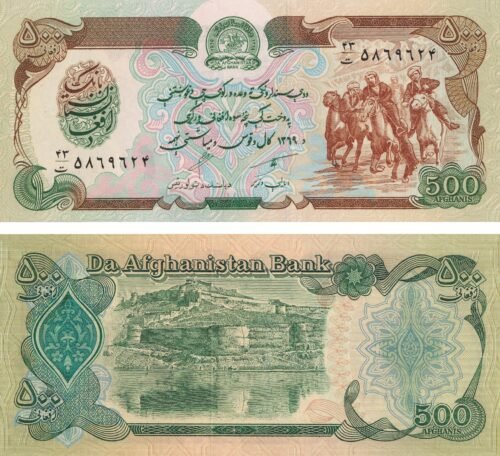
Afghanistan 500 Afghanis 1990, P-60b, UNC
1,49 € -
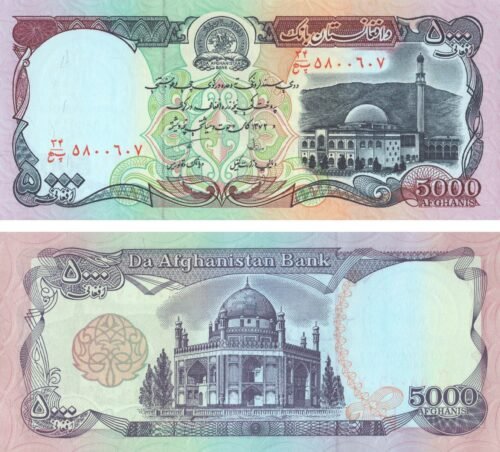
Afghanistan 5000 Afghanis 1993, P-62, UNC
3,99 € -
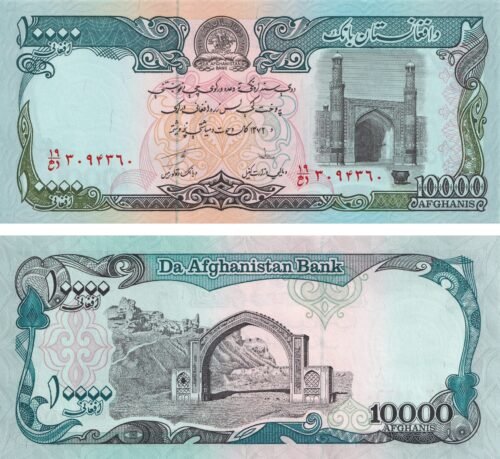
Afghanistan 10000 Afghanis 1993, P-63a, UNC
2,29 € -
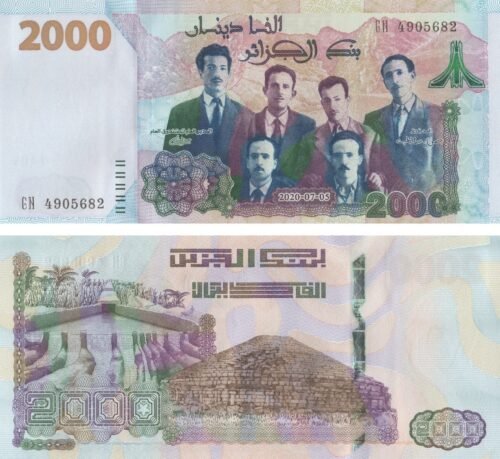
Algeria 2000 Dinars 2020, P-147(2), UNC
30,99 € -
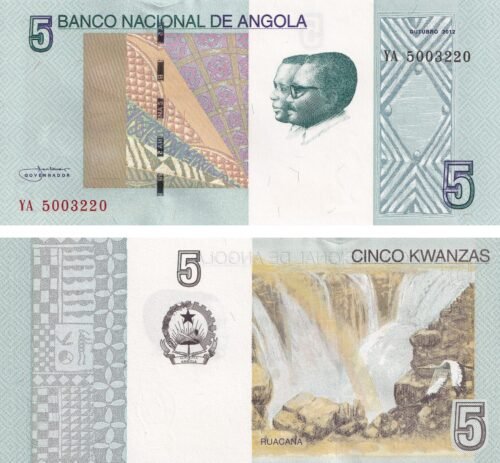
Angola 5 Kwanzas 2012, P-151A, UNC
1,99 € -
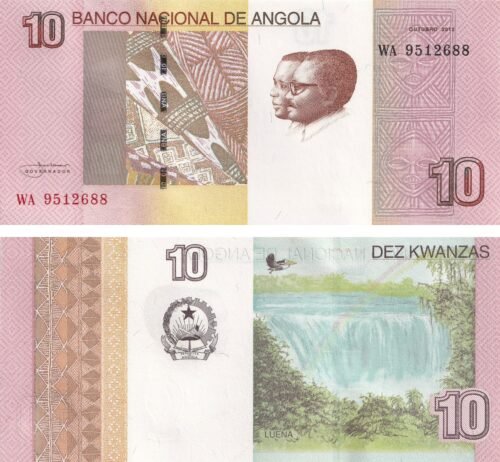
Angola 10 Kwanzas 2012, P-151B, UNC
1,99 € -
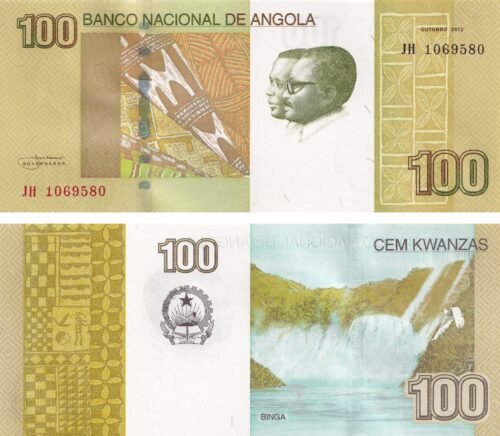
Angola 100 Kwanzas 2012, P-153a, UNC
2,99 €