
Imprimeria BNR

Imprimeria BNR is the National Bank of Romania’s dedicated banknote printing works, carrying a production lineage back to the first NBR notes of 1881. Reorganised as an autonomous public enterprise in 1991, it manufactures Romania’s circulating banknotes and other protected products under the supervision of the central bank. Its most distinctive achievement is the country’s transition to polymer: the works describes itself as the first European printing house to manufacture banknotes on polymer substrate. Portraits, cultural symbols and transparent security architecture meet within a production system that has been extensively modernised for present lei and future euro capability.
Quick Facts
Official name: Regia Autonomă Imprimeria Băncii Naționale a României
Alternative names: Imprimeria BNR; National Bank of Romania Printing Works; NBR Printing Works
Country: Romania
Headquarters: Bucharest, Romania
Established: Printing lineage from 1881; autonomous public enterprise since 1991
Status: Active
Institution type: Autonomous central-bank-supervised banknote printing enterprise
Ownership or parent: National Bank of Romania
Official website: imprimeriabnr.ro
Institutional Identity
The official Romanian name is Regia Autonomă Imprimeria Băncii Naționale a României. It is a legally distinct autonomous enterprise operating under the authority of the National Bank of Romania. The BNR fulfils its cash-issuance responsibilities through this printing works and the separate State Mint.
The present legal organisation dates from Government Decision No. 231 of 1991, which established the autonomous enterprises for the central bank’s printing and minting functions. The printing works manages its own operations and finances, but its public purpose and supervisory relationship remain tied to the BNR.
Its principal activity is the manufacture of banknotes required for Romania’s cash circulation. BNR governance reports also state that the works may produce banknotes for numismatic export and for other countries, together with additional secure printed products.
The institution should not be confused with the National Bank of Romania itself. The BNR is the issuer, owner of the monetary programme and supervising authority; Imprimeria BNR is the industrial producer. Nor should it be confused with Monetăria Statului, which is responsible for coins and other metal products.
Historical Development
The printing lineage begins with the early National Bank of Romania issues. The BNR was established in 1880, and its first banknotes entered the monetary landscape in 1881. The printing works’ own history presents more than 145 years of value printing, linking present production to this foundational period.
Romanian banknotes passed through monarchy, war, territorial change, political transformation, inflation and currency reform. Printer organisation changed across these periods, but the central bank’s connection with domestic note production remained a defining institutional thread.
In 1991, the printing operation was reorganised as an autonomous enterprise subordinate to the BNR. This legal form gave the works a modern corporate structure while preserving public ownership and its core monetary function.
Romania adopted polymer for circulating banknotes at the end of the twentieth century. The works identifies itself as the first printing house in Europe to manufacture banknotes on polymer substrate. The transition culminated in a fully polymer national series and became one of the most recognisable features of the modern Romanian leu.
The 2005 redenomination introduced the new leu at a ratio of 10,000 old lei to 1 new leu. The redesigned notes retained major cultural figures while using sizes related to euro denominations and a sophisticated system of transparent windows, intaglio, optical effects and machine-readable elements.
From 2012 onwards, Imprimeria BNR undertook a major technological modernisation. BNR reports describe a modern and complete banknote production line and preparations intended to support euro-banknote manufacture if and when Romania adopts the euro.
Role in Banknote Production
Imprimeria BNR manufactures banknotes required by the National Bank of Romania. Its work begins with design and pre-press preparation, where artistic content is translated into secure, producible layers. Specialist software and equipment support background design, engraving, plate preparation and proofing.
The works operates technologies for offset, intaglio and other printing stages. Intaglio creates raised portraits, inscriptions and tactile features, while background processes establish colour and fine-line structure. Serial numbering, inspection, cutting and packing complete the manufacturing sequence.
Polymer changes the physical logic of production. Transparent windows become part of the design, inks must adhere to a non-porous substrate, and the interaction between opacity, clear areas and optical devices must be controlled precisely. The substrate also gives Romanian notes their characteristic durability and clean edge definition.
The central bank determines quantities, denominations and issue schedules. The printing works must deliver the required notes on time and according to technical specifications. BNR oversight reports repeatedly connect the enterprise’s performance with the country’s need for sufficient, secure cash.
The WorldBanknotes.eu term currently has no linked products. The profile provides the correct canonical attribution for Romanian notes printed by the domestic works and separates the printer from the issuer in future product data.
Security and Technology
Imprimeria BNR combines traditional intaglio craft with polymer-specific security. Its public technical pages describe design and pre-press, intaglio printing and a broad banknote capability. The modernisation programme added a complete production line and strengthened the plant’s preparation for Eurosystem standards.
Romanian polymer notes use transparent windows, shadow images, microtext, see-through elements, raised print, iridescent or optically variable features and ultraviolet responses. The exact configuration depends on denomination and issue.
Intaglio remains important even on polymer. Raised portraits and inscriptions provide tactile recognition and fine engraved modelling. The printing works states that it possesses the technology required for banknote manufacture and has developed specialised experience with polymer substrate.
Security is governed through certified management systems. Official BNR reports record quality, environmental, occupational health and safety, and information-security certifications. Such systems support traceability and consistent production but should not be mistaken for visible note features.
The plant’s preparation for possible euro production is especially significant. It requires technical and logistical capability aligned with demanding common standards, even though Romania’s adoption date is a political and economic decision outside the printer’s control.
For Collectors
For collectors, Imprimeria BNR explains the strong visual and material coherence of modern Romanian notes. The shift to polymer is not merely a substrate change; it is the product of a domestic printer developing a specialised technological identity.
Printer attribution helps distinguish the National Bank of Romania as issuer from the works that manufactured the notes. This becomes important when studying earlier issues, foreign contracts, emergency production or export work.
Modern Romanian banknotes reward close examination. Transparent-window details, tactile print, signatures, prefixes and security revisions can vary within designs that look stable at first glance. The printer profile gives those differences an institutional frame.
The long lineage from the first NBR notes to the polymer era also makes the works suitable for chronological collecting. It links nineteenth-century national banking, twentieth-century political change and contemporary European technical standards within one evolving production tradition.
Banknotes Printed by Imprimeria BNR
-

Moldova 1 Leu 1992, P-5, UNC
3,99 € -

Romania 10000 Lei 2001, P-112b, UNC
4,99 € -
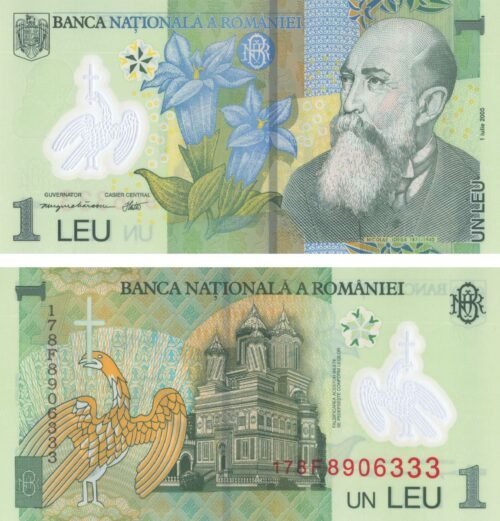
Romania 1 Leu 2017, P-117k, UNC
1,49 € -

Romania 1 Leu 2022, P-117, UNC
1,49 € -
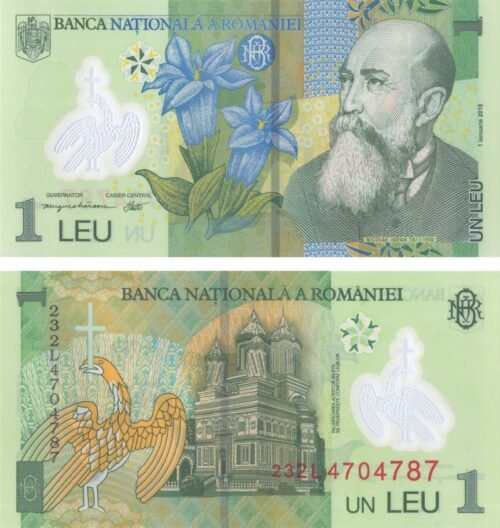
Romania 1 Leu 2023, P-117, UNC
1,49 € -

Romania 1 Leu 2024, P-117, UNC
1,49 € -

Romania 5 Lei 2019, P-118, UNC
3,99 € -
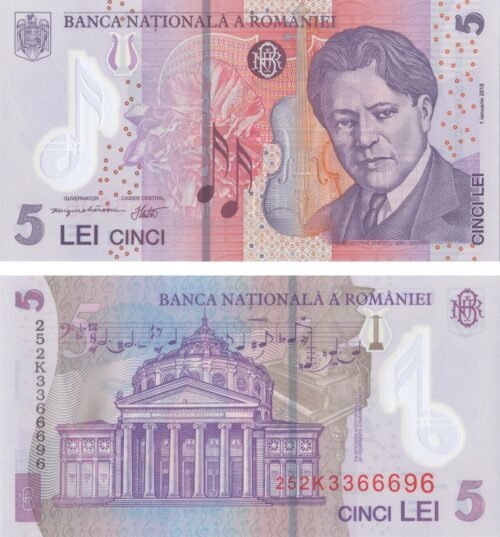
Romania 5 Lei 2025, P-118, UNC
3,99 € -

Romania 50 Lei 2024, P-120, UNC
24,99 €
Selected References
- Imprimeria BNR — Official English Website
- Imprimeria BNR — History
- Imprimeria BNR — About Us
- Imprimeria BNR — Banknotes
- Imprimeria BNR — Design and Pre-Press
- Imprimeria BNR — Intaglio
- National Bank of Romania — Cash Issuance
- National Bank of Romania — Governance Report on the Printing Works, 2020
- National Bank of Romania — Governance Report on the Printing Works, 2022