
Royal Joh. Enschedé

Royal Joh. Enschedé is one of Europe’s oldest security printers, with banknote work dating to 1810 and a present-day focus on secure documents, stamps and specialised note-format products.
Quick Facts
Official name: Royal Joh. Enschedé B.V.
Alternative names: Joh. Enschedé; Koninklijke Joh. Enschedé; Joh. Enschede Security Printing BV
Country: Netherlands
Headquarters: Haarlem, Netherlands
Established: 1703; first banknote printed in 1810; Royal title granted in 2003
Status: Active high-security printer; regular circulating-banknote production ended around 2017
Institution type: Privately owned high-security printer specialising in secure documents, stamps and banknote-grade commemorative products
Ownership or parent: Part of Authentix since 2023
Official website: joh-enschede.nl
Institutional Identity
Royal Joh. Enschedé B.V. is a Haarlem-based high-security printer founded in 1703. Its history includes more than two centuries of banknote production, but its present business is broader and different from its historical role. The company now emphasises secure documents, postage and tax stamps, authentication products and commemorative or event-note formats.
The distinction between historical banknote printer and current product portfolio is essential. A company page hosted by Royal Joh. Enschedé reported in 2020 that regular banknote printing had stopped three years earlier. The firm retained a refurbished intaglio press and continued using banknote-grade printing knowledge for specialised products, but it should not be described as a routine current producer of circulating currency without evidence of a new contract.
Royal Joh. Enschedé became part of Authentix in 2023. The acquisition preserved the Haarlem organisation while placing it within a larger authentication and security-printing group. Monetary authorities remain the issuers of historical banknotes; Joh. Enschedé’s role is the documented design or manufacturing work performed for them.
Historical Development
Izaak Enschedé established a printing office in Haarlem in 1703. The firm became the city’s official printer in 1737 and entered banknote production in 1810 with a note for use in the Dutch East and West Indies. In 1814 it printed the first banknotes for the newly formed Dutch national bank, beginning a long relationship with national currency production.
Over the following two centuries Joh. Enschedé combined banknote and stamp production with other protected documents. The company’s official timeline records that it was among the first printers of euro banknotes in 2000. In 2003, during its third-centenary year, it received the Royal designation and became Royal Joh. Enschedé.
Ownership and strategy changed in the twenty-first century. The Enschedé family sold a majority stake to private-equity investors in 2013. A strategic transition announced in 2016 and implemented in 2017 shifted the focus towards stamps, visas, tax labels, brand protection and anti-counterfeit products. Regular banknote printing ended around that transition, while commemorative and interactive note formats later became part of the portfolio. Authentix acquired the company in 2023.
Role in Banknote Production
Historically, Joh. Enschedé produced banknotes for the Netherlands and international issuers, combining artwork preparation, plate-making, offset and intaglio printing, numbering, inspection and finishing. Its long experience with stamps and secure documents also supported fine engraving, controlled colour, perforation and serial-data work.
The present company still possesses security-printing and intaglio capability, but its ordinary portfolio is no longer centred on circulating banknotes. Commemorative, event and collectible notes may use banknote-format design and security techniques without being legal tender. WorldBanknotes.eu therefore describes the historical banknote role separately from current Notables and authentication products.
The catalogue currently links Joh. Enschedé to selected issues from Israel, the Netherlands Antilles and Macau. These are examples of documented printer attribution, not evidence that every issue from those authorities was printed in Haarlem. The exact date and variety remain part of the attribution.
Security and Technology
Intaglio is central to Joh. Enschedé’s historical banknote identity. The process creates raised ink and fine engraved detail under high pressure. The company continues to discuss modern laser engraving and the operation of advanced intaglio equipment for secure products, demonstrating that the technical knowledge survived the end of regular currency production.
Its wider security-printing toolkit includes offset and web printing, controlled numbering, perforation, specialist papers and features for verification or track-and-trace applications. Current digital and interactive products can combine printed security with data-matrix codes, augmented reality, RFID or NFC. These innovations belong to modern secure products and should not be projected backwards onto historical banknotes.
Collectors authenticating an older Joh. Enschedé note should examine the documented issue: intaglio relief, line quality, serial typography, paper features and expected ultraviolet response. A company’s continuing possession of an intaglio press confirms capability, but only the note’s production history identifies the actual printer.
For Collectors
Royal Joh. Enschedé offers an unusually long collecting chronology, from nineteenth-century national and colonial issues to twentieth-century exports and euro production. WorldBanknotes.eu examples from Israel, the Netherlands Antilles and Macau demonstrate that international reach while preserving the identity of each issuing authority.
For Europa-series euro notes, the European Central Bank’s printing-works table assigns the letter P to Joh. Enschede Security Printing BV. The code identifies the works used for that production, whereas first-series country codes identify the commissioning central bank and not necessarily the printer. Historical codes should not be read as proof that the company still prints circulating euro notes today.
Collectors should also separate legal tender from modern commemorative or event notes. A product can use intaglio, serial numbering and banknote-style security without being issued as currency. The guides to who issues banknotes and authentication provide the correct framework: issuer status, production attribution and physical security are related questions, but they are not interchangeable.
Banknotes Printed by Royal Joh. Enschedé
-

Israel 5 Lirot 1968, P-34b, UNC
27,99 € -
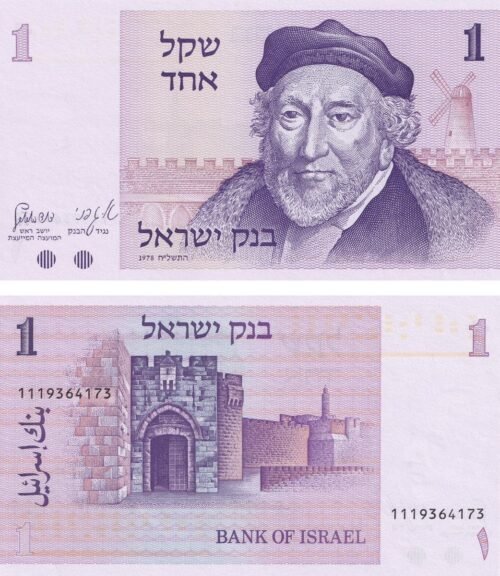
Israel 1 Shekel 1978, P-43, UNC
4,99 € -
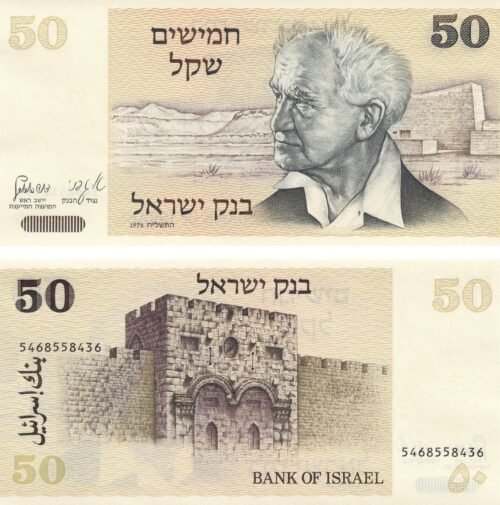
Israel 50 Shekalim 1978, P-46a, UNC
4,99 € -
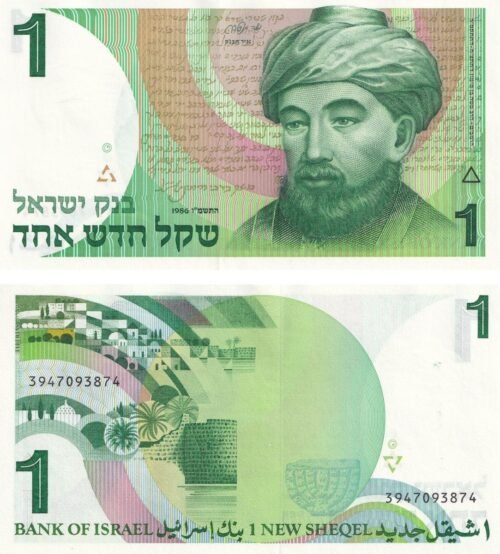
Israel 1 New Shekel 1986, P-51A, UNC
5,99 € -

Macau 10 Patacas 2013, P-80c(2), UNC
3,99 € -

Macau 20 Patacas 2005, P-81a, UNC
6,99 € -

Netherlands Antilles 1 Gulden 1970, P-20, UNC
2,99 € -

Netherlands Antilles 2½ Gulden 1970, P-21, UNC
6,99 € -
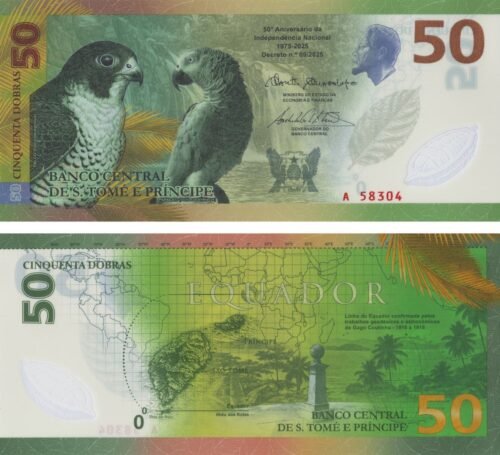
Sao Tome and Principe 50 Dobras 2025, P-82(1), UNC
10,99 € -
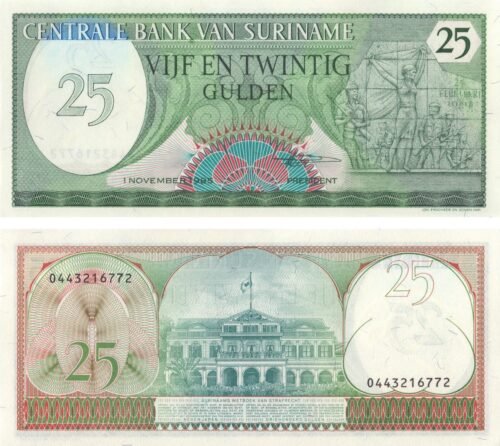
Suriname 25 Gulden 1985, P-127b, UNC
2,49 € -

Suriname 100 Gulden 1985, P-128b, UNC
3,99 € -
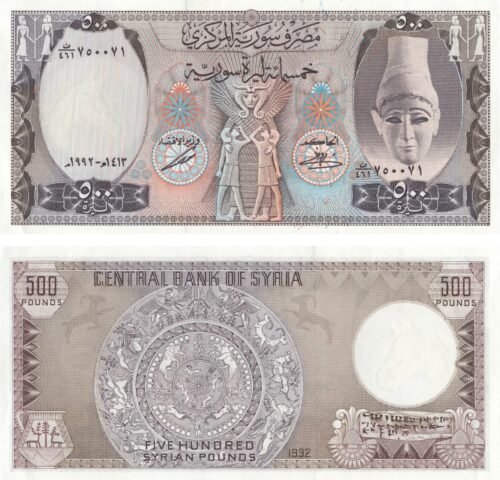
Syria 500 Syrian pounds 1992, P-105f, UNC
5,99 €
Selected References
- Royal Joh. Enschedé — About and Company Timeline
- Royal Joh. Enschedé — Authentix Acquisition
- Royal Joh. Enschedé — Fighting Fraud for Three Centuries
- Royal Joh. Enschedé — Intaglio Printing
- Royal Joh. Enschedé — Contact and Legal Identity
- European Central Bank — Euro Banknote Design Elements and Printing-Works Letters