
Oberthur Fiduciaire

Oberthur Fiduciaire combines a printing lineage founded in Rennes in 1842 with integrated banknote design, production, security paper and optical-feature capabilities.
Quick Facts
Official name: Oberthur Fiduciaire SAS
Alternative names: François-Charles Oberthur, FCO
Country: France
Headquarters: Paris, France; historic and production roots in Rennes
Established: 1842; banknote printing since 1940
Status: Active
Institution type: Private security printer
Ownership or parent: François-Charles Oberthur Group
Official website: oberthur-fiduciaire.com
Institutional Identity
Oberthur Fiduciaire is a privately held French security printer specialising in banknotes and other high-security documents. The company presents banknote production as an integrated discipline in which design, origination, materials, printing, security features, finishing and traceability must work as a single controlled process.
Its role should be separated from that of the issuing authority. Oberthur may design or manufacture a note, supply security paper or optical technology, or participate through a joint venture, but the monetary liability remains with the central bank or government named on the issue. This distinction is especially important because the wider François-Charles Oberthur group includes several security-related activities whose names can appear in technical literature.
The present headquarters and sales office are in Paris, while the company’s historical identity is rooted in Rennes. The group also includes specialised paper and technology capabilities, allowing the printer to work across more of the banknote value chain than a conventional print-only contractor.
Historical Development
François-Charles Oberthur founded the original printing business in Rennes in 1842. The company entered banknote production in 1940, when the Banque de France turned to Oberthur during a period of supply difficulty. That wartime commission marked the beginning of a long-term fiduciary specialism within a much older printing tradition.
The corporate structure evolved through several generations of security activities. Jean-Pierre Savare took control of the security-printing business in the 1980s, and subsequent decades brought expansion into cards, cheques, secure documents and cash protection. In 2011 the security-printing activities were consolidated under the Oberthur Fiduciaire name after other technology activities were separated.
Two later developments strengthened the banknote-production chain. In 2013 Oberthur Fiduciaire created Oberthur Fiduciaire AD with the Printing Works of the Bulgarian National Bank, establishing an additional banknote-production site. In 2017 it acquired the VHP banknote-paper plant from Arjowiggins Security, bringing specialised paper production more directly within the group.
The acquisition of a majority stake in Rolling Optics in 2023 added microlens-based optical technology to the group’s capabilities. This progression—from printing, to paper, to advanced optical features—helps explain why contemporary Oberthur attribution may involve more than the final printing stage.
Role in Banknote Production
Oberthur Fiduciaire states that it is expert in the entire banknote-production process. In practical terms, this can include concept development, graphic design, origination, plate preparation, security integration, printing, numbering, finishing, quality assurance and secure delivery. The exact combination is determined by the issuing authority and should be documented separately for each issue.
The group’s VHP Security Paper operation supplies banknote paper and related paper-based features. This creates the same attribution challenge seen with other integrated producers: a note printed elsewhere may use Oberthur-group paper, while an Oberthur-printed note may contain third-party material. Catalogue records should therefore distinguish printer from paper maker whenever sources allow.
The Bulgarian joint venture also demonstrates that “Oberthur Fiduciaire” can describe a group-level production relationship rather than a single French plant. When a source names Oberthur Fiduciaire AD or another specific entity, that detail should be preserved in research notes even if the public Printer page provides the broader institutional hub.
Security and Technology
Oberthur’s technical portfolio combines traditional security printing with paper engineering and optical features. Public materials describe security paper, printed and embedded elements, microlens technology, authentication features and controlled production traceability. These capabilities are designed to operate across public, professional and machine-assisted levels of authentication.
The group has also developed treatments and materials addressing durability, hygiene and sustainability. VHP programmes promote renewable and locally sourced fibres, while products such as Bioguard™ illustrate the use of paper and varnish treatments. Such technologies should be mentioned at company level without assuming that every Oberthur-printed note incorporates them.
Security-feature trade names are most useful when an issuing authority or technical source links them to a specific banknote. Without that evidence, the collector should record the visible feature descriptively rather than assign a proprietary name by appearance alone.
For Collectors
For collectors, Oberthur Fiduciaire is an important bridge between historic French security printing and the modern international banknote industry. Its name may appear in full, in abbreviated form or through a predecessor or joint-venture entity. Preserving the exact contemporary imprint helps distinguish a documented variety from a later catalogue simplification.
The company’s integration of printing, paper and optical technology makes careful role separation essential. A VHP paper attribution, an Oberthur security feature and an Oberthur printing attribution are related but not identical facts. Treating them as separate fields produces a more accurate catalogue and makes later comparison possible.
A transition to or from Oberthur may coincide with different paper, colours, tactile quality, thread placement or finishing, but these changes must be verified on the notes and in official records. Printer attribution enriches a series; it should not replace the primary classification by issuer, denomination, date, design and substrate.
Banknotes Printed by Oberthur Fiduciaire
-

Bahamas 50 Cents 2019, P-A77, UNC
2,99 € -

Bolivia 20 Bolivianos 2007, P-234, UNC
11,99 € -

Bolivia 10 Bolivianos 2018, P-248(1), UNC
4,99 € -
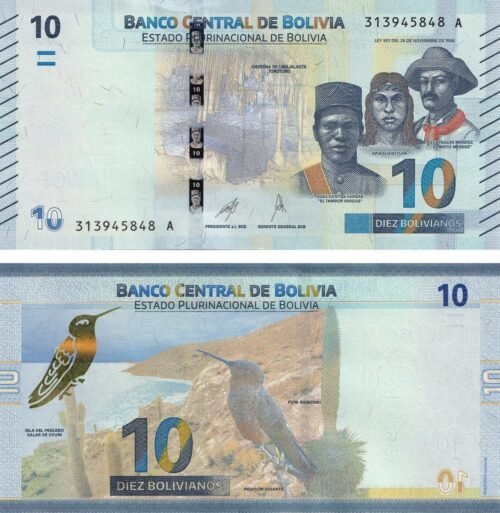
Bolivia 10 Bolivianos 2018, P-248(2-1), UNC
4,99 € -

Botswana 20 Pula 2024, P-31, UNC
5,99 € -
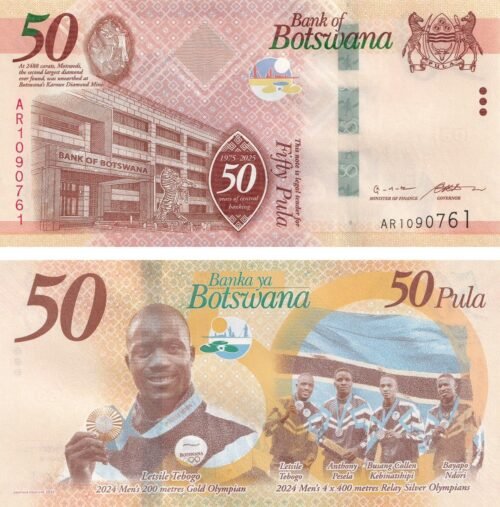
Botswana 50 Pula 2025, P-37, UNC
24,99 € -

Burundi 500 Francs 2015, P-50, UNC
1,49 € -

Burundi 500 Francs 2023, P-50, UNC
1,49 € -
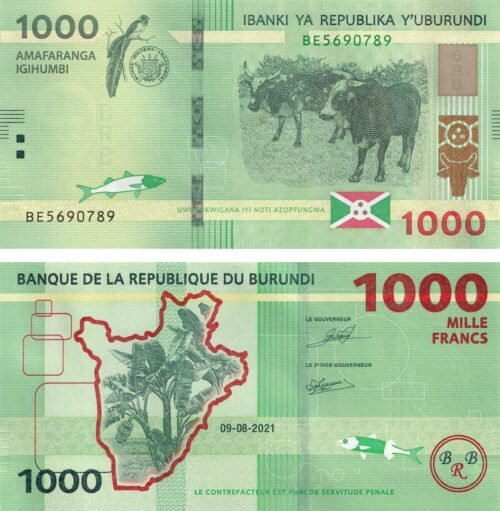
Burundi 1000 Francs 2021, P-51, UNC
2,49 € -

Burundi 1000 Francs 2023, P-51, UNC
2,49 € -

Burundi 2000 Francs 2018, P-52, UNC
3,99 € -

Burundi 5000 Francs 2018, P-53, UNC
6,99 € -
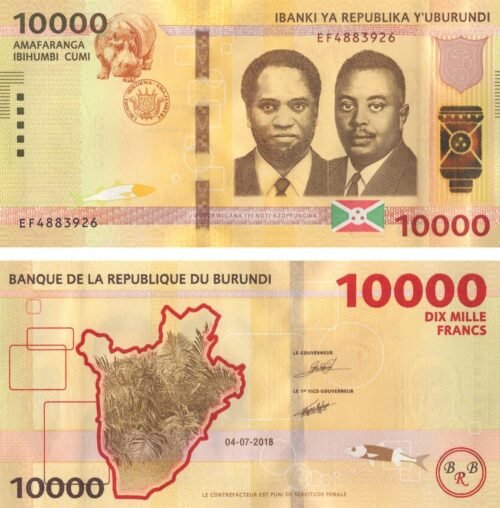
Burundi 10000 Francs 2018, P-54, UNC
12,99 € -
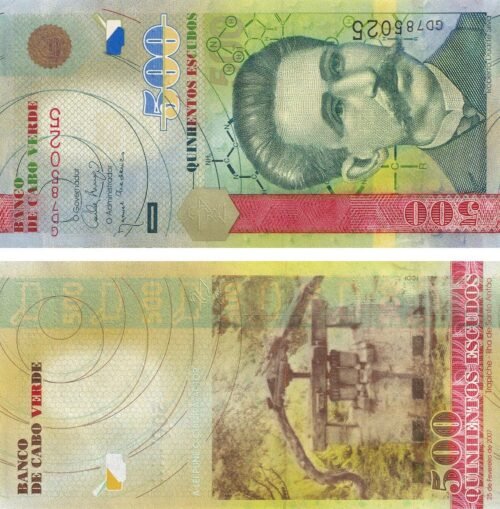
Cabo Verde (Cape Verde) 500 Escudos 2007, P-69, UNC
14,99 € -

Cambodia 2000 Riels 1995, P-45, UNC
3,99 €