

OeBS combines Austria’s banknote-printing tradition since 1816 with a modern Vienna operation offering research, design, plate production, printing, finishing, laboratory services and international currency work.
Quick Facts
Official name: Oesterreichische Banknoten- und Sicherheitsdruck GmbH
Alternative names: OeBS; Austrian Banknote and Security Printing Works; Oesterreichische Banknoten- und Sicherheitsdruck
Country: Austria
Headquarters: Vienna, Austria
Established: Banknote-printing origins date to 1816; the printing works was spun off from the Oesterreichische Nationalbank as a separate company in 1998
Status: Active
Institution type: Central-bank-controlled commercial banknote printer and banknote centre of excellence
Ownership or parent: 99.75% Oesterreichische Nationalbank and 0.25% Banque de France from 1 January 2026
Official website: oebs.at
Institutional Identity
Oesterreichische Banknoten- und Sicherheitsdruck GmbH, usually abbreviated OeBS, is Austria’s specialist banknote printer. It developed from the banknote-printing works of the Oesterreichische Nationalbank and became a separate company in 1998. The OeNB remains the controlling shareholder, while Banque de France acquired a 0.25 per cent stake from 1 January 2026. This ownership structure strengthens central-bank cooperation but does not merge the monetary responsibilities of the two shareholders.
OeBS is the manufacturer, not the issuer. The European Central Bank and national central banks hold the legal and policy responsibilities for euro banknotes; foreign central banks authorise their own currencies. OeBS supplies design, technical and production services within those mandates. The same institution can print a complete note, provide test printing or supply security paper, so the exact scope of a contract must be identified before using the printer field.
The company describes itself as a banknote centre of excellence rather than only a press room. Its current service list includes research and development, design, test printing, ink management, plate production, printing, finishing, laboratory work and cash-processing systems. That integrated range is central to its identity, but individual feature and substrate suppliers may still participate in particular issues.
Historical Development
Austria’s central-bank banknote-printing tradition begins in 1816, the year associated with the foundation of the Nationalbank and its internal printing works. For most of the nineteenth and twentieth centuries, banknote manufacture operated inside the central bank’s structure. This long institutional origin should be kept separate from the legal creation of OeBS as a company.
The printing works was spun off in 1998 while ownership remained with the OeNB. Official OeNB analysis explains that the change prepared the printer for European monetary union and a more competitive production environment. OeBS subsequently produced part of Austria’s euro allocation and pursued international contracts.
The company’s international development is directly documented by the OeNB. A 2007 central-bank publication states that OeBS won the contract for the new Azerbaijani manat, which entered circulation at the beginning of 2006. In 2026 the minority investment by Banque de France added a new ownership stage without changing OeBS’s Austrian location or the OeNB’s controlling position.
Role in Banknote Production
OeBS can participate from research and design through finished production. A complete project may include artwork engineering, test prints, plate preparation, ink management, background and intaglio printing, numbering, inspection, finishing and laboratory verification. Its Vienna facilities currently print every denomination of the Europa-series euro and foreign currencies, according to the company’s official site.
WorldBanknotes.eu links OeBS to two Azerbaijani one-manat notes: the 2005 issue and the 2017 P-31b printing. OeNB documentation provides strong institutional confirmation for the new manat programme introduced in 2006 and therefore supports the original 2005-dated series. The later 2017 note belongs to the continuing one-manat design family, but a public Central Bank of Azerbaijan statement naming the printer of that precise run was not located.
The page consequently distinguishes programme-level official confirmation from later issue-level catalogue attribution. Similar design, denomination and paper do not by themselves prove that a reprint used the same printer. The 2017 record should remain linked to OeBS because that is the controlled catalogue value, while its evidence status is kept explicit.
Security and Technology
OeBS’s official service portfolio shows unusually broad control over the production chain. Research, design, test printing and plate production support the conversion of an approved concept into manufacturable security artwork. Ink management, printing, finishing and laboratory work then control the physical note and its conformity. This integration can reduce gaps between design intent and industrial execution.
The new Azerbaijani manat is closely associated with the visual language of designer Robert Kalina and with modern European security-printing practice. That design relationship should not be simplified into sole authorship by the printer: the issuing bank approved the series, the designer created the concept and OeBS manufactured the notes under contract. Paper, threads and optical features may have separate suppliers unless the documentation identifies them as internal.
Collectors should inspect watermark, thread, tactile relief, microprinting and registration using the WorldBanknotes.eu guide to security features. A later date on an otherwise familiar design may represent a new print run, signature or issuer-name variation rather than a new printer. Printer attribution must therefore be checked independently of design continuity.
For Collectors
OeBS is a particularly useful printer for collectors interested in the movement of European security-printing expertise into non-euro currencies. Its Austrian lineage, euro production and foreign contracts make it possible to compare design and manufacturing standards across distinct monetary authorities without confusing their legal responsibilities.
The two Azerbaijani one-manat notes provide a controlled comparison across dates. Collectors can examine changes in issuer name, serial presentation, signatures, print sharpness and security execution while keeping the core cultural design in view. The official evidence is strongest for the original new-manat programme; later reprints require their own supporting record.
The current 2026 ownership structure also demonstrates why printer profiles must be maintained. A small Banque de France stake is institutionally relevant, but it does not turn OeBS into Banque de France or change the printer name on historical notes. Ownership, printer identity, issuing authority and production date remain four separate catalogue dimensions.
Banknotes Printed by OeBS
-

Azerbaijan 1 Manat 2005, P-24, UNC
5,99 € -
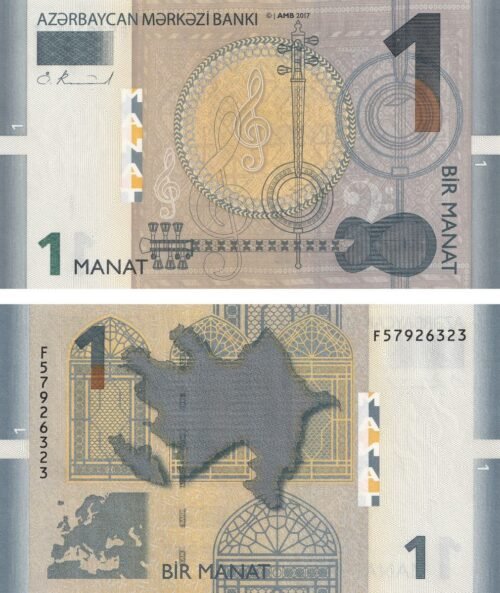
Azerbaijan 1 Manat 2017, P-31b, UNC
2,99 € -

Lebanon 20000 Livres 2004, P-87, UNC
9,99 € -

Lebanon 50000 Livres 2004, P-88, UNC
13,99 € -

Romania 10 Lei 2020, P-119, UNC
5,99 € -
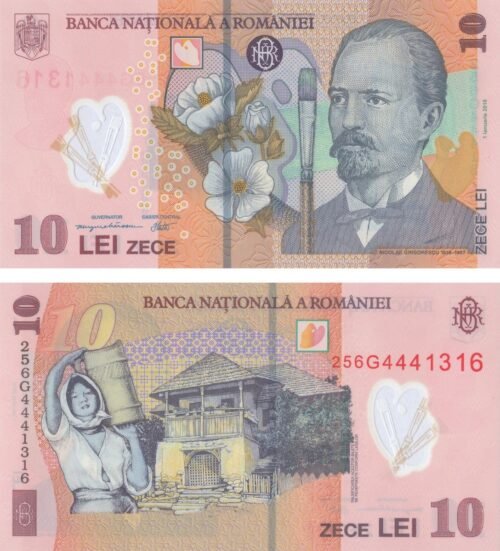
Romania 10 Lei 2025, P-119, UNC
5,99 € -
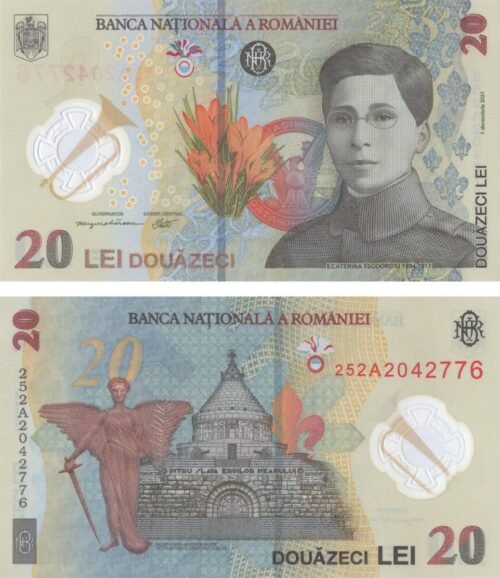
Romania 20 Lei 2025, P-119A, UNC
10,99 € -

Syria 50 Syrian pounds 2009, P-112, UNC
0,99 €
Selected References
- OeBS — Banknote Is Us
- Oesterreichische Nationalbank — Cash Logistics in Austria and the Euro Area
- Oesterreichische Nationalbank — Annual Report 2001
- Oesterreichische Nationalbank — Annual Report 2006
- Central Bank of Azerbaijan — Current Banknotes
- Numista — Azerbaijan 1 Manat 2005
- Numista — Azerbaijan 1 Manat 2009–2017