
Polish Security Printing Works

Polish Security Printing Works combines a century of state security printing with in-house banknote paper, multi-process printing and production for Poland and foreign issuing authorities.
Quick Facts
Official name: Polska Wytwórnia Papierów Wartościowych S.A.
Alternative names: Polish Security Printing Works S.A., PWPW S.A.
Country: Poland
Headquarters: 1 R. Sanguszki Street, Warsaw, Poland
Established: 1919
Status: Active
Institution type: State-owned security printer and banknote-paper producer
Ownership or parent: Wholly owned by the Polish State Treasury and supervised by the Minister of Internal Affairs and Administration
Official website: pwpw.pl
Institutional Identity
Polska Wytwórnia Papierów Wartościowych S.A., known in English as Polish Security Printing Works and commonly abbreviated PWPW, is Poland’s state-owned producer of banknotes and other high-security documents. The company is wholly owned by the State Treasury and supervised by the Minister of Internal Affairs and Administration. Its registered office and principal historic complex remain on Sanguszki Street in Warsaw.
PWPW is vertically integrated to an unusual degree. It produces banknote paper in its own mill, develops security substrates and features, prepares designs and printing forms, and manufactures finished notes using several complementary processes. This allows the company to control the relationship between paper, printed image, tactile relief, numbering and machine-readable elements from an early stage of a project.
The company is not Poland’s monetary issuer. That role belongs to Narodowy Bank Polski, while PWPW manufactures the physical notes. The same distinction applies to export contracts: the foreign central bank or issuing authority remains responsible for the currency, and PWPW provides the industrial production or selected technical components.
Historical Development
PWPW traces its foundation to 25 January 1919, when the Polish government created the State Graphic Works soon after the restoration of national independence. The first banknote produced by the works, a 100-Polish-mark note, followed in 1920. Domestic production of currency and identity documents formed part of the new state’s effort to establish administrative and monetary sovereignty.
In 1926 the State Graphic Works were transformed into Polska Wytwórnia Papierów Wartościowych. Construction of the Sanguszki Street headquarters began that year and was completed in 1929. The building later acquired a place in wartime history: employees produced banknotes and legalisation documents for the Polish Underground State, and the complex became a defended redoubt during the Warsaw Uprising.
Post-war reconstruction began in 1946. Production operated temporarily in Łódź before returning to Warsaw in 1950. PWPW subsequently printed the post-reform currency and, from 1975, the “Great Poles” series designed by Andrzej Heidrich. Since 1998 it has manufactured the “Polish Sovereigns” series used after redenomination, including modernised issues and collector banknotes.
The contemporary company has expanded its digital and export capabilities while retaining banknote paper and printing under one institutional roof. PWPW states that it produces for domestic and foreign markets, is authorised to print euro banknotes and is accredited for work on Guardian® polymer substrate.
Role in Banknote Production
PWPW can undertake the full banknote-production chain: substrate selection, paper manufacture, design engineering, plate and screen preparation, offset backgrounds, intaglio relief, screen-applied special inks, numbering, inspection and finishing. The availability of an internal paper mill allows security features to be introduced before the printing stage and coordinated with the visible design.
For Polish circulation notes, PWPW manufactures the banknotes issued by Narodowy Bank Polski. For foreign customers, the division of work may range from complete finished-note production to substrate or technical support. A catalogue should therefore state only the role documented for the specific issue and should not assume that a PWPW substrate automatically means final printing at PWPW.
WorldBanknotes.eu currently links PWPW to notes from Afghanistan, Djibouti, Guatemala and Poland. The range shows both domestic continuity and export work. It also demonstrates why printer data is valuable: notes from unrelated monetary systems can be connected through a common production institution without implying any relationship between their issuers.
Security and Technology
PWPW combines steel-engraved intaglio, offset, screen and letterpress processes. Intaglio produces raised tactile structures and can form latent or optically variable graphic effects. Screen printing allows the application of special inks, including optically variable, metallic, iridescent or thermochromic materials, while letterpress is used for controlled numbering and can incorporate ultraviolet- or infrared-responsive inks.
The company’s substrate portfolio covers cotton, semi-synthetic, composite and polymer bases. Its own mill produces the Fortis™ family of banknote papers, including coated and composite variants intended to improve resistance to abrasion, chemicals and soiling. Watermarks, security threads, fibres and coatings can therefore be engineered as part of the substrate rather than added only during printing.
These capabilities should be treated as a technical range, not as universal features of every PWPW note. Collectors and cataloguers must still verify the substrate, thread, watermark, ink effect and production process for the particular denomination and date.
For Collectors
PWPW offers a long, well-structured field for collecting: the early State Graphic Works, interwar PWPW, post-war reconstruction, the “Great Poles” inflationary sequence, the “Polish Sovereigns” series and modern export issues. Changes in political period, denomination system and security technology are more meaningful than the printer name alone when defining a series.
The strongest physical comparisons include paper texture, watermark construction, thread placement, intaglio relief, numbering style and special-ink effects. These characteristics can help distinguish production periods or varieties, but they should support rather than replace issuer records and catalogue evidence.
The WorldBanknotes.eu article How Banknotes Are Printed explains how these stages fit together. For attribution, note the exact historic name used by the source, particularly for early State Graphic Works issues. Modernising the name to PWPW may be useful for a canonical printer hub, but the historical record should preserve the institution appropriate to the period.
Banknotes Printed by Polish Security Printing Works
-
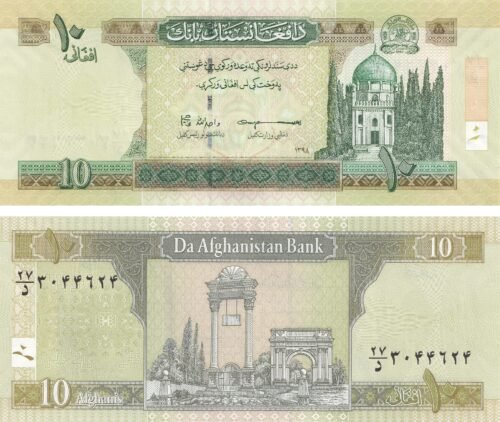
Afghanistan 10 Afghanis 2019, P-67A, UNC
1,99 € -
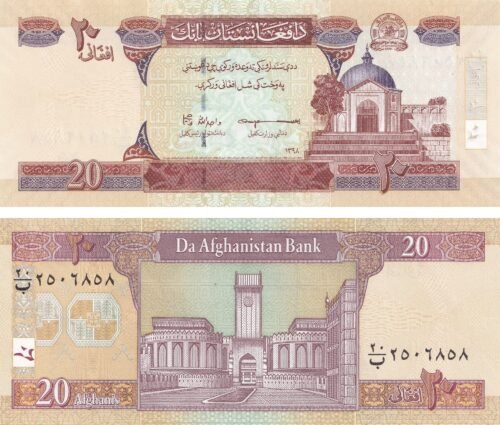
Afghanistan 20 Afghanis 2019, P-68, UNC
2,99 € -
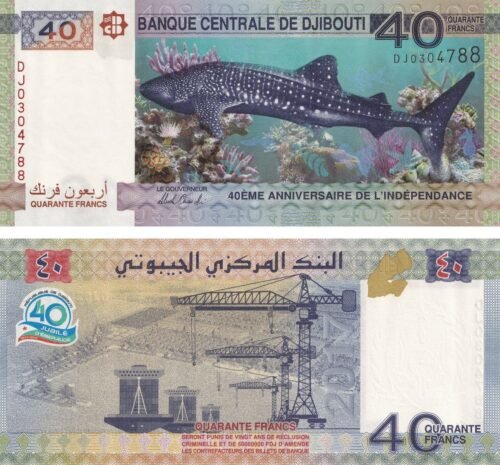
Djibouti 40 Francs 2017, P-46(1), UNC
2,99 € -
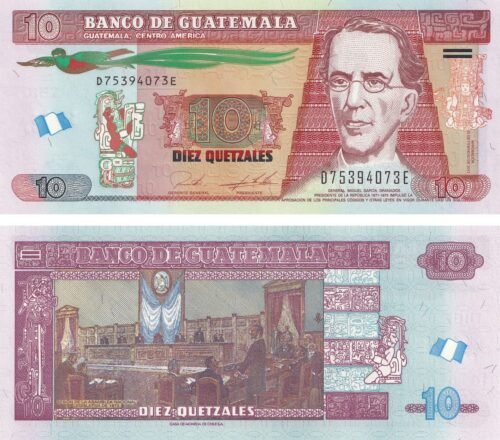
Guatemala 10 Quetzales 2017, P-123A, UNC
3,99 € -

Guatemala 100 Quetzales 2025, P-130, UNC
29,99 € -

Honduras 1 Lempira 2016, P-96, UNC
0,99 € -
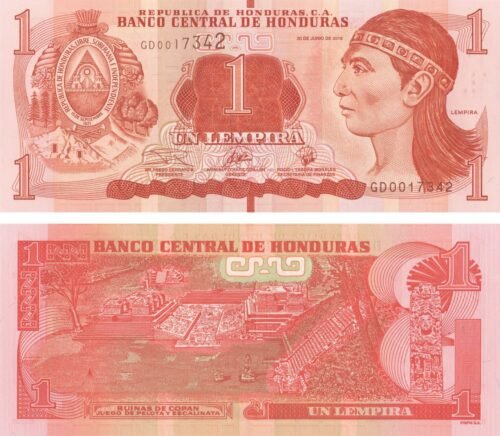
Honduras 1 Lempira 2019, P-96, UNC
0,99 € -

Honduras 1 Lempira 2022, P-96, UNC
0,99 € -

Honduras 2 Lempiras 2022, P-97, UNC
0,99 € -

Honduras 5 Lempiras 2019, P-98, UNC
2,49 € -

Honduras 5 Lempiras 2022, P-98, UNC
2,49 € -

Honduras 5 Lempiras 2024, P-98, UNC
1,49 € -

Honduras 20 Lempiras 2014, P-100b, UNC
3,99 € -
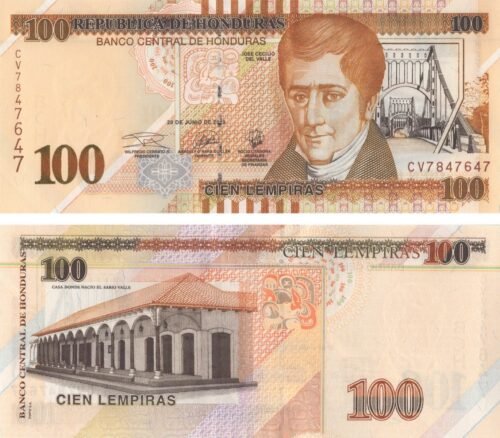
Honduras 100 Lempiras 2019, P-102, UNC
10,99 € -
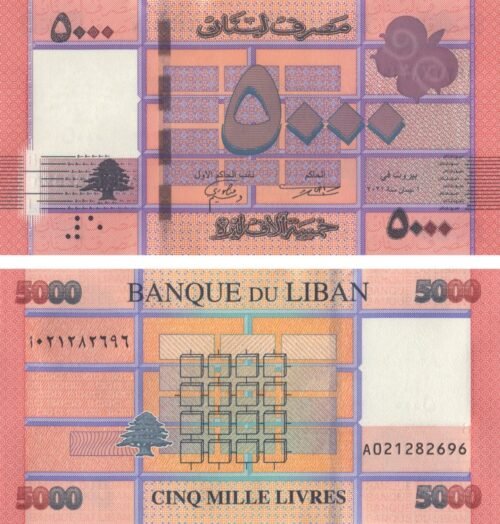
Lebanon 5000 Livres 2021, P-91c, UNC
0,99 € -

Poland 50 Zlotych 1988, P-142c, UNC
2,49 € -

Poland 100 Zlotych 1986, P-143e, UNC
2,99 € -

Poland 10 Zlotych 2016, P-183b, UNC
5,99 € -

Poland 20 Zlotych 2016, P-184, UNC
11,49 €