
Security Printing Works, Wazi

Security Printing Works at Wazi marks Burma’s transition to domestic state banknote production, beginning with the 1972 Union of Burma Bank series and continuing as a strategically important but publicly opaque security facility.
Quick Facts
Official name: Security Printing Works Factory, Wazi
Alternative names: Security Printing Works; Security Printing Wazi; Wazi Security Printing Works; SPW
Country: Burma
Headquarters: Wazi, Chauk Township, Magway Region, Myanmar; historically described as Upper Burma
Established: Circa 1972; the first Union of Burma Bank issues associated with the domestic works entered circulation from September 1972
Status: Reported active; current legal and organisational disclosure is limited
Institution type: State security-printing works producing banknotes and other protected state products
Ownership or parent: State-run facility serving Myanmar’s currency system; the precise current legal parent is not stated in the public sources reviewed
Institutional Identity
Security Printing Works at Wazi is the state security-printing facility associated with Burma and Myanmar’s domestic banknote production. It is located near Wazi in Chauk Township, Magway Region. Public references use several names—Security Printing Works, Security Printing Works Factory and Security Printing Wazi—but they describe the same protected production site.
The facility is not the issuing authority. The Union of Burma Bank authorised the 1970s and 1980s notes represented in the WorldBanknotes.eu catalogue, while the Central Bank of Myanmar is the present sole issuer under central-bank law. Wazi’s role is industrial: manufacturing the physical banknotes and, according to broader reporting, other state security products. The page keeps those roles separate and does not describe the factory as a central bank in its own right.
Unlike many modern printers, Wazi has no dedicated public corporate website, transparent legal profile or detailed current organisational chart. The available evidence is therefore assembled from the Central Bank of Myanmar’s official currency chronology, a government treasury reference and contemporary specialist reporting. That limitation is disclosed because institutional opacity should not be replaced with invented ownership or capacity statements.
Historical Development
The Central Bank of Myanmar’s official history records a major change on 30 September 1972, when the People’s Bank was renamed the Union of Burma Bank and a 25-kyat note was issued. A 1-kyat note followed on 30 December 1972, the 10-kyat on 30 June 1973 and the 5-kyat on 31 October 1973. The Thailand Treasury Department’s official regional history identifies the Wazi works as established around 1972 under the technical direction of Giesecke & Devrient. Together, these sources place the factory at the centre of the new domestic series.
The works subsequently manufactured a sequence of notes that became highly distinctive in world currency history. The official chronology records 100 kyats in 1976, 50 kyats in 1979, 75 kyats in 1985, 35 and 15 kyats in 1986, and 45 and 90 kyats in 1987. Several denominations were demonetised abruptly in 1985 and 1987. Those events are fundamental to the notes’ collecting context, but the page does not repeat unsupported claims about the political or numerological motives behind each value.
After 1988, the issuing institution and note designs changed, while Wazi continued to be identified in specialist and contemporary reporting as the state banknote facility. Recent reporting still describes the factory as operational. Because the current authorities do not publish a clear legal or production profile for the works, the current-status field is deliberately phrased as reported active rather than presenting an unverifiable corporate structure.
Role in Banknote Production
The documented Wazi role is finished-note production for the national currency system. Early technical assistance from Giesecke & Devrient helped establish the domestic works, but that historical relationship does not mean the German company should be recorded as the printer of every Wazi-produced note. Technical direction, equipment supply and physical printing are separate contributions.
WorldBanknotes.eu currently links Wazi to four notes: the 1 kyat of 1972, the 5 and 10 kyats of 1973, and the 15 kyats of 1986. These examples fall within the official Union of Burma Bank chronology and form a strong collector group for examining the first domestic series and the later unconventional denominations. The site should still retain issue-level evidence rather than automatically assigning every Burma or Myanmar note to Wazi.
The exact modern production chain is not publicly described in official sources. It is reasonable to expect controlled origination, background printing, intaglio, numbering, inspection and finishing within a state security works, but the profile does not present that generic sequence as a verified plant specification. Where a particular note carries a printer imprint or identifying microtext, that direct evidence is more valuable than inference from date or denomination.
Security and Technology
Government and specialist references associate the establishment of Wazi with German technical assistance and multicolour security printing. The notes themselves show the familiar disciplines of engraved currency production: complex line structures, portrait work, watermarks, security threads and controlled serial numbering. These features can be examined directly, but their presence alone does not identify the printer.
The 1970s Aung San notes provide a useful study of scale, portrait engraving and traditional imagery within a tightly structured security layout. The 15-kyat note of 1986 belongs to a later phase with different portrait and denomination choices. Comparing the groups can reveal changes in paper, printing pressure, line density and serial presentation, although a collector should avoid attributing every visible difference to a new machine or supplier without documentary support.
Current public reporting links Wazi to ongoing banknote production, yet technical details about present equipment, paper sources, inks and capacity are not officially disclosed. The profile therefore contains no invented certification claims, proprietary feature names or production volumes.
For Collectors
Wazi is one of the most important printer names in modern Southeast Asian collecting because it links technical nation-building, domestic production and dramatic monetary history. The 1972–1973 notes mark the beginning of the Wazi era, while the 1980s issues sit close to sudden demonetisations that had major consequences for the public.
The 15-kyat note deserves particular care. Its unusual denomination is a genuine catalogue fact, but popular explanations often move quickly into stories about numerology. The Central Bank’s own history records issue and withdrawal dates without endorsing those motives. A professional description should preserve that distinction rather than turning an attractive anecdote into institutional history.
For attribution, start with the issuer and exact series, then look for a printer imprint, microtext or reliable specialist reference. Use the guide to banknote dates and issue chronology to avoid confusing a printed date, issue date and production period. Wazi’s public record is incomplete, but the gaps themselves can be handled rigorously when the evidence hierarchy is made visible.
Banknotes Printed by Security Printing Works, Wazi
-

Burma 1 Kyat 1972, P-56, UNC
2,49 € -

Burma 5 Kyats 1973, P-57, UNC
2,49 € -

Burma 10 Kyats 1973, P-58, UNC
2,49 € -

Burma 15 Kyats 1986, P-62, UNC
2,49 € -
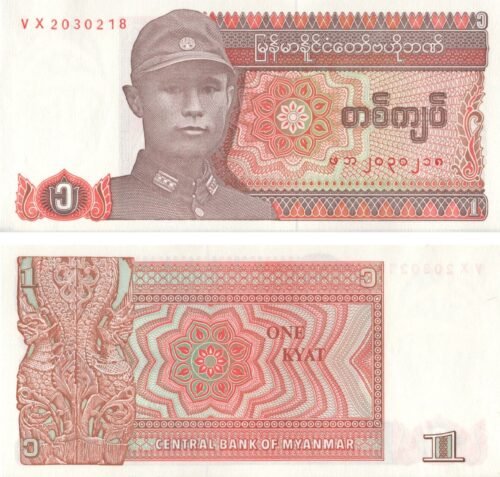
Myanmar 1 Kyat 1990, P-67, UNC
0,99 € -
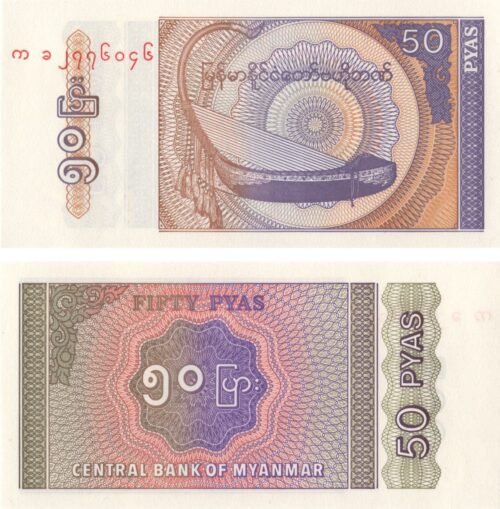
Myanmar 50 Pyas 1994, P-68, UNC
1,49 € -
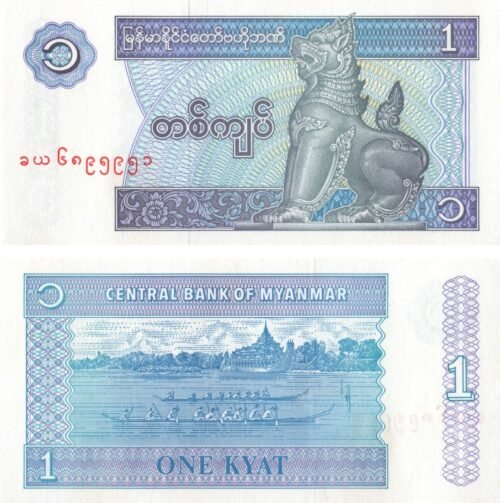
Myanmar 1 Kyat 1996, P-69(2), UNC
0,99 € -
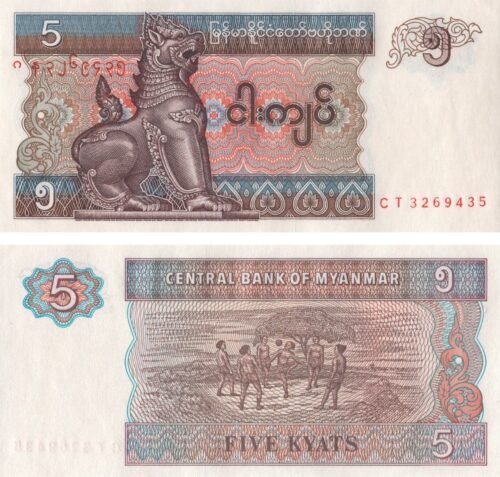
Myanmar 5 Kyats 1995, P-70b, UNC
0,99 € -
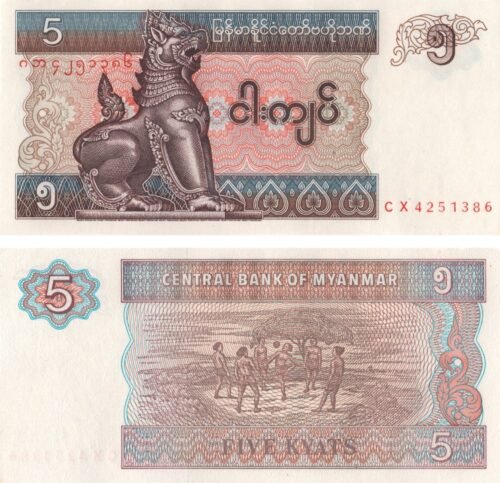
Myanmar 5 Kyats 1995, P-70br, UNC
0,99 € -
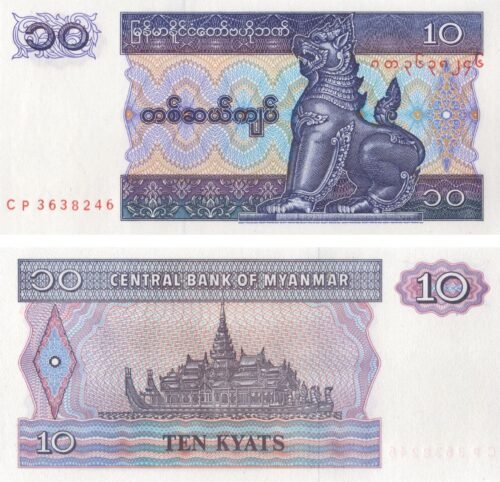
Myanmar 10 Kyats 1995, P-71b, UNC
0,99 € -
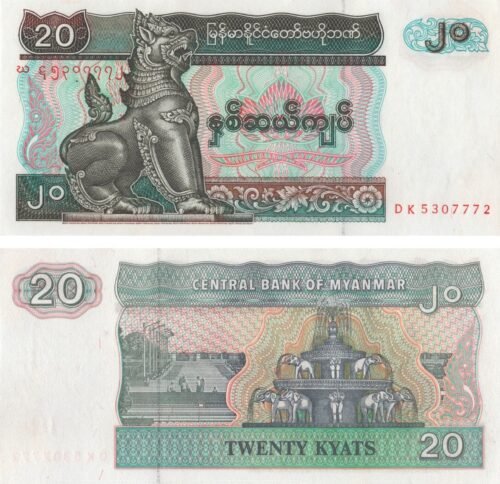
Myanmar 20 Kyats 1994, P-72, UNC
0,99 € -
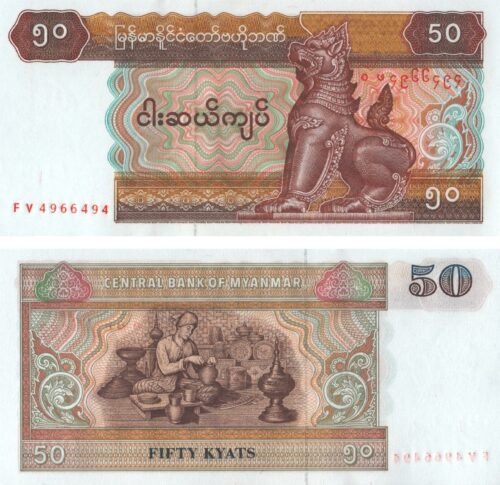
Myanmar 50 Kyats 1997, P-73b(1), UNC
0,99 € -
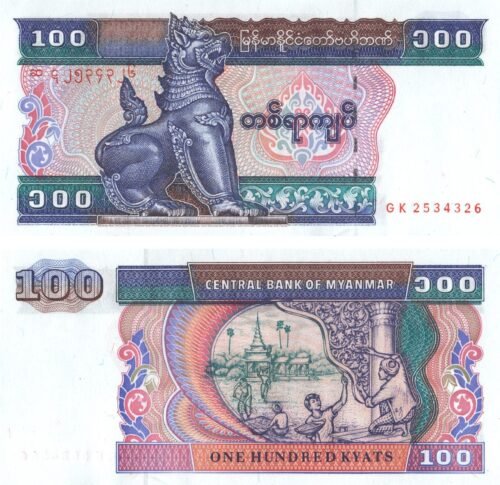
Myanmar 100 Kyats 1996, P-74b, UNC
0,99 € -
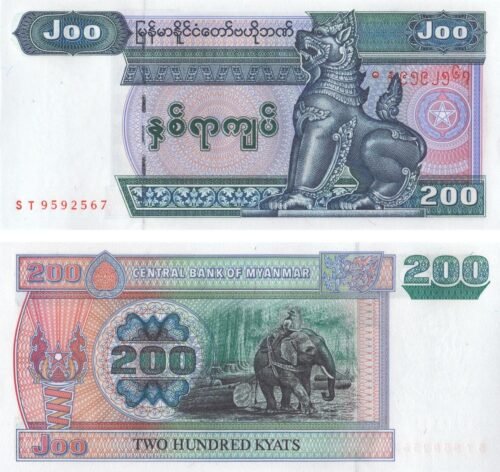
Myanmar 200 Kyats 2004, P-78, UNC
1,49 € -
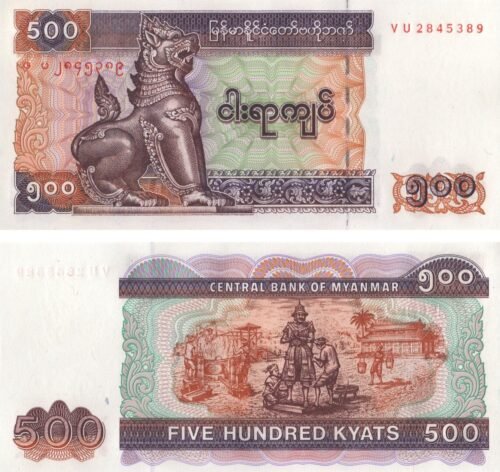
Myanmar 500 Kyats 2004, P-79, UNC
2,49 € -

Myanmar 500 Kyats 2020, P-85, UNC
2,49 € -

Myanmar 1000 Kyats 2020, P-86, UNC
2,99 €