
Tumba Bruk

Tumba Bruk is a foundational name in Swedish banknote history: established by the Riksbank in 1755, later sold to Crane, and now active as a paper mill and design centre rather than a banknote-printing plant.
Quick Facts
Official name: Tumba Bruk
Alternative names: AB Tumba Bruk, Tumba Paper Mill, Crane AB (current operator)
Country: Sweden
Headquarters: Tumba, Botkyrka Municipality, Sweden
Established: 1755
Status: Historical banknote printing works; active banknote paper mill and design centre
Institution type: Former central-bank banknote paper mill and printing works
Ownership or parent: Sveriges Riksbank until 2002; acquired by Crane Currency and currently operated as Crane AB within Crane NXT
Official website: cranecurrency.com
Institutional Identity
Tumba Bruk began as the banknote-paper works of Sveriges Riksbank. The central bank established the mill at Tumba in 1755 to obtain secure paper that would be difficult for counterfeiters to imitate. Over time the site developed from papermaking into an integrated centre associated with paper, banknotes and other security documents.
The name requires period-sensitive use. “Tumba Bruk” can refer to the historic Riksbank works, the later company AB Tumba Bruk or, more broadly, the production site. After the operation was sold to Crane Currency in 2002, the current legal operator became Crane AB. The Tumba location remains active, but its present functions are banknote-paper production, international operations and design rather than finished-banknote printing.
Tumba does not issue currency. Under Riksbank ownership it manufactured materials and notes for the Swedish central bank; under Crane it worked as a commercial production site. The issuer, corporate owner, paper mill and physical printing works must therefore be distinguished when cataloguing a note.
Historical Development
Sveriges Riksbank founded Tumba Bruk in 1755 as an anti-counterfeiting measure. Producing paper within a controlled central-bank facility reduced dependence on outside suppliers and allowed distinctive material characteristics to be developed for Swedish notes. This early connection between paper technology and monetary security made Tumba one of the oldest specialist banknote-paper sites still operating.
The works evolved beyond papermaking and became associated with complete banknote and security-document production. For much of the twentieth century, Tumba formed part of Sweden’s state-controlled currency manufacturing system. Historical attributions may therefore identify the Riksbank, AB Tumba Bruk or Tumba as the printer, depending on the period and source.
In 2002 the Riksbank sold Tumba Bruk to the American company Crane after deciding to procure banknote manufacture on the international market. The site continued printing Swedish and other notes under Crane ownership while also serving as a major paper and design centre.
That production model changed in 2018. Crane announced the closure of banknote printing at Tumba and transferred finished-note manufacturing to its Malta plant. The Riksbank consequently terminated its printing contract because it specified production at Tumba. The Swedish location itself did not disappear: Crane continues to operate a modern banknote-paper mill and design team there.
Role in Banknote Production
Historically, Tumba could contribute both substrate and finished-banknote manufacture. Its vertically connected capabilities allowed paper characteristics, watermarks, threads, printed design and quality control to be coordinated at one site. This makes Tumba a significant attribution for Swedish notes and for export issues produced during the commercial period.
After the end of banknote printing in 2018, the present Tumba operation should no longer be described as a finished-note printing plant. It remains part of Crane Currency’s banknote system through paper manufacture, design and international operations, while commercial note printing is centred at Ħal Far in Malta. A current Crane paper or design contribution is therefore not the same as historical printing at Tumba.
WorldBanknotes.eu currently links Tumba Bruk to notes from the Democratic Republic of the Congo, Croatia and Sweden. These catalogue examples span state and commercial periods. Each record should preserve the name and facility supported for the specific issue rather than replacing all Tumba attributions with the current parent company.
Security and Technology
Tumba’s original security logic was material: manufacture banknote paper under controlled conditions so that its composition and watermark could not be easily copied. Over more than two and a half centuries, that papermaking tradition expanded to include engineered fibres, threads, watermarks and durable cotton-based substrates designed to work with high-security printing.
During the period of finished-note production, these substrate features were integrated with offset, intaglio, numbering and other processes. The site’s later connection with Crane also placed it within the development of advanced paper security and banknote design. Present-day Tumba continues as a modern paper mill and the home of a specialist design team.
Collectors should treat watermarks, threads and paper behaviour as evidence to be compared with documented specifications, not as unique signatures that automatically identify Tumba. Similar security papers can be supplied to several printers, and a note printed at Tumba may incorporate features sourced elsewhere.
For Collectors
Tumba Bruk is most valuable as a historical and facility-level attribution. Collectors can follow the transition from central-bank production to Crane ownership and then to the closure of the printing operation in 2018. The same site name may therefore describe different ownership and production arrangements across time.
Do not merge Tumba Bruk, Crane Currency and Crane’s Malta facility into one undifferentiated printer label. A note printed at Tumba before the closure is not the same attribution as a later Crane note printed in Malta, even though both belong to the wider Crane history. Likewise, paper made at Tumba and printed elsewhere should be catalogued as a substrate contribution rather than Tumba printing.
The broader material context is covered in the WorldBanknotes.eu guide to paper, polymer and hybrid banknotes. For historical notes, the strongest record combines the date, issuer, printer name used in contemporary or catalogue sources, and any available facility evidence.
Banknotes Printed by Tumba Bruk
-

Congo (Democratic Republic) 1 Centime 1997, P-80, UNC
1,49 € -

Congo (Democratic Republic) 10 Centimes 1997, P-82, UNC
2,49 € -

Congo (Democratic Republic) 20 Centimes 1997, P-83, UNC
2,49 € -

Congo (Democratic Republic) 50 Centimes 1997, P-84A(2), UNC
2,99 € -
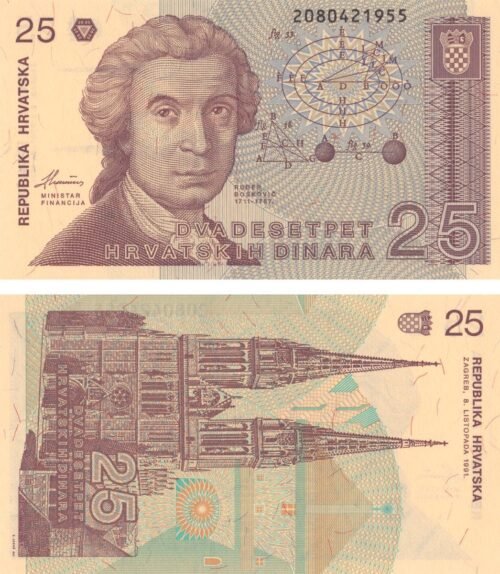
Croatia 25 Dinara 1991, P-19a, UNC
2,49 € -

Croatia 50000 Dinars 1993, P-26, UNC
1,49 € -

Croatia 100000 Dinars 1993, P-27, UNC
1,49 € -
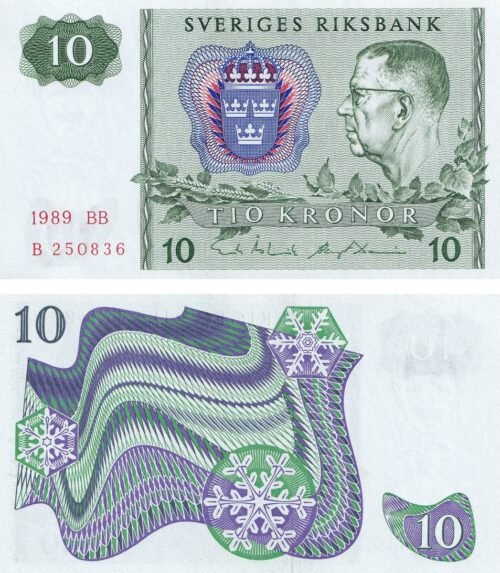
Sweden 10 Kronor 1989, P-52e, UNC
5,99 € -
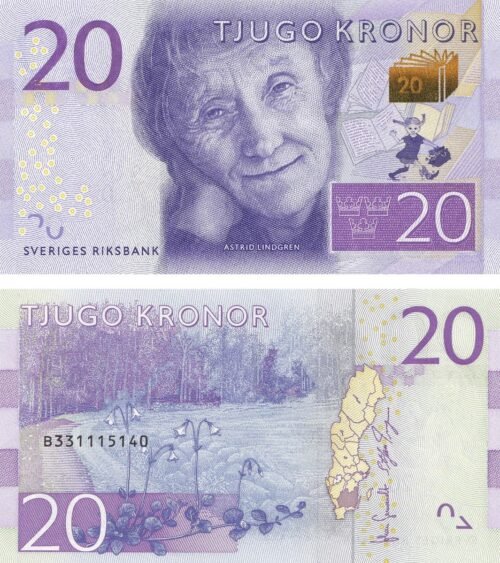
Sweden 20 Kronor 2015, P-69a, UNC
9,99 €