
Suriname
Suriname banknotes are defined by botanical richness, strong color, and a move from classic paper issues to modern polymer production.
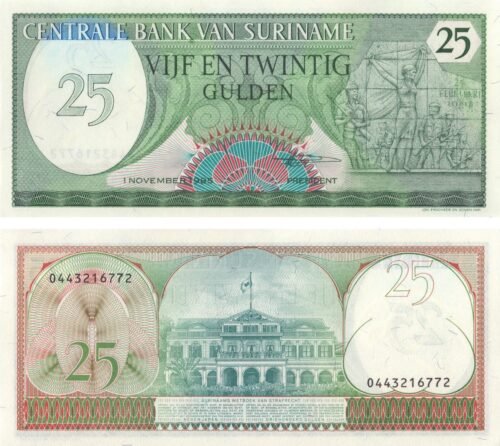
1960–1985 | Muntbiljet Coin Notes Issue

1982–1985 | Soldiers and Women Issue

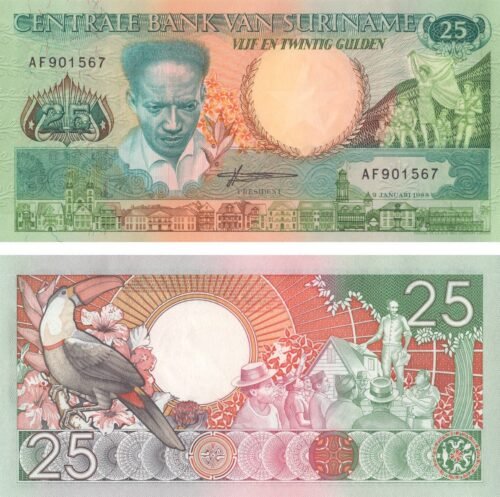
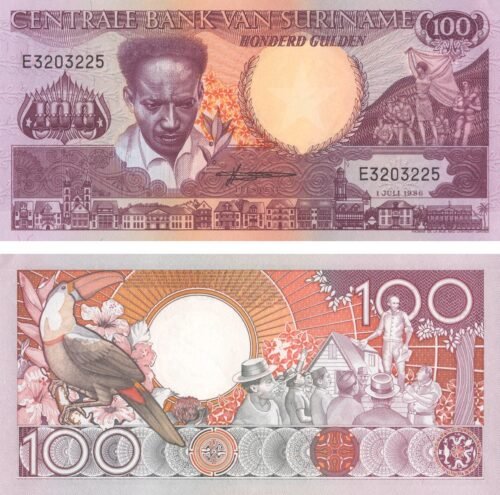
1986–1988 | Anton DeKom Issue


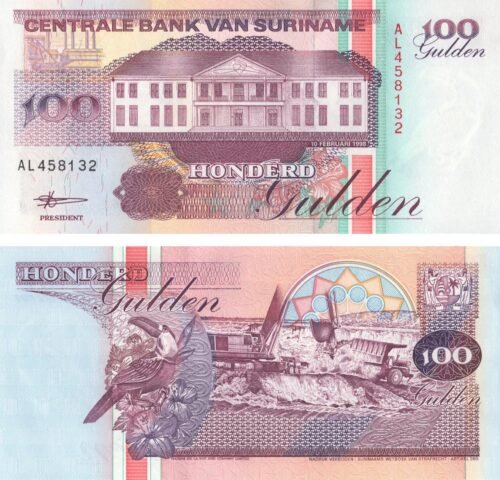
1991–1999 | Central Bank Building Issue


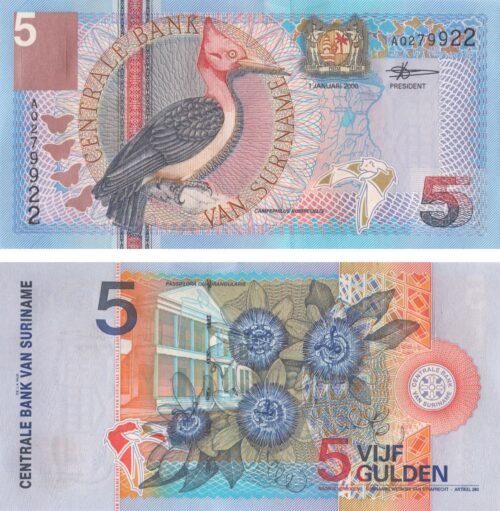
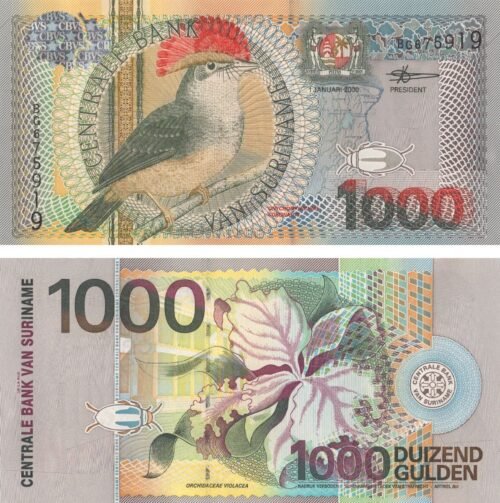
2000 | Birds Gulden Issue

2004–2009 | Dollar Issue
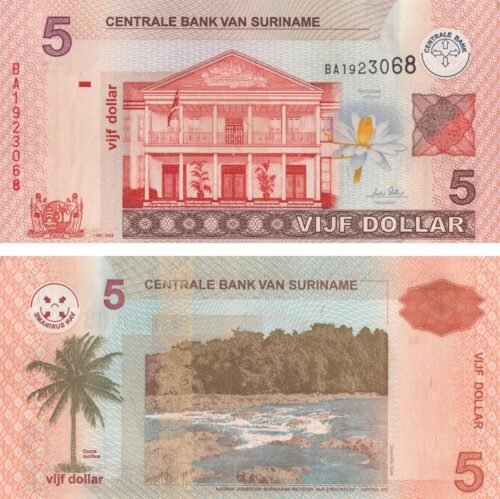
2010–2024 | Dollar Issue


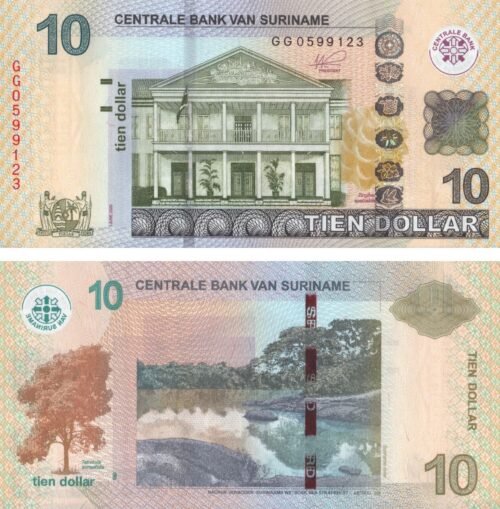

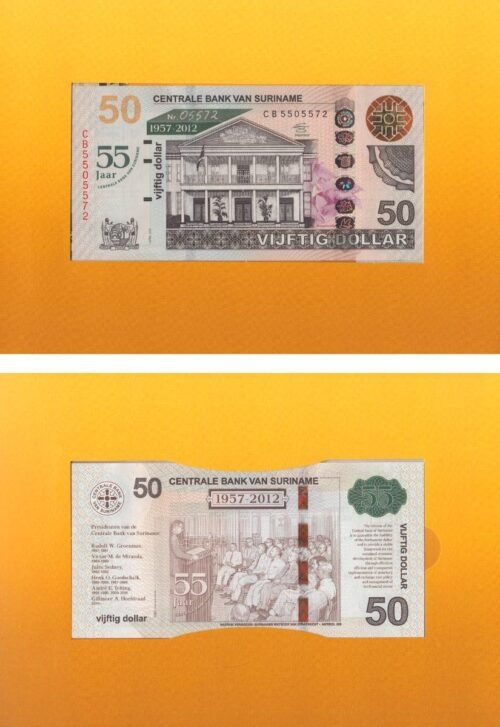
2012 | Central Bank Anniversary Commemorative Issue
Design & Visual Identity
A key artistic phase is the 1990s “Flower & Bird” Gulden series, where plants such as hibiscus and ginger lily are rendered with precise botanical detail, paired with carefully illustrated bird species in structured compositions.
These notes were produced with the involvement of Dutch printer Joh. Enschede, resulting in high-quality paper, controlled engraving, and well-balanced color application.
The 2004 monetary reform, replacing the Gulden with the Surinamese Dollar, created a clear division between earlier and later series while introducing broader thematic elements including wildlife, rivers, and architectural features.
Recent issues include a full polymer series, incorporating transparent windows, layered optical effects, and modern security structures across denominations.
Among notable designs, higher denominations feature rainforest species such as the Golden Frog, depicted with detailed engraving and strong color definition.
Historical & Cultural Context
The transition from the Gulden series to modern polymer notes creates two distinct phases within Suriname’s banknote development.
For Collectors
For collectors, Suriname stands out for its “Flower & Bird” series, Dutch printing quality, post-reform Dollar issues, modern polymer technology, and biodiversity-focused design, forming a visually distinctive and technically varied banknote system in South America.
Quick Facts
Currency: Suriname Gulden, Surinamese Dollar